
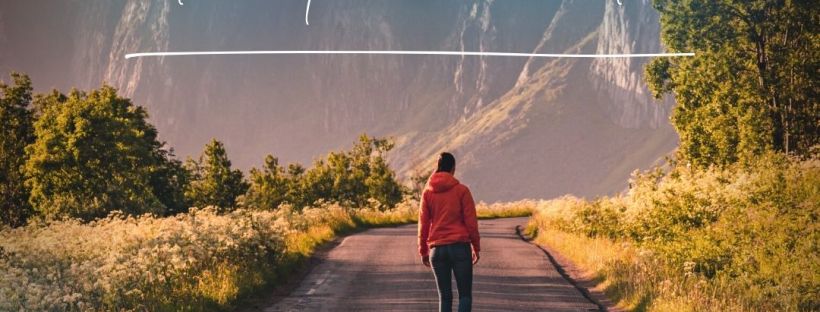

Although I am not the greatest at it, I really do try not to waste. I am a saver. Sometimes to my own detriment. Admittedly, I hold on to things probably much longer than I should. At times, the truth of it will show up in clutter, confusion, and mess. There are times when we must be willing to let go of the old to make space for and welcome the new.
There are various reasons we cling to the things of our past. Some are sentimental or have historical value to us. Some reasons can revolve around more. But whatever the reason, one thing I am slowly learning is, that if it is not serving a purpose in the day and time I am currently living in, I must categorize its usefulness and see if it is something I am going to choose to actively hang on to or if I need to trash, donate, or keep (but have it stored somewhere out of my everyday space).
Old things have their place. Whether it was in things that served us for a time or in experiences we lived through, but to mature and find greater peace in the space of your life right now, they must be kept in their proper place and that place may not look like what it used to look like or serve the way we were used to being served by it.
Spiritually speaking, we see the truth of this from the Hebrew writer when he was explaining the differences between the old and the new covenants. There was a future designed for the people of God that some could not yet fathom, therefore they desired to hold on to the old way of connecting and relating to God.
But what Galatians 3:23-25 teaches us is, “Before faith came, we were kept under the law, shut up unto the faith which should afterwards be revealed. Wherefore the law was our schoolmaster to bring us unto Christ, that we might be justified by faith. But after that faith is come, we are no longer under a schoolmaster.” The law was only a tutor for a time, showing our need for a Savior, showing us how to live in anticipation of what Christ would wholly fulfill in His person through His death, burial, and resurrection.
With that being revealed and accomplished, what now has come, and how one’s relationship with God would transpire from here on out, would be much different, but better. For what was coming was no longer going to deal with the letter of the law, but the relationship we would have with our heavenly Father would be from the position of a transformed heart (Jeremiah 31:31-34; Hebrews 8:10). This heart transformation would be spawned from the finished work of Jesus Christ, on the cross.
In Hebrews 12:18-21, the writer teaches from the history of their previous experience, explaining, “For ye are not come unto the mount that might be touched, and that burned with fire, nor unto blackness, and darkness, and tempest, And the sound of a trumpet, and the voice of words; which voice they that heard intreated that the word should not be spoken to them any more: (For they could not endure that which was commanded, And if so much as a beast touch the mountain, it shall be stoned, or thrust through with a dart: And so terrible was the sight, that Moses said, I exceedingly fear and quake:)”.
This was a “that was then” moment. Thinking back, he recalls through their history that it was two months after God delivered the children of Israel, He brought them to Mount Sinai. Upon their arrival, they were given very specific commands to follow because life and death depended upon it. During the time of His visitation, if any attempted to look at God or break through the boundaries that were set up to protect the perimeter of the mount, that individual would be killed. Even if a beast of any sort were to touch the mount where the manifested presence of God would make Himself known, it too was to be killed. No exceptions.
The thunder and lightning, along with the sound of the trumpet that blasted to signal their approach to the mount, and the blackness and the voice of words, all made the event very terrifying for the people. Their request was that Moses would be the intermediary between God and man; that Moses would hear the instructions that were coming from the mouth of God and relay them to the people. The awesomeness of God’s manifested presence on that mountain was just too much to bear.
At one point, even Moses himself, a man who would meet with God up close and personal, “face to face, as a man speaketh unto his friends” (Exodus 33:11), was described at this event as saying, “I exceedingly fear and quake” (Hebrews 12:21). God’s power that showed forth on that mount was terrifying to behold for sure.
Moses and the representation of the Mosaic Law had its time and there were currently still teachers of it in operation (Acts 15:21), but let’s talk about the now of the new.
In this “now moment,” God has a new covenant, a new mount experience, with a new intermediary in place. It is not based on the event portrayed at Mount Sinai. He wasn’t looking for ordinances written on stone as the old covenant was, but a spiritual difference in the heart of mankind that would lead one to heaven through the new covenant established through Jesus Christ.
In Hebrews 12:22-24 he further explains, “But ye are come unto mount Sion, and unto the city of the living God, the heavenly Jerusalem, and to an innumerable company of angels, To the general assembly and church of the firstborn, which are written in heaven, and to God the Judge of all, and to the spirits of just men made perfect, And to Jesus the mediator of the new covenant, and to the blood of sprinkling, that speaketh better things than that of Abel.”
This is now where our access to God lies, in the faith, hope, and grace afforded to us through the new covenant, through the blood of Jesus Christ, which is spiritual. Not in the old system or order of doing things that were contingent on coming to God through the outward conformity of the law which is physical. Now our access through Jesus Christ brings us to the place where God is in heaven.
He, Jesus, is the mediator of the new covenant (see also Revelation 14:1). And if heaven is your goal, then Jesus is the way there. While on earth Jesus spoke, “I am the way, the truth, and the life: no man cometh unto the Father, but by me,” (John 14:6). The only way to get to where God is, is through the door of Jesus Christ Himself; through accepting Him as Savior (John 10:9). There is no other way around it. The old way is obsolete and no longer in effect. Mount Sinai stood to symbolize the old covenant while Mount Sion stood to symbolize the new. Jesus is the way to the new.
When Jesus died on the cross, He not only became the Author of the new covenant, but He became the mediator, the go-between of God and man. He stood in the gap that we would have fallen into that leads to eternal death. But through His death, through Him as the new covenant and mediator of our faith, we cross over the gap that sin caused and follow Him to eternal life. He is the way, “For through him we both have access by one Spirit unto the Father,” (Ephesians 2:18; see also Romans 5:2). Jesus is the bridge that leads us to our heavenly home.
Jesus is our only hope that draws us near to the Father. Fear of the quaking, thunderous mountain is not there. But a welcoming receptivity of new life and reconciliation that only love in its truest form can bring is now what we get to experience. That past mount, we could not go to and touch, but today, because of what now is established through Jesus, we have a Savior who has come and touched us. The beauty of His nearness is extraordinary, and the experience of what He has done is like no other. The new has overtaken the old. While the old was good for its time and place, the new is better. The culmination of everything we need to spiritually succeed can be found in Christ Jesus alone, with no added additions.

 Word For Life Says...