What Would It Have Been Like? – “To Be Ruth of the Bible”

ruth-001

“What now?” clawed at her throat, but the words refused to be uttered from her mouth.  Disbelief that her husband was deadlocked those words in her tortured mind.  Numbness over the reality of it all would have made her swoon if it were not for the look on her mother-in-law’s face.

“Not now,” Ruth thought as she tried to hold on to her composure despite the sadness that gripped her own heart.  “Noami needs me to be strong,” she silently willed within herself.  “First, Elimelech, and now this.  How much more can she bear?”

“Daughters,” Naomi spoke up, “it is time,” feeling greatly resolved at the decision that had to be made.

“What?” both women, Ruth and Orpah, spoke in unison.

“It is time for me to return home.  Oh, girls, Moab has been good to my family and me these last years.  But, Moab is not home.”  Looking at their pleading eyes Naomi continued, “It has recently come to my attention that the famine we fled from is now over.  God has blessed my people once again with His favor.  There is now bread in Bethlehem.  I have no more reason to stay here.  It is time for me to go back.”

“But, what of your life here,” asked one of the women?

“I no longer have a life here, dear,” Naomi cried with sobs breaking through her words.  “In this land, I have had to say goodbye to the people I treasure most in this world.  This land has taken my heart; it has taken my family.  I’ve watched my husband die and now I am forced to let go of my sons.  What is there left for me here?”

“Naomi, you have us,” Ruth spoke confidently.

“No, my daughter.  It is best if you two return to your homes as I must return to mine.  I am old.  I have nothing left to offer you.”

“Mother,” Ruth lovingly and gently spoke to her.  “We can do this together.  You don’t have to return to Bethlehem and we don’t have to leave your side.  Somehow, some way we can make this work.”

Sighing, with the prayerful hope for understanding, Naomi turned to the face that bore the sadness of her own.  “Child, I love you both, and I would that for all the world to have things as they once were.  But, it is not so.  Things will never be the same for me again.  Not here anyway.  Now, I must return to my own people where I belong to seek solace for this old, broken heart.”

“Then, permit us to go with you,” Ruth said with Orpah nodding in agreement.

“Mahlon and Chilion were my only sons.  I have no more.  I am now too old to remarry.  It’s as I told you, I have nothing left offer you.  It would be selfish of me to ask you to give up the possibility of a better future in your parent’s homes to follow me.  Go, return now to your own people.  Perhaps God will be gracious to you and you can remarry there and start over again someday.”

“You don’t mean that do you,” Ruth questioned as she looked into the eyes of the woman whom she has come to love?  Sobbing by her side, Orpah could not speak.  Their world had been shaken, but Naomi is right, she thought within herself.

There was a decision that had to be made that day.  Both Ruth and Orpah would have to choose what path in life they would follow.

What would it have been like to stand there that day and to make that decision?  Those times were not favorable toward women who were all alone.  Should they stay or should they go?

Walking into the unknown toward Bethlehem with Naomi, Ruth chose to go.  Orpah chose to return back home to her people.  There she would hope to find some semblance of normalcy and stability.  Ruth, as the Bible says, clung to Naomi and refused to be parted from this woman who has meant so much to her.

That day Ruth walked away from everything familiar with no promise for better.  Ruth turned her back on her own family to love and support this woman who is not even of her own flesh and blood.  Ruth chose a path most would not want to travel.  Hers was a path of self-sacrifice.  Lest one take her story too lightly, they should consider her life in comparison with ours today.

Before I go anywhere I plan ahead in great detail to be sure I lack nothing when I arrive.  Ruth had no such pleasure.  Not only was she not guaranteed any provisions of life, but would they even accept her in Bethlehem.  Surely by now, they knew that Naomi’s sons married Moabite women.  How would she be treated?  People would rejoice at the return of Naomi, but what of her?  In that place, are there those who would take advantage of her?  If any of those questions ever arose they were not spoken for fear of thwarting the opportunity to follow Naomi.  Her only concern was for that very woman, not herself.

In every part of her journey, Ruth stepped into the unknown.  In her travels with Naomi, in her arrival in Bethlehem, her work at gleaning the fields to try and support Naomi, and in her marriage to Boaz.  Everything was new to her and everything was strange.  But, everything she did, she did for the love and care of Naomi.

What would it have been like to give up so much; to show so much love to make such a decision?  If we knew all the particulars of a woman in her situation in that day we would see that hers was a decision of pure love.

She knew everything she was leaving behind.  She didn’t know anything about where she was headed.  But, declaring God as her own, her mind was made up and her heart was fixed.  Onward she walked the journey where life would lead her because of that decision made that day.

In the end, God greatly blessed her life and the sacrifices she made on behalf of another.  So much so, that she ended up giving birth to Obed who is the grandfather of King David, the lineage of our Lord Jesus Christ.

It started out with a decision.  Not knowing what we were stepping into, would we have been able to make that decision?  What would it have been like to be Ruth of the Bible?

Ruth teaches us our decisions matter!

“When the Father speaks…”


There is a lot of inner dialogue that goes on and there is a lot of outer dialoguing that goes on.  The inner dialogue comes from the person within.  It talks to oneself sometimes words of encouragement, and that’s okay.  But, when it begins to express doubt, confusion and rehearses hurt repeatedly, it becomes a dangerous voice causing one to lose out on some of the best stuff God has for them.

The outer dialogues we hear daily comes from the voices all around.  Again, sometimes one may hear words of love, but when these voices speak criticism, discouragement, and put-downs, their words need to be silenced and replaced because they are not doing anything to one up or to help along the way.

Any voice, inner or outer, which speaks contrary to the words of the Father, must be made to shut up.  When the Father speaks, His is a heavenly dialogue, and what He has to say far outweighs any word on earth.

When the Father speaks His words are power.  “God hath spoken once; twice have I heard this; that power belongeth unto God,” (Psalm 62:11).  Every other speech will fail and grow weak when it meets up against the strength of what He has to say.  “For the word of God is quick, and powerful, and sharper than any twoedged sword…” (Hebrews 4:12).

When the Father speaks His words are fulfilling.  “So shall my word be that goeth forth out of my mouth: it shall not return unto me void, but it shall accomplish that which I please, and it shall prosper in the thing whereto I sent it,” (Isaiah 55:11).  In the sea of worthless words that drown the hearing of this world, God’s Word can be trusted to do what He said He would do.  It will succeed at everything spoken of it.

When the Father speaks His words are truth.  False speech seems to dominate this world.  Whatever the platform, people are careless and deceitful with the words that they throw around.  But God’s words are dependable and faithful.  They are “truth” (John 17:17) and His words don’t lie (Numbers 23:19).  “For the word of the LORD is right; and all his works are done in truth,” (Psalm 33:4).

When the Father speaks His words are life.  Jesus said, “…the words that I speak unto you, they are spirit and they are life,” (John 6:63).  Not only are His words filled with life-giving power in the here and now, but when He speaks they are words of eternal life (John 6:68).  For those who believe in His Word, it will provide them with everything they need to live.

And, when the Father speaks, it is forever.  “The grass withereth, the flower fadeth: but the word of our God shall stand for ever,” (Isaiah 40:8; see also Matthew 24:35).  There will never be a time when His Word will not be.  All the inner and outer dialogues that take place daily will eventually pass away.  But, everything declared in His Word, shall be forever.  It’s not going anywhere.  Therefore, we can stake our very lives on it, live by it, and hope in it.  Because, when the Father speaks, His Word will always be there for us through it all.

Today, when the Father speaks, let His voice be louder than all others and let His words be the strength for your day.

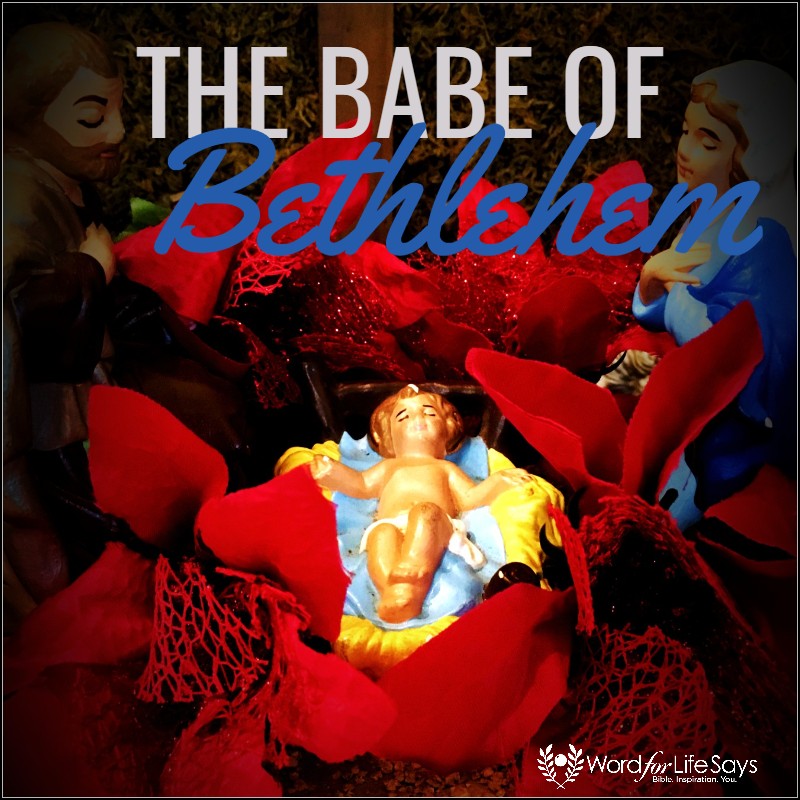
“The Babe of Bethlehem”


“And they said unto him, In Bethlehem of Judaea: for thus it is written by the prophet,  And thou Bethlehem, in the land of Juda, art not the least among the princes of Juda: for out of thee shall come a Governor, that shall rule my people Israel.” Matthew 2:5-6

At the writing of Matthew 2:5-6, over 700 years have gone by since the Old Testament prophet Micah told of a Ruler that would be birthed out of this little town of Bethlehem (Micah 5:2-3).  While over those centuries of waiting, countless babies have entered this world and linked the beginning of their lives to this motherland, only One’s heritage can connect the dots with those long-ago words that herald the coming of the Savior of the world.

He would be the freedom the world has longingly yearned for.  He would be the peace, souls since the beginning of time, have dreamt about.  He would be the Shepherd who would not lead with a rod or a staff, but with His life.  This blessed Babe of Bethlehem would be the all eternal One, whose days are from everlasting (Micah 5:).  He would be the Babe seen as He “who is, and who was, and which is to come, the Almighty,” (Revelation 1:8), and He would change everything the world once knew.

No wonder hearts were stirred.  No wonder souls were searching with excitement.  No wonder kingdoms were in a ruckus.  The Babe of Bethlehem was no ordinary babe.  He was God incarnate, God in the flesh, “God with us,” (Matthew 1:23).  The imperfect people born in this world would need the help of that perfect Savior born in Bethlehem.

The celebration of Christmas is the celebration of that precious Babe who had finally arrived in the world to bring this long-awaited hope.  He that was born as the prophesied Messiah would lift the judgment of condemnation for those who not only seek Him but find Him.  And, they are no longer content to have Him wrapped in swaddling clothes, but their soul’s desire is to wrap Him in their hearts.


“Rise Out of the Shadows of What Others Think”

Photo Credit: Pixabay

Shadowing living is not for the people of God unless they are living under His shadow (see Psalms 91:1).  And, constantly living, ordering, and covering your life by what others think is a trap.  It is not up to you to change people’s minds about you or to constantly seek their approval for this or that.  If you are living for Christ, then you are living to be approved by Him and not to win a positive vote from others (see Galatians 1:10).  Recognize that some people will never look at you in a positive light no matter what you do to “prove” yourself worthy to them.  Some people take very long or will never get over your past or your mistakes and will tend to look at you with eyes of suspicion and mistrust and categorize you as such in their thoughts.  At the same time, there are others who will keep their thoughts focused on what they see as lack and short-comings in your life, and to them, you just don’t measure up.

That’s why the Bible tells us, “The fear of man bringeth a snare: but whoso putteth his trust in the LORD shall be safe,” (Proverbs 29:25).  The job of the Christian, who knows Christ bore the worst part of us and our sins on the cross, and that it is He and His Spirit that is empowering us, is not to live life like cowering dogs with tails tucked in because of people.  It’s not to let oneself continually carry the burden of guilt, shame, or misgivings of your abilities that others try to force on you when Jesus already paid it all, gave it all, and supplied it all.  That kind of life is a trap and it is dangerous because one will always be consumed by what others think.  And, when one is so worried about what others think, they are less focused on what God thinks.

But, God said, “I, the LORD, search the heart, I test the mind, Even to give to each man according to his ways, According to the results of his deeds,” (Jeremiah 17:10, NASB).  God is the only judge whose standards of living we need to be concerned about because He holds the results and the rewards.  He knows our every move in life and even our innermost thoughts (Psalm 139:2).  He knows the works we do (Isaiah 66:18).  He knows the secrets we hold (Psalm 44:21).  He knows the plans we make (Proverbs 16:9).  He knows everything about us and He also knows that Jesus Christ has freed each one of us, that is found in Him, to rise out of the shadows of the thoughts of others that you might live fully in Him and completely for Him.  Trust more in what God thinks as opposed to what people think and choose to live freely in Him today!

“…But Lord, I Thank You!” – Word For Life Says

Job 1:20-22 “Then Job arose, and rent his mantle, and shaved his head, and fell down upon the ground, and worshipped, And said, Naked came I out of my mother’s womb, and naked shall I return thither: the Lord gave, and the Lord hath taken away; blessed be the name of the Lord.  In all this Job sinned not, nor charged God foolishly.”

Ephesians 5:20 “Giving thanks always for all things unto God and the Father in the name of our Lord Jesus Christ.”

1 Thessalonians 5:18 “In every thing give thanks: for this is the will of God in Christ Jesus concerning you.”

Job 19:25-27 “For I know that my redeemer liveth, and that he shall stand at the latter day upon the earth:  And though after my skin worms destroy this body, yet in my flesh shall I see God:  Whom I shall see for myself, and mine eyes shall behold, and not another; though my reins be consumed within me.”

Anytime we see a “…” in a sentence it expresses a train of thought and direction or a transition if you will.  That “…” is very important to this message.

Times of transition can be good and bad.  When one is engrossed in unpleasant circumstances a nice change of pace can be just what the doctor ordered.  It breathes new life into you and lifts your spirits high making you feel as if you are on cloud nine.  At the same time, when one is entering times of affliction, lack of any sort of substandard anything compared to what they are used to, the feelings of dread and just suffering through take over.

There are different seasons that everyone goes through in life.  There are times of joy and there are times of pain.  While we don’t mind dealing with the seasons of joy and happiness that come our way, a whole other story could be told for the times of pain and suffering we encounter.

There are seasons, even for the Christian, that come that are not too pleasant.  There are times when the people of God had to endure trials and tribulations.  There are episodes of turmoil that have wiggled their way into our families, our lives, our jobs, and our finances.

Sometimes difficult and new stuff pops up out of nowhere, things you weren’t looking to happen in this season of life, and it has blindsided you and caught you off guard.  There may be things that surprised you and now you just don’t know which way you are going.  The road hasn’t always been easy to travel.  We are looking for the new.  We need a transition.  We are in need of a “…” moment.

It’s time to move from the victim mentality and don a praise mentality.  It’s time to move from the feeling defeated mentality to no matter what’s going in my life, “…Lord, I just want to thank You” mentality.

A praise mentality says no matter the situation we are going through I still have a reason to worship.  We still have a reason to lift our hands in utter adoration!  We still have a reason to fall to our knees in prayer!  We still have a reason to believe His grace and mercy is at work in our lives!  I still have a reason to say, “Thank You!”

Job is one of the most figurative Bible characters who we surmise as suffering outside of Jesus Christ our Savior.  So, I figured if anybody can teach us how to be thankful despite what we’re going through it could be Job.

Job was a man whom God describes in the Bible as being upright and perfect, Job 1:8.  He is known for turning himself away from the path of evil, not giving it a foothold in his life.  Yet, in his righteous living, he was still susceptible to being tested in some of the worse ways possible.  He lost everything from possessions down to the very people he loved the most in life.

Job’s experiences can be summed up in that one word: suffering. Job knew suffering.  Job knew what it was like to love and lose; to have and to have not.  What’s more is he lost everything at the same time, piling traumatic event after traumatic event on till he thought his heart couldn’t take any more (read Job 1-2 for greater detail).

Sitting in a pile of ashes with seemingly nothing left, could he at least find comfort in the good word of a friend? Will they speak encouragement to help him carry the weight of his burdensome troubles?

The answer sadly is, “No.”  His friends started out with good intentions but by the time they reach chapter 4, Job’s friends became what is known as “miserable comforters.”  They decided to chime in with their opinions of what was right and wrong.  This was where their attempts at comfort went downhill.  They berated Job and blamed him for all that he was going through.

Job literally had no one and the weight of the world was upon his shoulders, but his response to his trials is what blew my mind away.  When things first began to unravel for him, in the verses we read in chapter 1 he shaved his head, fell down on his face and he worshipped.

The words that came out of his mouth were of praise and thanks.  He said, “Naked came I out of my mother’s womb, and naked shall I return thither: the LORD gave, and the LORD hath taken away; BLESSED BE THE NAME OF THE LORD!

That word “blessed” is synonymous with celebrating God with praise in spite of.  That word blessed is acknowledging God is good no matter what the circumstances around me say.  That word blessed is also translated in the New and Old Testament to give thanks!  “Blessed be the name of the LORD!”  Job, with his shaved head of sorrow and humble spirit, gave God thanks amid the sorrow he was going through!

His response reminds me of Psalm 34:1 where the psalmist proclaimed, “I will bless the Lord at all times and His praise shall continually be in my mouth!”  I will thank God always and I will never stop celebrating His goodness!  I will show God gratitude always and I will never stop lifting Him up.  I will appreciate God even in this and I will never stop recognizing that He and He only is God of my life.

Ephesians 5:20 says, “Giving thanks always for all things unto God and the Father in the name of our Lord Jesus Christ.”  My always for all things may not look the way I want it to right now, but Lord I thank You, is what he’s saying!  I am not saying thank you because I like problems, but I am saying thank You because I know the God I serve.  I am saying thank you because He is working on the inside to change things on the outside.  I am saying thank you because God is setting us up for a future that is glorious in Him!  Therefore, “…Lord, I just want to thank You!”

1 Thessalonians 5:18 tells us, “In everything give thanks: for this is the will of God in Christ Jesus concerning you.”  I am in Christ; therefore I give thanks!  I have been washed by the blood, therefore I give thanks.  Yes, life hurts sometimes and yes, the walls come crashing down sometimes, but I owe God a praise.  I thank God for seeing me through every trouble, every storm that blows my way!  “…Lord, I just want to thank You!”

Job’s response went even further than this.  In Job 19, he said, “For I know that my Redeemer lives.”  Things were not exactly turning in his favor.  At that time, his today didn’t look any better than his yesterday.  His friends are still in his face challenging him with their accusations.  But, despite his personal persecutions, he emphatically declares, “I know . . .”

Knowing speaks of assurance. A declaration of knowing tells doubt there is no place here for you. “Know” is certain that this is what it is. And, what he is certain of is “my redeemer liveth.” God is alive and will always be alive. “I am Alpha and Omega, the beginning and the ending, saith the Lord, which is, and which was, and which is to come, the Almighty,” (Revelation 1:8).

“He shall stand at the latter day upon the earth.”  Job knew that God was and is the end-all of all authority, victory and power. Standing upon anything denotes mastery and dominion of said object.  Job knew where his trust lies.  In God who is victorious: “Let God arise, let his enemies be scattered: let them also that hate him flee before him,” (Psalm 68:1).  Paul, speaking of Christ said He, “hath put all things under his feet…,” (Ephesians 1:22).  Even this.

“And though after my skin worms destroy this body, yet in my flesh shall I see God.”  There is hope beyond the here and now. Physically, it didn’t look good for Job. He had “sore boils from the sole of his foot unto his crown,” (Job 2:7).  He, in dealing with the pain of his body and the pain of his heart must have thought there is not that much more time left. At one point of desperation, things had gotten so bad, Job prayed for death (see Job 6:8-9).

Despite it all, he knew that there was a better day beyond the corruption of his flesh.  His body, when the time came, would lie in the ground and the worms would have their way with him, but he looked forward to another glorious time when “in my flesh shall I see God.”  Things were hard for Job, but in his speech, you can still see his faith alive and active in what he believes: and he believes GOD!  Therefore, “I bless God!  I give God thanks!”

Job teaches us how to respond to God in midst of trials and troubles.  He may have been down, especially when his friends attacked him, but he still recognized God for who He is.  He basically transitioned his mentality to shift his focus from what was before him to the God who can save Him.

Yes, he grew weary and even questioned why he was going through what he was going through.  Who wouldn’t?  But, through it all you still see his faith in God come to the forefront in the midst of his story.

In the end, Job was blessed with a double portion of blessings.  God testified of Job to his friends.  God spoke up for Job and said, “My wrath is kindled against thee, and against thy two friends: for ye have not spoken of me the thing that is right, as my servant Job hath,” (Job 42:7).

It’s not too late for God to turn it around and to testify on your behalf.  The week of Thanksgiving is here, and this year is not over yet.  There is still room for a blessing.  And, even if not – if God never does another thing for us, can we say, “Lord, I thank You?”

At the end of the day, as hard as it may be sometimes, we must transition our thinking and say “… But Lord, I thank YOU!”


“Exam Time, Check it Out!”

Photo Source: Pixabay/geralt

“Examine yourselves, whether ye be in the faith; prove your own selves . . .,” 2 Corinthians 13:5

When was the last time we really pushed the envelope with ourselves to see what we have in us?  When watching television, I sometimes come across shows where people are doing what seems to be the impossible; people who love the adrenaline of seeing just how far they can go with a particular feat.  Some of the things I see just make me want to shake my head, and yet, others are actual, honest assessments of endurance; to see if they have what it takes to make it all the way, or to break some sort of record.  It’s a testing of one’s strength and stamina.

Tests, for most people, are not pleasant at all.  It doesn’t matter if its elementary age level test all the way through college, or a learner’s permit; tests make individuals uncomfortable because they are designed to see what one has in them.  If speaking in terms of education, it is probing one’s intellect to see if enough knowledge has been retained and also able to be applied.  If speaking in terms of physical endurance, it is working out in the body to see if one is deficient in a particular area, to point out any weaknesses that need to be strengthened for one to gain a particular goal.

This is why tests are not pleasant.  Because, it goes beyond the façade on the outside to see what one really has in them.  No truer is this more prevalent then in our spiritual lives.  The stuff on the inside is quickly hidden as we enter the church doors on a Sunday morning.  No one else can see the battles or struggles going on inside.  That is, no one else, but God.  “For the LORD seeth not as man seeth; for man looketh on the outward appearance, but the LORD looketh on the heart, (1 Samuel 16:7).  And, it is the test of the heart that really matters; the places where others can’t see.

I live around the corner from a prominent cemetery in our area.  It serves the needs of all people, but they specialize in handling the burials of fire fighters and police officers.  It is not unusual to see a processional of cars go by on any given day to lay a loved one to rest.  Sometimes the line is long and sometimes it is short.  If it is one of those specialized burials, then the whole affair is catered to honor the life of the one who has served.  There are what seems like hundreds of police cars from all over, horses, raised flags, gun salutes, honor guards and the like.  It becomes a beautiful send off in the midst of sorrow.

No matter who it is I often wonder about the individual being laid to rest.  It becomes a stark reminder for me to follow the prudent advice of Paul and examine myself.  We all have areas that need improvement; things that we can do better.  Sometimes a close, personal examination is the only thing that will draw it out of us, to see “whether ye be in the faith.”  Are we where we need to be when our time comes to be at the head of that processional?  Do we have that quality of faith that will settle our eternity positively?  Maybe it’s time we take a deeper look inside of us.

“Stepping Out of Your Comfort Zone”

One thing I have reluctantly had to admit is that I don’t always have Abraham faith.  When one really delves into his story, his story was laden with change.  Change, often times, is something I have been pretty resistant to.

Let’s face it, leaving your own home is no small feat (Genesis 12:1), especially during the Bible era.  In our day we have options to hop back on a plane and usually, there are provisions and backup plans that are available if that adventurous leap of faith didn’t work out.  And, this could all be done in a matter of hours.

I imagine it wasn’t quite that easy back then.  But, then again, maybe that’s a good thing.  Maybe not having easy access to falling back into one’s comfort zone is a blessing in disguise for it forces that venture forward.  It forces us to take on new terrain and enter new callings as we try to acclimate and navigate our new surroundings and circumstances.

Often I feel the ease of looking back hinders our progress.  Unchartered territories can be scary, uncomfortable, and demanding of our time, talent, and emotions.  But what if it leads to something greater?  What if that step of faith allows you to do something miraculous that you could never see yourself doing?  What if it opened new doors of opportunity that you never could have imagined being able to walk through?

I guess that’s why it’s called faith.  Almost blindly, without full perception and without knowing where every piece of the puzzle already fits, we are asked to play along anyway.  Engage in the unknown no matter what the current reality says.  After all, according to the Bible, “Faith is the substance of things hoped for, the evidence of things not seen,” (Hebrews 11:1).

Comfort zones, though they appear safe, are in fact very dangerous.  Walking in the land of familiarity may seem like a sure bet but in them lays unexpected traps.  Traps where dreams lose their freshness.  Traps where ideas lose their strength to be propelled forward.  Traps where talents get wasted in this pit of unseen snares.

God has always wanted the best for all His people.  But, when He calls, it is up to them to make the move.  He may not be asking you to leave your homeland, but where or what do you feel Him pulling you toward?  What area of your comfort zone has become so stale that now it too is very uncomfortable, yet, you’re still too afraid to make a move?

If Abraham had not put action behind his calling, he would have never been dubbed the father of faith, and so many things in our biblical history would not be traced back to his stepping out moment.

I wonder if we boldly step out today, what miraculous future events will point back to our time when we chose to leave the safety of our comfort zones?

One thing is for sure if we stay where we are, and if we keeping doing the same thing over and over again, nothing will ever change.  Don’t substitute comfort and reluctance to change for what can be.  Who knows what God wants to write in your future story?  Step out of your comfort zone and let Him write something amazing!


Limiting God

Almost everybody wants to see a mighty move of God in their life.  But often there are things that get in God’s way; obstacles that act as barriers to blessings.  There are two very specific items I want to deal with in this article that the Bible clearly shows us to be things that limit God’s power to work in an individual’s or a people’s life.

But, before I move any further in this article I want to clarify a few things.  1) Just because one may be in the waiting process, it doesn’t mean these items that are going to be discussed apply to that individual or their situation.  Sometimes, for His own wise reasons, God just has us waiting for His right time to move.  And, 2) The two items that are going to be listed here are not the only things that form themselves as a blockade to one’s blessings.  A truly seeking heart will prayerfully peel back the layers of self for a close-up examination of the inner man to see if there is anything else that may be getting in the way.

As I was reading my Bible, I came across Psalm 78:41 which states, “Yea, they turned back and tempted God, and limited the Holy One of Israel.”  This psalm is reciting Israel’s history and it highlights several of their rebellious moments.  Particularly, God’s deliverance of them from Egypt, and their provocation of Him in the wilderness, through sin.  The verse above brings out those same disobedient actions as limiting God.  Their sin made a mark or drew a line prohibiting them from the fullness of God and what He had to offer.  Rather, they ended up provoking Him to anger.

Disobedience is one thing that will definitely limit God’s ability to work in you, through you, and for you.  Disobedience evicted Adam and Eve from the Garden of Eden (Genesis 3:1-11) when God’s blessing was for them to live in paradise.  Disobedience turned Lot’s wife into a pillar of salt (Genesis 19:17, 26) when God’s blessings wanted to deliver them from that city of sin.  Disobedience caused Jonah to end up in the belly of a fish (Jonah 1:3, 15-17) when God’s blessing was for him to be a great witness to a great city.  And, there are oodles of more cases noted in the Bible.  Disobedience will always forfeit God’s best in one’s life.

As I was pondering this verse in Psalm about limiting God, I was reminded of a time when Jesus wasn’t able to do great works in Nazareth, His hometown.  Matthew 13:58 tells us, “And he did not many mighty works there because of their unbelief.”  He was limited by their unbelief.

Now, we all know by now Jesus’ ability to do absolutely anything.  One thing He won’t do is infringe, encroach upon, or overstep one’s belief.  Mankind is a creature made with free will.  It is His hope and desire that one would fully believe who He is and all that He says He can do.  But, it is a choice that every individual must make, by faith, for his, or herself.

The Bible tells us in no uncertain terms that, “Without faith it is impossible to please him:” (or, to agree with Him), “for he that cometh to God must believe that he is, and that he is a rewarder of them that diligently seek him,” (Hebrews 11:6).

God is the God of all possibilities, but a lack of faith and belief will hinder those possibilities.  Unbelief caused the first group that attempted to enter into the Promised Land to be made to turn back (Hebrews 3:19).  God’s best wasn’t for them to wander in the wilderness for forty years.  His blessing was for them to go in and possess it at that time.  Their own unbelief refused the blessing for them.  Going back to Psalm 78 in the recitation of their history, there are other noted instances where the unbelief of the people came to the forefront (Psalm 78:22, 32).

In the New Testament, if it had not been for Jesus on the boat with His disciples they may have perished in the storm.  Jesus had already done miracles and even taught many powerful parables, but when the storm blew, they freaked out and asked Jesus, “Master, carest thou not that we perish?” (Mark 4:38).  But after Jesus stilled the storm He asked them this one question: “How is it that ye have no faith?” (Mark 4:40).  Faith matters.

Back to Jesus’ experience in Nazareth, in parallel verses found in Mark, the Bible tells us, “He marvelled because of their unbelief,” (Mark 6:6).

God, throughout the Bible, wants the best for His people.  God would rather add blessings to our account rather than subtract them.  If God blesses and takes care of the birds of the air and the grass in the field (Matthew 6:25-29), “shall he not much more clothe you, O ye of little faith,” (Matthew 6:30).

But He says in Matthew, “Seek ye first the kingdom of God, and his righteousness; and all these things shall be added unto you,” (Matthew 6:33; emphasis added).  Go after a life of obedience and faith!  Reject those hindrances to the blessings.  The things that stand in one’s way and limit God’s moving in their life have to be put down so that He can raise His people higher.

We hear a lot of inspirational messages dealing with the subject of “No Limits.”  And, that’s wonderful!  But, in order to have a life of no limits one needs to make sure God isn’t being limited in their life through disobedience and unbelief.

Copyright © Word For Life Says.com (Sharing any posts or lessons can only be done through the share buttons provided on this site from the original posts, lessons, and articles only. You can reblog from the original posts only using the reblog button provided, or share using the share buttons provided from these social media platforms: Facebook, Twitter, or Pinterest, etc., and they must be shared from the original posts only. All other repostings are prohibited. Posts and other items of interest found on this site MAY NOT BE COPIED AND PASTED, downloaded, uploaded, etc to another website or entity not listed (physical or electronic).  See COPYRIGHT PAGE for more details.

“Decorated in Glory”


Being called to the front of the assembly to receive awards of excellence was one of my greatest joys in my private elementary school.  One year I excelled in every category, so instead of receiving multiple name calls of recognition – I was given one all-encompassing award.  I remember not liking it one bit.  An over-all award meant specifics were not being named in front of my peers and others, and I didn’t have the pleasure of playing the role of jack-in-the-box in my seat with my constant popping up and down to receive individual accomplishments.

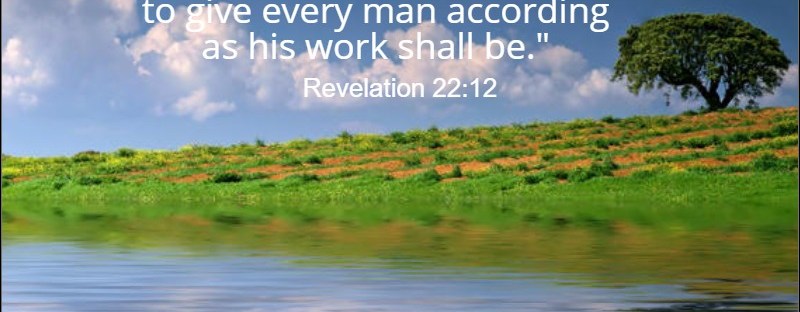
As we get older in life we realize every achievement does not need to come with applause or recognition (at least, not here on earth anyway).  But, in heaven, your works are going to be rewarded.  You and I are going to be decorated in glory.  These rags of humanity will be replaced with robes of righteousness.  As a soldier being medaled for victories, we shall be adorned and dressed in the finest of the heavenlies, telling our story of overcoming.  We made it through and now He speaks, “My reward is with me, to give every man according as his work shall be,” Revelation 22:12.

Take heart.  What you do today may escape the notice of man but the eye of the Lord sees it all.  And, when we get to that heavenly city we will have all the recognition we will ever need.  For it is there we receive the greatest thing no earthly prize can give: “Well done, thou good and faithful servant: thou hast been faithful over a few things, I will make thee ruler over many things: enter thou into the joy of thy lord,” Matthew 25:21, 23.

And, that’s all the glory one needs to be decorated with.

“Your Anointing is Dangerous, but it’s Worth It!”


A shepherd boy who had been forgotten when Samuel came to call, David was treated as a “less than” by everyone who knew him the most, except God.

God, looking past his outer array saw something special in him. He instructed Samuel to “Arise, anoint him: for this is he,” (1 Samuel 16:12). Following God’s lead, “Samuel took the horn of oil, and anointed him in the midst of his brethren: and the Spirit of the LORD came upon David from that day forward,” (1 Samuel 16:13).

Not only had he been empowered and anointed by God’s Spirit on that day, but ever since then, his life has never been the same. Because of the anointing on his life, David experienced ups and downs; he experienced victories, and he experienced times of loss. But, in the end, he is still known as one of Israel’s greatest kings; as the bloodline through whom our Lord Jesus Christ came, and as a man after God’s own heart, Acts 13:22.

What David gained, Saul lost. As David became empowered by God’s Spirit, Saul was stripped of this anointed pleasure and replaced by something evil, 1 Samuel 16:14. This made David a continual target of hatred and adversity. What started out as a relationship of love (1 Samuel 16:21) quickly turned to envy and hatred after David returned from the slaughter of the Philistines because the women of the city sang, “Saul hath slain his thousands, and David his ten thousands,” (1 Samuel 18:7).

Saul knew he was on a downward spiral and as a bird of prey perched to claim his next victim, “Saul eyed David from that day and forward,” (1 Samuel 18:9). Even when David was sent to relieve Saul of the distressing spirit that had come upon him, his life became an endangered treasure as the javelin of hatred whisked through the air intent on taking his life, 1 Samuel 18:10-11.

The LORD was with David. The people loved David. The anointing was on David, but that didn’t mean people wouldn’t try to squash what God was trying to accomplish in his life. David was at times a fugitive, constantly on the run, but he escaped time and again in what I am attributing to the providence of God.

At one point, in a dark cave in the wilderness of En-gedi, David had the opportunity to rid himself of the provocation of Saul once and for all. Yet, David refused to come against anything or anyone who had once been anointed by God, 1 Samuel 24:6.

This did not immediately vanquish Saul’s pursuit of David. Not until Saul perished in the battle against the Philistines did David become free of this enemy who pursued his life, 1 Samuel 31.

Hear this, we may not be aligned to be a great king of Israel or the like, but the Bible tells us, “Ye are a chosen generation, a royal priesthood, an holy nation, a peculiar people,” (1 Peter 2:9a). The anointing on your life makes you and me something and someone special before God.

The rest of 1 Peter 2:9 states, “That ye should shew forth the praises of him who hath called you out of darkness into his marvellous light.” Because God has poured His oil of anointing, through the power of His Holy Spirit, upon each and everyone that belongs to Him, we are designed to make a mark for Him in this world.

This anointing will bring enemies and battles, and yes, at times may seem dangerous, yet, “He which stablisheth us with you in Christ, and hath anointed us, is God,” (2 Corinthians 1:21). God is the one that has anointed us, and “If God be for us, who can be against us?” (Romans 8:31).

Through Jesus Christ; through the power of His Spirit in us, we have been called and blessed to walk in the power of all God designed each one of us to be. Don’t let your circumstances dictate your anointing. Don’t let the Saul’s of your life pierce through what God has divinely appointed for you. David ran for his life yet God’s plan for him never faltered. He was set aside for the Master’s use, and so are we.

There will always been adversity against God’s anointing, but if God anointed you choose today to walk in all that He has blessed you to be. Your anointing may seem dangerous at times, but in the end, it is well worth it. Just ask David.

Photo Source: Pixabay

ADS BELOW ARE NOT REPRESENTATIVE OF THIS SITE’S ADMIN