Increasing Your Spiritual Health | 3 Simple Ways to Build Your Faith

Photo by Victor Freitas on Pexels.com

“But ye, beloved, building up yourselves on your most holy faith…” Jude 1:20

Churches, books, inspirational speakers, and yes, even the internet are not short on teaching and encouraging our need to have faith, but I find that it could benefit us to also give attention to the “how” of building one’s faith. We’ve all read the stories and great exploits done in faith, but how was their faith initiated? How did they get to that point of moving in faith? How was their faith built?

Firstly, one must know and understand that to be spiritually healthy, one must acknowledge and embrace the spiritual. Now, I know this can encompass many thoughts that can lead down various avenues people may reference as “spiritual.” But I am referring to the spiritual associated with God, our heavenly Father, the Spirit (John 4:24), and the source of all things holy spiritual.

With that, building our faith first begins with one’s inner man. When we are born again, we experience what is known as saving faith. That’s the faith that prompts us to turn from the world of sin to Christ. It believes in Jesus Christ as the source of our salvation through His death, burial, resurrection, and ascension (see John 3:16; 1 Corinthians 15:3-4; Acts 2:38; 4:12; Romans 5:8; 6:23). This initiates our relationship with Him. It opens our hearts to that holy communion and fellowship. Without this step, no other can be taken. Without our relationship with God, through Christ Jesus, one’s “faith” is null and void.

But faith does not stop there at that initial step. There is what I like to call living faith. It is the faith that prompts our daily decisions and choices. This lifetime endeavor is determined by how we nourish our faith.

To be a healthy Christian, we must realize the care it takes to accomplish that goal. Therefore, our next step is to be sure we are feeding on what is good for you and your growth. Previously I wrote, “What we put into our bodies matter. The foods we eat can either help or hinder our health… Our spiritual lives work in the same manner.  We are what we eat, spiritually.  If all that we ever digest is the negatives of this world then we are robbing our spirit of the vital nutrients that can increase our awareness and spiritual health.  The Bible says, “Faith comes by hearing, and hearing by the word of God,” (Rom. 10:17).  What we assimilate in our being is what will be produced in our spirit and in our lives.” (What What You Eat/©WordforLifeSays.com) It may sound like a basic principle, but great things are done building on basic principles such as reading the Word of God, praying, worshiping and fellowshipping with other believers. All these things will help us maintain our spiritual diet, ensuring we take in the proper things we need to be spiritually healthy.

Lastly, faith must be exercised. Faith is like a muscle, if it gets used it gets stronger. It will increase. But if it is never put to the test it will not stand when it is tested. David gives us a great example of how to do this. When he faced Goliath, that was not his first encounter with conflict. It was not the first time he stepped out in faith to do the extraordinary.

He had experience in exercising his faith. Before he even knew there was a giant with a bad attitude, David knew what it was to face a bear and a lion head-on (1 Samuel 17:34-37). Those situations gave him exposure to facing unthinkable circumstances. In encountering those, he also encountered what it means to have and build confidence and faith in the God who delivered him.

Our experiences may not come by such drastic means. Sometimes it may come by taking little steps outside our comfort zones to travel into paths unknown. What may seem like unchartered territory to us is the way God may choose to lead us in increasing our faith.

Jude wrote, “But ye, beloved, building up yourselves on your most holy faith…” (1:20). This is not a passive pursuit, but it is a personal one. Something for each individual to walk and live out daily. And as with any good workout regimen, the more consistent we are, the more we do right by our spiritual health, the more positive results we will see in building a stronger faith. We may not see or understand everything before us, but God does. A mature and strengthened faith will fit us for whatever lies ahead.

I know I could have went even deeper with this subject of building one’s faith, but I believe these three basic steps can anyone, in any situation who is serious about increasing their spiritual health.


Tethered in Hope

Hold on, dear friend, for He is present — your solid source of dependence through it all. Whether the days are of peace or as turbulent as the harrowing storms, there is a God we can wholly link to and rely upon. He will never fail you. He will never leave you. He will never forsake you (Hebrews 13:5). He is your steady rock, your hope realized, and He is everything and anything you need in this journey called life (Exodus 3:14).

You may experience ups and downs, but your days are not spent in futility, as if you are fighting against the wind. The Author and Anchor of your soul is holding onto you as you hold on to Him. As the waves crash about, He buoys your head above the waters, keeping you from going under.

No one wants you to have a successful Christian journey more than God the Father. Today, we lean into Him and secure our faith in Him, holding on to His promises, for they are as sure and reliable as He is.

His holy Word encourages us: “Thou wilt keep him in perfect peace, whose mind is stayed on thee: because he trusteth in thee” (Isaiah 26:3). When we depend wholeheartedly on the immovable power, strength, and grace of our God, my friend, we are kept.

Tired of being wind-tossed? Your safety and surety are in the One who’s never moved, shaken, or stirred by what this world is experiencing. His throne is forever (Ps. 45:6), and He is your forever help (Ps. 48:14). Tether your heart to our dependable God and be filled with peace, establishing your hope and faith on Whom you rely: “And the peace of God, which passeth all understanding, shall keep your hearts and minds through Christ Jesus” (Philippians 4:7).

“And now, Lord, what wait I for? my hope is in thee.” – Psalm 39:7

“Be of good courage, and he shall strengthen your heart, all ye that hope in the Lord.” – Psalm 31:24

“The Lord taketh pleasure in them that fear him, in those that hope in his mercy.” – Psalm 147:11

“Now the God of hope fill you with all joy and peace in believing, that ye may abound in hope, through the power of the Holy Ghost.” – Romans 15:13

Image by Michaela from Pixabay

Returning to the Familiar

Returning to the familiar can be like a warm hug.  Its embrace is comfortable and welcoming and can give you a sense of belonging.

But what if you don’t belong in the familiar?  What if the place you are trying to return to is not the best for you?  What if you are trading the comfort of familiarity for the hard choice to move on to something new?

This time of year, many people seek to add new routines to their lives, new regimens to their health, and pursue fresh ideas about what they want out of life.  At the same time, many resolutions fall through because going after the new is not always the easiest thing to do.  The steps forward can be uncomfortable rather than exciting, and truthfully, it can be downright overwhelming.

In the Bible, God knew what was best for His people, but how often did we see that the children of Israel wanted to go back to what was not best, back to the familiar (Numbers 14:4)?  In Egypt, although it was hard, they knew what to expect.  Their routines were predictable, and they knew which course of action would produce which results.

God wanted better for them.  He desired to take them on a life-changing expedition.

But when God wanted them to journey through the wilderness toward their Promised Land, many became apprehensive and disillusioned with the many challenges they faced in order to reach that goal.  And even though Egypt wasn’t good for them and caused them great pain, when times got hard in going toward their place of promise, they wanted to return to the familiar.

With rose-colored glasses on, they talked themselves into believing that the old place where they had come from was not that bad (Exodus 16:3; Numbers 11:5).  They convinced themselves that things were okay with the way they were and to be content with a life that was less than ideal because the prospect of the new brought too many challenges.

In pursuing change, we too must be careful not to romanticize where we have come from or where we are going.  We must remind ourselves there was a reason for wanting change in the first place.  To continually look back and want to throw oneself into that familiar embrace can sabotage where you are trying to go and what you are trying to do (Proverbs 4:25-27; Luke 9:62). 

At the same time, to look ahead as if everything is going to be peaches and cream, as if moving forward is going to produce automatic results without hurdles to overcome, is setting oneself up for a fairy-tale ending without experiencing the tragedy of the plot in the middle.  It just does not happen that way.

Although this is just the beginning of the year, as it progresses, there will be a few times, if not many, when the pull to the familiar will seek to lure you back (Isaiah 43:18-19).

The familiar, when used correctly, can be an incredibly beautiful thing.  But, if you are after real change this year, and the familiar place is not what was producing it, challenge yourself to stay the course, to keep looking ahead (Philippians 3:12-14).

Prayerfully, seek God’s wisdom and guidance, and as with the children of Israel, He will gladly show you the way (Exodus 13:21; Psalm 25:4-5).    

Yes, this year, the new may have its challenging moments, but when you reach your place of promise, think of the beauty there to behold.

More Than Noise

Photo by rovenimages.com on Pexels.com

“Though I speak with the tongues of men and of angels, and have not charity, I am become as sounding brass, or a tinkling cymbal. And though I have the gift of prophecy, and understand all mysteries, and all knowledge; and though I have all faith, so that I could remove mountains, and have not charity, I am nothing. And though I bestow all my goods to feed the poor, and though I give my body to be burned, and have not charity, it profiteth me nothing.” 1 Corinthians 13:1-3

“Roses are red, Violets are blue…” is the beginning of many poems regarding love. Going back through history with many versions attached, these words declare verbally (and sometimes funny), how one feels about another.

But I will tell you, while words are nice and sweet and can edify (Proverbs 16:24; 25:11; Ephesians 4:29), there is no substitute for love produced through action.

Substance. Making a difference. The Christian life is so much more than just talking and telling. It is more than sounding off. It is love with motion behind it outflowing from one’s being into the lives of others.

With God, love is the number one principle because He is love (1 John 4:16). As those who have been adopted by His grace, love should be our natural response to others as well. It’s the emblem of our Heavenly Father, not carried about on our chests or in words only, but seared upon our hearts that propel us forward.

Love is our regulator.  It governs how we behave and treat one another. It serves as a thermometer to measure that we are fervent in the things that God is fervent for.

Love is about serving like Christ did (and we all know what His love looked like, John 3:16). It is about using what God gifted you with to help one another under that same umbrella of love He operated in.

Since that’s exactly how God does everything, under love, we too should be imitators of our Father.  Outside of it, we are “nothing.”  It doesn’t matter how important one thinks their gift or contribution is, if love is not the motivator, then the gift is empty.  That box has nothing to offer the world except a bunch of extra noise; or, as Paul puts it, “sounding brass, or a tinkling cymbal.”  

I don’t know about you, but I want to be more than noise, more than fluff.  I want to have substance working at the core of my gift.  I want lives to be changed and hearts to be lifted through what God has placed in me.  This should be the attitude of every Christian.  Not to get ahead, but to make a difference.  Being a vessel so filled up with love and anointing, mixed with His special stuff He put on the inside of us so that we could help shift the atmosphere for some and help steer them on a course closer to God.

This can only happen if love is operating at the helm.

Jesus once encouraged His disciples by telling them, “For verily I say unto you, That whosoever shall say unto this mountain, Be thou removed, and be thou cast into the sea; and shall not doubt in his heart, but shall believe that those things which he saith shall come to pass; he shall have whatsoever he saith,” (Mark 11:23).  Yet, Paul says you can “remove mountains” all you want, but if love is not what’s lifting your faith to do that than forget about it. Although the action may be carried out, the core of it doesn’t mean anything.

Paul was not by any chance contradicting what Jesus said because everything Jesus did from birth to death was done through love, and His disciples are always expected to follow in His footsteps.

Neither is Paul denouncing doing things for others such as one who would “bestow all . . . goods to feed the poor” or the sacrificing of oneself (he gave the example of being “burned”); but what he is saying is that without love, it will not last; it will not make the difference that He is looking for and it will not please God because we are told, “And whatsoever ye do, do it heartily, as to the Lord, and not unto men,” (Colossians 3:23) and that can only be done through love.

Later, Paul wrote another letter to the Corinthian church that says, “Wherefore we labour, that, whether present or absent, we may be accepted of him,” (2 Corinthians 5:9).  Everything must be “accepted of him.”  But, without love (charity) all our works and gifts put together add up to a big, fat zero.  There is no gain or “profit” from it.

The world we live in today needs more than talk, more than noise. They need to see, feel, and experience the substance of love in action through those who have been redeemed by love in action.

Today, look for ways to be more than noise. Look for ways to be that force of love in action for another.

Blessings~

Translated

“Who hath delivered us from the power of darkness, and hath translated us into the kingdom of his dear Son” (Colossians 1:13).

Ah, my friends, a mighty move took place at the moment of salvation. Physically, your position and status of life may not look different, but spiritually, you were translated. You were taken from where you were and placed in a better position. You were taken from the power of darkness and delivered to the kingdom of the Lord Jesus Christ.

Who you were identified as before no longer exists spiritually. While in this world there may be remnants, consequences, or residual effects from the previous walk, but in the spirit, we are free. In this new life, those identification markers do not exist. The things that bound you or tried to attach themselves to you are subdued under the power of God because now you are His. Now, you breathe the breath of each day differently. Now, your walking and thinking patterns do not follow those previous footsteps. Now, there is freshness. Now, you are a member of a new family. Now, you are a part of a kingdom that will never fail, nor will it ever fade. Eternally, you have been translated there.

Now, our souls are happy. Now, even if it doesn’t seem so conditionally, our spirits have been liberated to new life. Now, because of what He has done, we cannot help but “Giving thanks unto the Father, which hath made us meet to be partakers of the inheritance of the saints in light” (Colossians 1:12).

The move has taken place. And thanks be to the Lord Jesus Christ “In whom we have redemption through his blood, even the forgiveness of sins” (Colossians 1:14), has secured this translation for us.

Text Free Image by Gordon Johnson from Pixabay

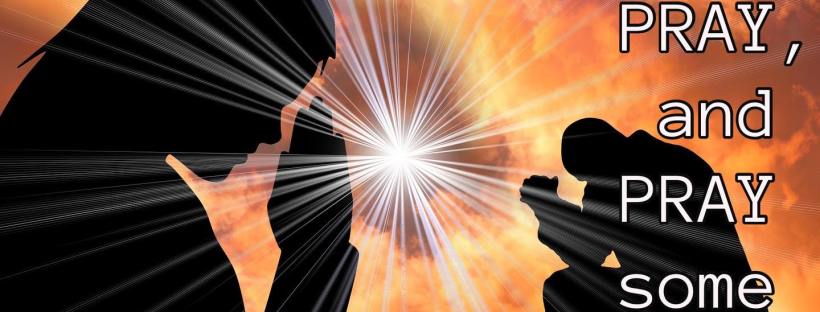
Pray, Pray, and Pray Some More | A 1 Minute Word of Encouragement

Thank You, God, that You have given us this position of prayer, this place of power where we can not only lay our burdens down but also intercede for others in our lives. We can pray for the unsaved status of souls, petition heaven for healing or hurts, and seek answers for the help we need. A place where God, our Heavenly Father, has given us permission to come and unload it all before His holy throne.

When we fall on our knees, we fall before the only true King of all eternity. In that place, we open our hearts and pray.

Therefore, don’t stop. Pray, pray, and pray some more. Never give up. God hears and is attentive to the praying heart of His children: “𝓑𝓾𝓽 𝓿𝓮𝓻𝓲𝓵𝔂 𝓖𝓸𝓭 𝓱𝓪𝓽𝓱 𝓱𝓮𝓪𝓻𝓭 𝓶𝓮; 𝓱𝓮 𝓱𝓪𝓽𝓱 𝓪𝓽𝓽𝓮𝓷𝓭𝓮𝓭 𝓽𝓸 𝓽𝓱𝓮 𝓿𝓸𝓲𝓬𝓮 𝓸𝓯 𝓶𝔂 𝓹𝓻𝓪𝔂𝓮𝓻. 𝓑𝓵𝓮𝓼𝓼𝓮𝓭 𝓫𝓮 𝓖𝓸𝓭, 𝔀𝓱𝓲𝓬𝓱 𝓱𝓪𝓽𝓱 𝓷𝓸𝓽 𝓽𝓾𝓻𝓷𝓮𝓭 𝓪𝔀𝓪𝔂 𝓶𝔂 𝓹𝓻𝓪𝔂𝓮𝓻, 𝓷𝓸𝓻 𝓱𝓲𝓼 𝓶𝓮𝓻𝓬𝔂 𝓯𝓻𝓸𝓶 𝓶𝓮.” 𝓟𝓼𝓪𝓵𝓶 66:19, 20

Text Free Image by Gerd Altmann from Pixabay

Beautifying the Temple

“And he garnished the house with precious stones for beauty…” 2 Chronicles 3:6

The house of God, have we lost our wonder and respect for such an edifice? The specified place designated for drawing near to His holy presence. The place ordained by His Spirit for the saint to come and be refreshed, and to learn what thus saith the Lord. The place for the sinner to find refuge if he will but hide himself in the salvation offered there.

Solomon did everything in his power to beautify this sacred space. Other kings had other gods with other buildings of worship. But for the King of all kings, and the one and only true living God, Creator of all, he knew he could not do enough to honor the Holy Presence there. Yet, he would do what he could because God deserved this and more for this designated meeting place.

The wonder and respect for the Lord God over all compelled him to lay out the best of the best to honor Him.

But Jesus said, “Destroy this temple, and in three days I will raise it up” (John 2:19), speaking of His body regarding His death and resurrection. Paul goes on to say, “What? know ye not that your body is the temple of the Holy Ghost which is in you…” (1 Corinthians 6:19).

Are we taking such care as Solomon did in beautifying and honoring the temple? How are we caring for the temple within?

My friends, whether we be in a building we designate as the house of God, or be it the temple within, let us remember to bring honor to the place where God’s Spirit dwells. Never lose the awe and wonder over such a sacred assembly.

Take away anything that mars the beauty, stop any practice that brings dishonor and replace it with ornaments of grace (Proverbs 3:22), remembering we are “Always bearing about in the body the dying of the Lord Jesus, that the life also of Jesus might be made manifest in our body” (2 Corinthians 4:10).

May we bring our own precious stones of praise and honor to beautify His house.

In the finiteness of our humanity, Father God, You deserve so much more glory, honor, and praise.

Text Free Image by Arek Socha from Pixabay

Change Your Perspective

“Therefore they that were scattered abroad went every where preaching the word.” Acts 8:4

Is the glass half empty or half full? This question determines whether one is a pessimist or an optimist.

How we view things determines how we categorize them, and how we categorize them determines how we deal with them.

For those in the early church, the persecution they encountered could have been categorized as disastrous. The afflictions they faced brought real suffering, and decisions had to be made for individuals to leave their homes and places of comfort and flee. But in the fleeing, something amazing happened: Their faith went with them.

The cause of Christ that burned within refused to be extinguished. Rather, through the hardships they dealt with, it found a place to grow.

In the scattering of the faithful, more people were introduced to Jesus Christ, our Lord.

The situations you face today may not be pleasant, and you may not fully understand how it can work out for your good (Romans 8:28), but God does, and He is “able to do exceeding abundantly above all that we ask or think, according to the power that worketh in us,” (Ephesians 3:20).

Father God, I may not understand everything I encounter today, but I know that You always have my best in mind, and it is in Your hands I place my trust. In the name of Jesus Christ, our Lord, I pray, AMEN.

The Mercy Seat

“And seeth two angels in white sitting, the one at the head, and the other at the feet, where the body of Jesus had lain.” John 20:12

The morning after the high Sabbath had come.  Certain women, of whom Mary Magdelene was one, approached the tomb of their beloved Savior, intent on properly honoring Him with the spices they brought for His body.

Upon arrival at the tomb, the object of their desire for coming was not there.  The body of Jesus, whom they wanted to pay homage to, was gone.

They felt the earthquake, they saw the angel that sat upon the stone that had been rolled from the door of the tomb, and they heard his words: “And the angel answered and said unto the women, Fear not ye: for I know that ye seek Jesus, which was crucified. He is not here: for he is risen, as he said. Come, see the place where the Lord lay,” (Matthew 28:5, 6).

The women were entrusted to share the news with Jesus’ disciples, but one had come back.

Mary, whose encounter with Jesus freed her life of demonic oppression (Mark 16:9), needed to take a deeper look into the tomb, and what she saw may have reminded her of God’s presence and work among His people: “But Mary stood without at the sepulchre weeping: and as she wept, she stooped down, and looked into the sepulchre, And seeth two angels in white sitting, the one at the head, and the other at the feet, where the body of Jesus had lain,” (John 20:11, 12). 

Not being a high priest, or any priest for that matter, and never seeing it for herself, but hearing stories of what it may have been like, I wonder if she pondered this question in her heart, “Is this what the mercy seat was like?”

The Mercy Seat in the Old Testament

The book of Exodus describes the meticulous instructions and care to follow on the building of everything regarding the Tabernacle as prescribed by God, including the mercy seat: “And thou shalt make a mercy seat of pure gold: two cubits and a half shall be the length thereof, and a cubit and a half the breadth thereof.  And thou shalt make two cherubims of gold, of beaten work shalt thou make them, in the two ends of the mercy seat.  And make one cherub on the one end, and the other cherub on the other end: even of the mercy seat shall ye make the cherubims on the two ends thereof,” (Exodus 25:17-19).

This is the sacred place of which God said, “And there I will meet with thee, and I will commune with thee from above the mercy seat, from between the two cherubims which are upon the ark of the testimony…” (Exodus 25:22). 

This is the place of atonement, where the high priest would enter with the blood of animals once a year for the sins of the people.

The Mercy Seat in the New Testament

But when Jesus died on the cross, that protocol had been done away with.  The old covenant had been replaced by the new: “Jesus, when he had cried again with a loud voice, yielded up the ghost.  And, behold, the veil of the temple was rent in twain from the top to the bottom…” (Matthew 27:50, 51).

The way that only one man could enter once a year (Hebrews 9:6) had now been opened for all who would believe: “But Christ being come an high priest of good things to come, by a greater and more perfect tabernacle, not made with hands, that is to say, not of this building; Neither by the blood of goats and calves, but by his own blood he entered in once into the holy place, having obtained eternal redemption for us,” (Hebrews 9:11, 12). 

Whether or not what she saw reminded her of that ancient ark, what she saw was the sure sign that the price had been paid once and for all.  Not only for her sins but for the sins of the world (John 3:16) if they would only believe: “For Christ is not entered into the holy places made with hands, which are the figures of the true; but into heaven itself, now to appear in the presence of God for us… but now once in the end of the world hath he appeared to put away sin by the sacrifice of himself,” (Hebrews 9:24, 26b). 

What Jesus’ Fulfillment Means to Us

Mercy, by definition, is God not giving us what we deserve.  We deserved the penalties.  We deserved the price that was extracted through His holy sacrifice.  When He laid down His life, He did so for us, not Himself.

Now, all hindrances are removed.  All excuses, as they say, are nailed to the cross.  Believers far and near have no reason, like Mary, to draw near in complete faith: “Having therefore, brethren, boldness to enter into the holiest by the blood of Jesus, By a new and living way, which he hath consecrated for us, through the veil, that is to say, his flesh; And having an high priest over the house of God; Let us draw near with a true heart in full assurance of faith, having our hearts sprinkled from an evil conscience, and our bodies washed with pure water. Let us hold fast the profession of our faith without wavering; (for he is faithful that promised;),” (Hebrews 10:19-23). 

Paul, in his second letter to the Corinthian church, called God, “The Father of mercies” (2 Corinthians 1:3), and rightly so.  Just a glimpse into any of our lives would reveal how much His love and long-suffering nature have held, blessed, kept, provided, and more, despite our undeserving state.

And still today, mercy is available as we are invited not to draw near to the tomb, but to the throne: “Let us therefore come boldly unto the throne of grace, that we may obtain mercy, and find grace to help in time of need,” (Hebrews 4:16). 

Once the way was not as easily accessible, but now we are beckoned to come.  And not just come, but “come boldly.”  Jesus paid the price for our mercy.  The “new and living way” has been opened.

While the old mercy seat is gone, Jesus Christ has more than satisfied the atoning cost of the new covenant, establishing now, that through Him, is where we find the grace and mercy we need.

Friend, come boldly to Jesus Christ if you need mercy.

“And his mercy is on them that fear him from generation to generation.” Luke 1:50

“But ye are a chosen generation, a royal priesthood, an holy nation, a peculiar people; that ye should shew forth the praises of him who hath called you out of darkness into his marvellous light; Which in time past were not a people, but are now the people of God: which had not obtained mercy, but now have obtained mercy.” 1 Peter 2:9-10

Text Free Image by Arnie Bragg from Pixabay

Marching in the Mulberry Trees

“And it shall be, when you hear the sound of marching in the tops of the mulberry trees, then you shall advance quickly. For then the Lord will go out before you to strike the camp of the Philistines.” 2 Samuel 5:24, NKJV

Have you ever seen one of those action movies where the characters involved in a grand scheme or plan must synchronize their watches to ensure everyone is moving at the right time?

When a big feat is to take place, it is good to make sure everyone is on the same page and moving at the proper time.

That’s what proper planning does.  It views the many angles of the story, not just the present or temporary moments, but all the moments included, and it determines when the best time is to do A, B, or C.

On the opposite end of this spectrum is impulsiveness.  It doesn’t always take every matter into account and consider all the possibilities.  It tends to move forward hastily, and sometimes prematurely.

Sometimes it is hard to determine the difference between impulsiveness, instincts, and zeal, but there is a difference.

When David finally became king, not just recognized as king in Hebron, but over all Israel (2 Samuel 5:1-3), there were still yet contentions he faced, including their long-time enemy, the Philistines.

If you will remember, David had great success as a youth in slaying their most prominent warrior, Goliath (1 Samuel 17).  But during the time between that battle and the one facing the Philistines here in 2 Samuel 5, David experienced many other inner and outer battles along the way.

In that, he grew not only in stature but in ability.  Through his fearlessness, faith, and fervor, he became a much-feared warrior and king.

But David didn’t allow his previous accomplishments to cause him to rest on his laurels.

There were still battles to fight and enemies to conquer, so David pursued and engaged – but not without God’s guidance.

He could have chalked up his previous victories as the all-encompassing plan to win all his battles, but he didn’t.

And that’s a good thing because, with each battle he faced God gave him different directions on how to gain a successful ending.

Here in chapter 5, in one battle David was instructed to “go up” (v. 19), and in the other, he was told to “circle around behind them, and come upon them in front of the mulberry trees. And it shall be, when you hear the sound of marching in the tops of the mulberry trees, then you shall advance quickly. For then the Lord will go out before you to strike the camp of the Philistines” (Vv. 23, 24, NKJV; emphasis added).

This was going to be the battle of battles with the Philistines.  After this event, they would no longer be a threat to Israel.  But to get there, David had to wait for the right time.

Back to our opening illustration of synchronization, time is everything.  But the caveat to that is, that the way we view time and the way God views time is vastly different (2 Peter 3:8).

Twice in verse 24, you see the word “then,” with God giving specific instructions on when David is to make his move.  Any time outside the premise of that “then,” was not his moment to advance.

If David wanted to ensure success, he had to synchronize his move with God’s “then,” with God’s timing.

While zeal, fervor, and experience are great, if it’s out of alignment with God’s moment to progress, it won’t work.

Our God works specifically and in order.  And more often than not, His design will not be on our timetable.

As infinite as He is, so are His plans and abilities, and through it all, taking the omniscient view of our lives, He knows when, where, and how something should be done.

But it is when we fight with impatience and frustration, when we can’t see it moving or how it will turn out, we find ourselves in precarious situations or wanting to give up altogether.

We don’t want “then,” we want now!

Instant victory.  Instant gratification.  And instant applause and promotion.

But when we pause at the “then” moments, we are simultaneously taking that occasion to learn how God is leading and giving Him room to work.

Listen for the sound of God’s moving.

This was David’s experience.  Not until he heard the marching in the tops of the mulberry trees was it safe for him to proceed regardless of his personal abilities or how he previously won battles.

My friend, God has a specific plan for you.  One drawn up and orchestrated out of His divine love.  Do not rush ahead of God.  He has an appointed time for everything (Ecclesiastes 3:1; Habakkuk 2:3).

Learning to wait for your “then” moments requires trust which is why Proverbs famously reminds us to “Trust in the Lord with all thine heart; and lean not unto thine own understanding. In all thy ways acknowledge him, and he shall direct thy paths” (Proverbs 3:5,6).

We will never have the full understanding God does for our lives (Isaiah 55:8,9), but what we can have is our trust and belief that He is perfect, His ways are perfect, and God knows what He is doing.

I don’t know what marching in the tops of mulberry trees audibly sounds like, but I do know what it sounds like in our lives of faith: waiting.

Waiting, patience, and being still when everything says go is hard.  But if that going is not marked by God’s stamp of approval, it will all be for nothing.

And if you are longing for me to give you specifics or signs or systems to find out how to know when your “then” moment is, I can’t.

Our Heavenly Father has a perfect timeline for everyone’s life, and He only can tell you when it’s your time to advance.

In the meantime, you may have to do one of the hardest things – continue to wait, continue to have patience, and continue to be still.

In these moments of not going, let them be filled with the activity of seeking God, seeking His face and His perfect will for your life.  Let them be filled with drawing ever nearer to His presence and learning to recognize and become more familiar with His moving in your own life.

Then, when you figuratively hear the marching in the tops of the mulberry trees (or by whatever means that you beyond a shadow of a doubt know it’s God’s prompting and leading you), you will know that your time has come, and you can advance forward successfully.

That second “then” assured David that by following God’s way, He was the one going before him.  And whatever we are doing, above all else, this is how we should want to win our victories: following God’s ways and Him going with us.

“But they that wait upon the Lord shall renew their strength; they shall mount up with wings as eagles; they shall run, and not be weary; and they shall walk, and not faint.” Isaiah 40:31

“For I know the thoughts that I think toward you, saith the Lord, thoughts of peace, and not of evil, to give you an expected end.” Jeremiah 29:11

Text Free Image by Mariya from Pixabay