Sunday School Lesson – “Serving Like the Good Samaritan” Luke 10:25-34

Photo: Pixabay/jclk8888

VERSE DISCOVERY: Luke 10:25-34 (KJV, Public Domain)

In a previous article I wrote: “Have a Warmer Heart than Usual” it reads:

“I live in a good distance from the church I attend which means lots of driving and observing time.  Often times, on my way to church I look out my window and I stare.  Some may think I’m being rude, but it’s the exact opposite.  I look at that person sitting on the stoop or the one standing on the corner, and I wonder.  I wonder about what they may have gone through that day.  I wonder what it is that made that person look so sad.  I wonder about the mom on the bus stop struggling to get stroller, baby, and bags onto the bus.  I wonder.

How often have we really taken the time to see beyond the people to see the person, to really try to imagine you walking in the shoes of another?  To see what’s going on inside the person without judging the outside?  To show a tender heart instead of a wagging head, disapproving eyes and a simple tsk-tsk-tsk?

When it’s all said and done, “Mercy rejoiceth against judgment.” (James 2:13).  Thinking beyond oneself is going to win out hands down every single time.  Why?  Because, that’s what Christ did for us!  He looked beyond Himself, beyond His own needs and hurts, and saw what the world needed.  The world needed a Savior.

Even during His earthly ministry it has been noted in the Bible, “But when he saw the multitudes, he was moved with compassion on them” (Mt. 9:36).  To the leper, “And Jesus, moved with compassion, put forth his hand, and touched him…” (Mk. 1:41).  To the mom who just lost her son, “And when the Lord saw her, he had compassion on her…” (Luke 7:13).  To the world, “Father, if thou be willing, remove this cup from me: nevertheless not my will, but thine, be done,” (Luke 22:42).  To His enemies, “Father, forgive them; for they know not what they do…” (Luke 23:34).

That’s how warm Jesus’ heart was toward people.  He had a genuine concern to look at people from the inside out instead of the outside in.  He saw the person beyond the people.  So, did the Good Samaritan.  Despite the rejection and animosity he faced down through the years at the hand of the Jews, this man needed his help.  He was not going to let those years of bitterness or even indifference change his resolve to help the one that needed him now.

Paul taught the church in Ephesus to “And be ye kind one to another, tenderhearted, forgiving one another, even as God for Christ’s sake hath forgiven you.  Be ye therefore followers of God, as dear children; And walk in love, as Christ also hath loved us, and hath given himself for us…” (Eph. 4:32-5:2).

Imitators of God are concerned with the person on the inside.  An imitator of God is warmed to the plight of the human in humanity and sees them for who they are.  They are someone that God is concerned enough about to allow His Son to die.  Shouldn’t we then have that same compassion for one another? (© Word For Life Says).

Compassion, though it may sometimes seem like it in today’s world, does not have to be a lost art.  We, if we follow the example of Jesus and of those who have gone on before us, can make a difference, not only in one life but in the world, positively, for change.  Through our service to our fellow man we are demonstrating the service of God’s love toward us; thereby serving God as well.

Considering all that Christ has done for us, we have a unique responsibility to show one another love through service.  Think about the life of Christ.  He said, “Even as the Son of man came not to be ministered unto, but to minister, and to give his life a ransom for many,” (Matthew 20:28).  Here is the King of all kings and the Lord of all lords, humbling Himself as a commoner and serving.  His focus was never on receiving anything, yet to give it all.  The pattern of the Church and those who would serve God should be so likeminded.

A Lawyer Questions Jesus

Luke 10:25-29 “And, behold, a certain lawyer stood up, and tempted him, saying, Master, what shall I do to inherit eternal life?  He said unto him, What is written in the law? how readest thou?  And he answering said, Thou shalt love the LORD thy God with all thy heart, and with all thy soul, and with all thy strength, and with all thy mind; and thy neighbour as thyself.  And he said unto him, Thou hast answered right: this do, and thou shalt live.  But he willing to justify himself, said unto Jesus, And who is my neighbour?” 

It amazes me the lengths that individuals will go through to try to prove a point.  Certain men would show up at different points: Pharisees, Herodians, Sadducees and scribes, “to catch him in his words,” (Mark 12:13).  These questionings were not honest inquiries rather ways to try to catch Jesus in a trap; “that they might take hold of his words, that so they might deliver him unto the power and authority of the governor,” (Luke 20:20; read 9-19 for more).

The lawyer in today’s lesson was an expert in the religious law or the Law of Moses.  His life revolved around the teachings thereof; he knew and possessed the expertise of the time; a very thorough knowledge of what was written and passed down from generation to generation amongst the people of God.

Here, he used his “knowledge” to try to trap Jesus in something he and the other Pharisees and scribes could eventually use against Him in their pursuit of His demise.  We see a similar situation play out in Matthew 22:35 and Mark 12:28.

But Jesus turned the tables on him and asked him, “What is written in the law? how readest thou?” Obviously, Jesus knew of the man and who he was and being the expert that he is should be able to readily answer His question as well.  It’s one thing to throw questions at another in an attempt to embarrass or discredit; it’s totally different to be put on the spot and have to answer for some theological debate for oneself.  Jesus redirected the man’s question to let the law, which he is so familiarly acquainted with, speak for itself.

Note: “All scripture is given by inspiration of God, and is profitable for doctrine, for reproof, for correction, for instruction in righteousness,” (2 Timothy 3:16).  If there is any question regarding the Word, refer back to the Word.  Jesus used God’s Word a lot in many defenses.

What I like is Jesus didn’t initiate this.  It was the pride and headiness of those who sought to disprove Him that caused them to pose these questions.  Yet, at every turn, Jesus, in His quiet and humble way, puts people in their place causing the opposite results in what they were hoping for.

The lawyer’s response was not unexpected.  He answered with his recitation from a portion of the Law which begins in Deuteronomy 6:4 with the words, “Hear, O Israel: The Lord our God is one Lord:”; also known as the Shema (compare Mark 12:29).  This prayer was recited two times a day.  Its instructions are very poignant and meant to solidify one’s relationship and that of his house with God (see Deuteronomy 6:4-7).  What great principles on rearing a godly house and drawing one closer to God!  Here, the lawyer answered confidently, “Thou shalt love the LORD thy God with all thy heart, and with all thy soul, and with all thy strength, and with all thy mind” reciting from the familiar verse 5 in that same set of verses from Deuteronomy 6.

Note: Because we love Him, everything within our inner being should be wholly and completely devoted to God: the emotions, mind, will, and strength.  This goes beyond lip service.  God wants your inner man devoted to Him rather than surface professions of faith.  Why do you think God so approved of David despite his many, many faults?  He did so because David’s heart was for God.  Act 13:22 says, “I have found David the son of Jesse, a man after mine own heart…”  David worshiped God and was devoted to God from the heart.  His inner man was tied to God.”

The second portion of his recitation came from Leviticus 19:18b where it states, “Thou shalt love thy neighbor as thyself.”  Love is a working of the inner man and is concerned with outwardly working itself in the lives of others seeking their betterment.  Love doesn’t look to loop-hole another to get out of service, rather, it asks, “What can I do for my fellow man?”  One of the greatest things we or any of us can give to another is love (1 Corinthians 13:13)

Jesus supports his answer as being correct by stating, “Thou hast answered right: this do, and thou shalt live.” In Matthew 22:40 Jesus states, “On these two commandments hang all the law and the prophets.”  Everything is fulfilled in the following of these two commandments.  We are not saved by our works, but our works prove to whom we belong.  “Even so faith, if it hath not works, is dead, being alone,” (James 2:17; read vss. 14-18).

“But he, willing to justify himself, said unto Jesus, And who is my neighbor?” Oh, here’s where we get into the pudding of the matter.  I don’t know why this man felt a need to justify himself but the answer that Jesus gives was most certainly not what he was looking for.  When one is seeking to justify themselves, in my opinion, they are trying to clear themselves from any wrongdoing.  Being that this man was, in fact, a pro at the dealings of the Mosaic Law, he wants to be found, again in my opinion, “right” in his dealings with his fellow man.

Though his title of a lawyer was not as we use it today in a court of law, let’s think about that court of law scene for a moment.  People go to court to try and convict.  Others are there to defend or justify; presenting an excuse to the judge/jury of why they should be cleared of any charges.  Again, strictly my opinion, but to me, this man was fishing to be exonerated of any wrong toward his fellow man.  But, let’s find out Jesus’ answer in the matter.

Jesus’ Answer to the Lawyer

Luke 10:30-34 “And Jesus answering said, A certain man went down from Jerusalem to Jericho, and fell among thieves, which stripped him of his raiment, and wounded him, and departed, leaving him half dead.  And by chance there came down a certain priest that way: and when he saw him, he passed by on the other side.  And likewise a Levite, when he was at the place, came and looked on him, and passed by on the other side.  But a certain Samaritan, as he journeyed, came where he was: and when he saw him, he had compassion on him, And went to him, and bound up his wounds, pouring in oil and wine, and set him on his own beast, and brought him to an inn, and took care of him.”

To answer the lawyer’s question, Jesus, as He was known to do, told a very illustrative story instead of giving a simple verbal response.  What He was about to pose would be thought-provoking and should cause some to question whether they are truly serving in the love of God.

Many of us are very familiar with this story so I won’t bore you with the obvious.  What I do what to point out is the “opposite” ingredient that plays into the mix of things in Jesus’ story.  On the one hand, we have not one, but two men who are considered righteous workers in the temple of God: the priest and the Levite.  Both men have been ordained and appointed special positions and special tasks on behalf of the temple, the people, and God.

On the other hand, we have a despised reject of Jewish society, the Samaritan.  One who most would have been considered a nobody yet became the hero of Jesus’ story and is definitive proof that no matter how others view you, you can still make an impact in this world for God.

Another “opposite” ingredient to look at is not who any of the men are; rather, their actions in coming across the beaten man.  The two, the priest and the Levite, for whatever reason chose not to help or even come near to see about the battered man.  Some say they wanted to remain ceremonially clean or the like.  We just don’t know the exact cause for why they reacted the way they did but Jesus made it a point to tell the story like this, so it is more than noteworthy to pay attention to.

To Jesus, their actions were not only opposite of the Samaritan’s, who showed compassion; but their actions were also opposite of what God was looking for.  For by the time we reach the end of the story, not in today’s printed text, Jesus asked, “Which of these three, thinkest thou, was neighbour unto him that fell among the thieves?” (Luke 10:36).

The lawyer to whom He presented the question answered, “He that shewed mercy on him,” (Luke 10:37a).  Jesus followed with this very important instruction: “Go, and do thou likewise,” (Luke 10:37b), showing what kind of service God was looking for from His people.

We serve God not just in the confines of the church building or temple; we serve God when we reach out to our fellow man and become vessels for His mercy to work through.

This was a prime teaching opportunity to let them know how they treat people matters.  Treat people as you yourself would want to be treated or how you think Jesus would treat them.  “God is love,” (1 John 4:8), and those that belong to Him should operate in love also.  Everybody wants to be loved and feel the concern of mercy and compassion this man showed, no matter their status in life.

God’s people should know how to treat people in any situation or circumstance, whether the times are favorable or not.  God’s people must respond the same way Jesus did.  Philippians 2:5 tells us, “Let this mind be in you, which was also in Christ Jesus.”  See people how Jesus sees them.  What is His attitude toward another in need?

Loving people; serving them and treating them as one would want to be treated is a priority for living as God’s people and serving Him.

As was already stated in our introduction, we are to “And be ye kind one to another, tenderhearted, forgiving one another, even as God for Christ’s sake hath forgiven you.  Be ye therefore followers of God, as dear children; And walk in love, as Christ also hath loved us, and hath given himself for us…” (Eph. 4:32-5:2).

In order to serve God, we must serve people also.  The Good Samaritan became a great and enduring example through the ages of how through serving one’s fellow man we also serve God.

PDF Printable Sunday School Lesson Pack (With easy to read instructions following the P.E.A.R.L. format on how to conduct each lesson with areas for adding personal notes): Sunday School Lesson – Serving Like the Good Samaritan

Suggested Activities:

Object Lesson Idea from: “Living Love: The Parable of the Good Samaritan” (go to page 3 for the Object Lesson to lead into this lesson titled, The Present Predicament )

“Bible Verse Review Activity” (Click to find a great game that’s easy and inexpensive to help students memorize Bible verses)

In getting across the idea of “Serving,” I used crafts incorporating the hands since that’s what we use the most to serve and help others (see below). Enjoy!

LACE IT UP HANDPRINT:

One craft idea is to simply have students trace their handprint on cardstock or use this Handprint Craft Cutout printed on cardstock for this project because it’s sturdier, and then cut it out.   Using a hole punch, go around the outer edges of the picture of the hand (these will be for lacing).  Students can then decorate and lace with ribbon, colorful shoelaces, or yarn (note: if you use ribbon like I did, you may want to wrap the ends in tape to make a little aglet like on a shoelace to make it easier to navigate through the holes).  You or your students can even write a memory verse reference directly on your project. (Example pictured below)


 

HANDPRINT NECKLACE:

Continuing with our hand theme, students can make a Handprint Necklace (example pictured below – I used construction paper with tracing).  Students can trace their handprint onto construction paper or cardstock or use this Handprint Craft Cutout and cut out.  Punch one hole in the top.  Using ribbon or yarn and cut up straws, beads, or whatever you have laying around (even loop cereal 😉 Let them have fun and decorate it as they see fit. You or your students can even write a memory verse reference directly on your project.

Adult Journal Page: Serving Like the Good Samaritan

Kid’s Journal Page: Serving Like the Good Samaritan

Blank Journal Pages (to cover what interest your class): Blank Adult and Kid’s Journal Pages

Draw the Scene: Serving Like the Good Samaritan Draw the Scene

Word Search: Serving Like the Good Samaritan Word Search  Answers: Serving Like the Good Samaritan Word Search Answers

Crossword: Serving Like the Good Samaritan Crossword  Answers: Serving Like the Good Samaritan Crossword Answers

Word Scramble: Serving Like the Good Samaritan Word Scramble  Answers: Serving Like the Good Samaritan Word Scramble Answers

“The Good Samaritan Bible Lesson” (Here you will find many, many activities to choose from including WWJD? activities, coloring pages, take-home pages, and more.  Enjoy!)

“The Good Samaritan Crafts for Kids”

“The Good Samaritan Bible Lesson/Little Blots of Faith”

“Bible Fun Zone/Good Samaritan”

“The Good Samaritan” (Several unique activities, printables and story illustrations for the telling of the lesson.  Enjoy!)

“First Aide Bag” (A very original, cheap and easy craft your students can put together.  I would suggest adding a bible verse from the lesson as a reminder of what was covered.  Enjoy!)

“Doctor’s Bag”

“I Can Be a Service Star” (Sugardoodle.net)

“Serving Others”


Sunday School Lesson – “Love Your Enemies” Matthew 5:38-48

Photo: Pixabay

VERSE DISCOVERY: Matthew 5:38-48 (KJV, Public Domain)

What does true Christianity look like?  How do people know that we are a child of God?  What marks us as being different from anyone else?  When we decided to do the things that God does and love the way He loves, then people can readily tell whom we belong; who is our Father.

In life, there are going to be times of being wronged, hurt, and/or misunderstood.  What do we do in these instances?  Do we vehemently seek revenge or try to get even? 

No.  Part of being a Christian or living life as God’s people is to extend God’s love to those who refuse to show us kindness in return.  It’s going against our human nature to when offenses happen by extending the heart of God to those who oppose or war against us; to those whom one would consider being an enemy.

When we choose to say no to what our flesh wants to do and yes to what is right in God’s sight, then we are on the right pathway of living lives that are pleasing to Him.  We are purposefully living like Jesus did – choosing to love, even the worst, like God does.   

Going Against Human Nature

Matthew 5:38-42 “Ye have heard that it hath been said, An eye for an eye, and a tooth for a tooth: But I say unto you, That ye resist not evil: but whosoever shall smite thee on thy right cheek, turn to him the other also.  And if any man will sue thee at the law, and take away thy coat, let him have thy cloak also.  And whosoever shall compel thee to go a mile, go with him twain.  Give to him that asketh thee, and from him that would borrow of thee turn not thou away.”

It is during His teaching on the Sermon on the Mount where Jesus lays out the disciplines necessary for a life lived for the Kingdom of God, where this lesson text is found.  In that teaching, He clarifies a few points He wants His followers to adhere to.  Jesus wanted to set aright some misunderstandings concerning the Law and offers a more Kingdom-approached mindset.

Part of laying out the law in Exodus was to ensure that when people committed a wrong against another or injured another, proper retribution was made.  This portion of the law, and similar portions like it, were put in place to keep everything fair and balanced, not only for the offended but for the offender.  Both parties would be protected to ensure neither party involved would go overboard in exacting from the other what they believed was due them or deserved.  Those who were to receive something in return for an offense would get what’s coming to them – nothing more, nothing less.  And, those who caused the offense or injury, those on the punishment end of the spectrum would get or give what is their due – nothing more, nothing less.

Basically, laws like this not only promoted fairness, but it limited extreme actions from being taken by another for the least little bit of infractions.  The punishment had to fit the crime and not be exaggerated, out of the proportion, or go too far for what was called for.

That’s the meaning behind the phrase/verse, An eye for an eye, and a tooth for a tooth, (compare Exodus 21:24).  It was not a license for retaliation and revenge.  It was a law commanded to keep everything fair and balanced.

Supporting the true nature of the law, Jesus taught, rather than seek revenge, go above and beyond what normal human nature would demand of in times of offense.  Do something radically different: Resist not evil.  Proverbs 20:22 explains it like this: “Say not thou, I will recompense evil; but wait on the LORD, and he will save thee,” (compare 1 Peter 3:9).  The focus of a Kingdom-minded individual is not seeking to render evil for evil.  The focus of a true child of God is to live life like Jesus did, with love and compassion toward one’s fellow man.  Even their enemies.

And, if it’s the Law the people want to quote to justify themselves in rendering to another their “just desserts,” then they also must remember that it is also the Law that states, “Thou shalt not avenge, nor bear any grudge against the children of thy people, but thou shalt  love thy neighbour as thyself: I am the LORD,” (Leviticus 19:18).

People can be very self-seeking in matters of avenging and holding grudges.  These two things will tear relationships and people down rather than heal and restore.  And, that defeats the purpose of the original intent of the Law.

Therefore Jesus, to further drive His point home, continues: But whosoever shall smite thee on thy right cheek, turn to him the other also.  During the Roman occupation, people in Jesus’ day would suffer many assaults from these soldiers and governing authorities.  And, surely too, there would be times when one’s own countrymen would strike out in unjust ways.  But, the response of the Christian is not to behave in the same manner as they.  They were to respond opposite of what society or their normal human character would dictate.

Other scenarios Jesus gave, such as, if any man will sue thee at the law, and take away thy coat, let him have thy cloak also, and, whosoever shall compel thee to go a mile, go with him twain, demonstrate the previous point He made about not getting caught up in revenge, retaliation, and the seeking of one’s rights.  Here, He is instructing them to once again, go above and beyond that, to the point of doing more than what was insistent upon.  The Christian is not called to live and act like everyone else, getting caught up in matters that surround the here and now or being entangled with the cares of this life, 2 Timothy 2:4.  He/she is called to live and love people as God Himself does, and that often goes against the grain of human nature.  And, sometimes it will require one to do extra or more than necessary in order to show the love of God.

When someone has been hurt and broken the last thing on their mind is the benefit of the one who has inflicted the harm.  Jesus, knowing what He was going to accomplish on the cross, was teaching His disciples to operate in this world as He would.

All these things that He speaks of in the above verses, all the scenarios of wrongs committed, were to be situations that Jesus Himself would live through, love through, and forgive the offense of others through.  They would be things that He would actually demonstrate through His own life: “He was oppressed, and he was afflicted, yet he opened not his mouth: he is brought as a lamb to the slaughter, and as a sheep before her shearers is dumb, so he opened not his mouth,” (Isaiah 53:7).

Jesus was teaching His disciples that to live as Kingdom-minded people, you will not only have to go against the status quo and cliques of society, but you will also have to fight against your own natural inclinations that don’t want to seek the good of those who cause harm.

In addition to that, be giving.  Give to him that asketh thee, and from him that would borrow of thee turn not thou away.  God gave us the greatest gift one could ever hope to receive, the Lord Jesus Christ (John 3:16), who would freely and willingly suffer so much wrong to lay His life down for us.  Is it too much for us to give as He gave to those in need?  Jesus didn’t turn others way or turn a blind eye to genuine needs.  Do we?

Love Like God Loves

Matthew 5:43-48 “Ye have heard that it hath been said, Thou shalt love thy neighbour, and hate thine enemy.  But I say unto you, Love your enemies, bless them that curse you, do good to them that hate you, and pray for them which despitefully use you, and persecute you; That ye may be the children of your Father which is in heaven: for he maketh his sun to rise on the evil and on the good, and sendeth rain on the just and on the unjust.  For if ye love them which love you, what reward have ye? do not even the publicans the same?  And if ye salute your brethren only, what do ye more than others? do not even the publicans so?  Be ye therefore perfect, even as your Father which is in heaven is perfect.”

Love your enemies.  Loving neighbors is one thing, but the words love and enemies don’t exactly coincide with one another according to human standards; rather, they usually collide with one another head-on.  But Jesus is calling us to use God’s Spirit within us to operate on a supernatural level that surpasses our view which is usually obstructed by this natural world.

When one is an enemy that means they are against us.  Yet, Jesus’ command is to love them anyhow.  Show them the same compassion as He did when He allowed them to drive the nails through His hands and feet.  He told His disciples in the Garden of Gethsemane at the time of His arrest, “Thinkest thou that I cannot now pray to my Father, and he shall presently give me more than twelve legions of angels?” (Matthew 26:53).  He could’ve taken care of His enemies with one swoop of prayer, yet love compelled Him to offer Himself for their release from sin.  He had a heavenly view for loving His enemies.  In that, He laid it all down for them and us and showed just one of the ways one can do good to them that hate you.

Pray for them which despitefully use you, and persecute you.  No one said these sayings were easy, because they’re not.  If they were, everybody would be doing them.  But they are doable because everything that Jesus is telling His followers to do, He did, or would go on to do.

They cursed Him, yet He prayed for them: “Father, forgive them; for they know not what they do,” (Luke 23:34).  They struck Jesus on the cheek (John 18:22; compare with Matthew 5:39 from above), and they divided His clothes (Luke 23:34).  He went through it all and never sought His own revenge but continued forth in love.

Following His teachings, even when it’s hard, and mimicking the things He did, helps to identify the Christians as true children of your Father which is in heaven.  In normal, familial relationships there will be some sort of resemblance between parents and children.  Certain traits, characteristics, features will be prominent, assuring the fact that this child belongs to me.  And, the same is true for those who claim to be spiritual children of God.  As His children, some of Him should be seen in us.  As we were originally created to be in the image of God (Genesis 1:26-27), so too should we represent His image as we have been recreated with a new nature (2 Corinthians 5:17).

God is a good God (Psalm 100:5) and “He that doeth good is of God: but he that doeth evil hath not seen God,” (3 John 1:11).  In His goodness, He does not withhold the natural graces of nature even from those who are considered evil and unjust.  He allows the sun and rain to benefit them all.  How much more in kindness should we operate if we are mimicking our Father?

It is easy for anyone to love or salute those who love and salute them back.  Jesus, to make sure they understood this concept, used as an illustration one of the most despised people of their day: the publicans.  The publicans were the local tax collectors on behalf of the Roman government.  They placed exorbitant charges on their fellow countrymen and gave to the Romans what belonged to them while pocketing the overages for themselves.  Because of this, they were greatly despised among their own people and seen as traitors.

With that being said, Jesus is making His point, that it is no great thing to treat ones with love and compassion who show the same toward you.  Even the most despised of people usually do the same.

It is when one goes above and beyond – that’s what sets them apart as true children of God.  When one can step away from their natural tendencies of wanting to retaliate and get even and decide to walk the path that leads us to perfect living; one that mimics our Father which is in heaven is perfect, can they truly say they are loving as God loves.  They are seeing people the way the Father sees them.  That even enemies, and those that war against us, would be viewed in our sight the same way the Father views them and treats them.

After all, we were once enemies as well.  “But now in Christ Jesus ye who sometimes were far off are made nigh by the blood of Christ.” (Ephesians 2:13).  But, in His love, “God commendeth his love toward us, in that, while we were yet sinners, Christ died for us.” (Romans 5:8).  He didn’t wait until we were doing right and walking perfect and checking off all the right boxes and treating everyone fairly before He died for us.  He did it while we were in our mess.  He did it while we were sinners.  He did it while we were enemies.  Now, it’s our turn to show others, even those who may hurt us and be called our enemies, the love of God in us.

PDF Printable Sunday School Lesson Pack (With easy to read instructions following the P.E.A.R.L. format on how to conduct each lesson with areas for adding personal notes): Sunday School Lesson – Love Your Enemies

Suggested Activities:

Adult Journal Page – Love Your Enemies

Kid’s Journal Page – Going the Second Mile

Memory Verse: Love Your Enemies Memory Verse

Draw the Scene: Love Your Enemies Draw the Scene

Word Search: Love Your Enemies Word Search  Answers: Love Your Enemies Word Search Answers

Crossword: Love Your Enemies Crossword  Answers: Love Your Enemies Crossword Answers

Word Scramble: Love Your Enemies Word Scramble  Answers: Love Your Enemies Word Scramble Answers

“Love Your Enemies Activities” (Tom and Jerry anyone?  Yes, what a great example about getting along with someone you are always fighting with.  Enjoy!)

“Love Your Enemy Children’s Lesson”

“Love Your Enemies Group Activities” (Several great ways to bring this lesson out.  Enjoy!)

“Love Your Enemies Activity Sheets”

“What Would Jesus Do Printable Craft”

“What Would Jesus Do Activities” (I really like the section on Visual Activities.  I think using this technique is a great way to open up and introduce the students to this week’s lesson.  Enjoy!)

“What Would Jesus Do, Mirror”

“Jesus Knocking Craft” (Though this does not go with today’s verse, I think this easy printable can be nicely applied to today’s lesson.  Use it to make a Jesus door hanger that will help remind students to ask WWJD?  Enjoy!)


Sunday School Lesson – “A Sheep or a Goat?” Matthew 25:31-46

Photo: Pixabay/Zahaoha

VERSE DISCOVERY: Matthew 25:31-46 (KJV, Public Domain)

Much of our culture is self-seeking and gives evidence to a heart that is far from the heart of God.  And, as time goes by it seems to infect more and more like a disease that won’t be snuffed out.  But snuff it is what God is asking for as we raise for ourselves flags of surrender to be waved in service for Him toward others.  That we give up of us and pour out all for Him; that we show the world a thing or two about true love; true appreciation to a Savior who poured out all for us.

The Bible tells us, “In all things shewing thyself a pattern of good works…” (Titus 2:7).  It’s time for a new pattern to be laid.  The foundation of self must dissipate, and new groundwork needs to be found on who He is the head of our life and all that He has already done.  It’s time to show the world a different lifestyle.

The Bible assures us, “That they do good, that they be rich in good works, ready to distribute, willing to communicate; laying up in store for themselves a good foundation against the time to come, that they may lay hold on eternal life,” (1 Timothy 6:18-19).  In that, we see that our service toward one another matters and what we do or do not do for others on behalf of our Lord  – the impact of it can even show up in our eternal reward or eternal punishment.

In this lesson, Jesus teaches the difference between the two.  He shows His disciples the difference of being classified as a sheep or a goat.

 When the Son of Man Comes

Matthew 25:31-33 “When the Son of man shall come in his glory, and all the holy angels with him, then shall he sit upon the throne of his glory: And before him shall be gathered all nations: and he shall separate them one from another, as a shepherd divideth his sheep from the goats: And he shall set the sheep on his right hand, but the goats on the left

Today’s lesson is known to be a part of The Olivet Discourse which begins at Matthew 24:1. Throughout this “discourse,” Jesus is telling or prophesying of times to come.  He even foretold of the destruction of the temple which would occur in A.D. 70 (see Matthew 24:1-2).

I absolutely love how this portion of the discourse begins with the word “when.”  Not “if,” but “when.”  And the “when” that is being referenced is the second coming of Jesus Christ.

Jesus is coming back!  Point blank.  And, one’s eternity is measured by how they lived on earth.

A large part of biblical preaching and teaching is focusing on and preparing people for the return of Christ that they might reign with Him when He comes.

When some look down through the pages of history, they don’t see the chain of events that ushered in the plan of salvation for mankind.  They believe or don’t believe based off what they see with their natural eyes and their short-sighted minds and/or ideas. They don’t see the promise of the good to come that God has already laid up for our futures. They don’t see the fulfilling prophecies that brought God’s kingdom closer to man.  When they look down through history all they see is a normal course of events.  They don’t see this beautiful, epic love story where God tries to woo mankind back to Himself.

But, rest assured, there is a future after this and Jesus says “when” the time comes, this is what’s going to happen.  The events that He speaks of are truths that are still unfolding.  We haven’t seen it all yet, but it’s coming.

The Bible reassures us, “For the Lord is not slack concerning his promise, as some men count slackness,” (2 Peter 3:9a).  We are also told, “For the vision is yet for an appointed time, but at the end it shall speak, and not lie: though it tarry, wait for it; because it will surely come, it will not tarry,” (Habakkuk 2:3).

Know this, every word of God, for good or bad, for happy or sad, for those who believe or for those who don’t believe, will come to pass!  For right now He is withholding His hand of judgment so that as many people as possible can be saved.  For us and everyone out there, there is hope for salvation.  God’s waiting won’t add to the demise of people as in the.  Rather, His “longsuffering” is because He is “not willing that any should perish, but that all should come to repentance,” (2 Peter 3:9b).  Will all come and accept a relationship with God through Jesus Christ?  No.  But God loves mankind so much that He wants to get as many people as possible out of the waters of sin that seek to drown them for all eternity.

And, although He has held off, eventually, judgment will come.  2 Peter 3:10 says, “But the day of the Lord will come as a thief in the night…”

Here, in this lesson, we see we have a King, and the King is coming back.  A time of judgment takes place; a division from those who believe and those who don’t believe; from those who are considered righteous and those who are called cursed: the sheep and the goats, if you will.

“When” this takes place, our lesson tells us “the Son of man shall come in his glory, and all the holy angels with him, then shall he sit upon the throne of his glory.”  Daniel paints a very similar picture to the one Jesus is describing.  He writes, “I saw in the night visions, and, behold, one like the Son of man came with the clouds of heaven, and came to the Ancient of days, and they brought him near before him.  And there was given him dominion, and glory, and a kingdom, that all people, nations, and languages, should serve him: his dominion is an everlasting dominion, which shall not pass away, and his kingdom that which shall not be destroyed,” (Daniel 7:13-14).    

Here, we see Jesus obtained His dominion and declaring His reign in these verses and was found sitting “upon the throne of his glory.”  Have you ever read a story when a king rides up in battle with his armies, obtains the victory and sits down on the throne declaring his rule?  This is the picture that comes to my mind when I read this verse.  Jesus, the King of all kings, comes with His entourage of angels; His armies of heavenly hosts and sits in His place of honor where He will rule and reign forever into eternity.

He is that prophesied “righteous Branch, and a King shall reign and prosper, and shall execute judgment and justice in the earth,” (Jeremiah 23:5; emphasis mine); and here it can be said, “Let the judging commence.”

“Before him shall be gathered all nations: and he shall separate them one from another, as a shepherd divideth his sheep from the goats.”  When He does return, as already stated, a judgment will commence, and this judgment should be taken seriously for in it those living for Christ will be blessed and those who are not shall be condemned.

Here, He is gathering “all nations,” meaning no one on the face of this earth will be exempt from this judgment.  Everyone will be examined, and everyone will be separated “as a shepherd divideth his sheep from the goats” according to how He classifies them.  Psalm 4:3 lets us know, “That the LORD hath set apart him that is godly for himself…”

We see here, those who are classified as being “sheep” are placed “on his right hand.”  Repeatedly in the Bible, we see the phrase “at the right hand” is used.  For example, in the Old Testament, God said, “Fear not… I will uphold thee with the right hand of my righteousness,” (Isaiah 41:10; emphasis mine).  And, in the New Testament Hebrews 12:2 says, “Looking unto Jesus the author and the finisher of our faith; who for the joy that was set before him endured the cross, despising the shame, and is set down at the right hand of the throne of God,” (emphasis mine).

The “right hand” is a special place.  It gives the idea that those on the right are in a more honored and favored position than others.

The opposite occurred for those who are considered “goats” for they were placed “on the left.”  In the following verses, we will really see the impact of what being in those opposite positions means.

To the Sheep He Says…

Matthew 25:34-40 “Then shall the King say unto them on his right hand, Come, ye blessed of my Father, inherit the kingdom prepared for you from the foundation of the world: For I was an hungred, and ye gave me meat: I was thirsty, and ye gave me drink: I was a stranger, and ye took me in: Naked, and ye clothed me: I was sick, and ye visited me: I was in prison, and ye came unto me. Then shall the righteous answer him, saying, Lord, when saw we thee an hungred, and fed thee? or thirsty, and gave thee drink? When saw we thee a stranger, and took thee in? or naked, and clothed thee? Or when saw we thee sick, or in prison, and came unto thee? And the King shall answer and say unto them, Verily I say unto you, Inasmuch as ye have done it unto one of the least of these my brethren, ye have done it unto me.”

First, the “King” addresses those “on his right hand.”  With that, He calls them, “Blessed of my Father” and pronounces that they will “inherit the kingdom prepared for you from the foundation of the world.”

In John 14:3 Jesus stated before His death, “And if I go and prepare a place for you, I will come again, and receive you unto myself; that where I am, there ye may be also.”  Here, we see the “King” has come back as promised and is now speaking directly to those have become inheritors of that prepared kingdom; to those that He is receiving to Himself.

Their service gave proof/evidence of the faith they claimed they possessed causing them to think outside of the box of their own little world into that of others who have needs.  But let us remember, we are not saved by our works, but our works prove to whom we belong.  “Even so faith, if it hath not works, is dead, being alone,” (James 2:17; read vss. 14-18).

Jesus gave the reason they were in their favored position: on a human level, they acted as He would in their care and concern for the “brethren.”  To do this means their faith was put into action, and that manifested itself through service, despite the cost to their personal being.

In another portion of Scripture Jesus said, “He that loveth his life shall lose it; and he that hateth his life in this world shall keep it unto life eternal.  If any man serve me, let him follow me; and where I am, there shall also my servant be: if any man serve me, him will my Father honour,” (John 12: 25-26; emphasis mine).  Here, we see them receiving that honor as the “blessed of my Father.”

Basically, payday has come, if you want to call it that.  Just as in a natural job, so it is in the spirit.  Those who work good works will be rewarded.  That’s why Hebrews 13:16 tells us, “But to do good and to communicate forget not: for with such sacrifices God is well pleased.”  God is pleased when we offer our lives in service and the doing of good works.  Colossians 3:23-24 supports this by telling us, “And whatsoever ye do, do it heartily, as to the Lord, and not unto men; Knowing that of the Lord ye shall receive the reward of the inheritance: for ye serve the Lord Christ” (emphasis mine).  There is a reward at the end of the services we offer on behalf of the Lord.

The “sheep” know what it is to put their faith into action and make a difference in the world around them.  Faith is not silent.  Faith is full of action.  Faith is alive.  Faith is shared through works to testify of its genuineness and sincerity.  Faith does more than move mountains; if it is lived out in the lives of the men and women of God, it can move hearts toward salvation!

When one is living a life of faith people should be able to look at their life, their actions, as signs of accreditation that we belong to God.  They should be able to tell by how we operate and carry ourselves through our display of service, that we live what we talk.

James, in his book, wrote, “If a brother or sister be naked, and destitute of daily food, And one of you say unto them, Depart in peace, be ye warmed and filled; notwithstanding ye give them not those things which are needful to the body; what doth it profit?” (James 2:15-16).

James saw the emptiness in just words alone.  Speaking “peace” without lifting a finger to physically help satisfy the present need, to him it was not true faith.  True faith believes and then allows that belief to be put to work.  True faith has heavenly aspirations that work out to show good on earth.  So, he asked, “What doth it profit” without it?  What is each of us doing now that is benefiting his fellow man and the kingdom of heaven?

Words without supplying to the physical, emotional or spiritual comfort of another in distress are what these two verses speak of.  But, all too often, how many times have we heard or spoken of what should be done to help others without putting in some work to help society move toward that goal?

Jesus gave props to those who stepped in to help others.  James mentioned two issues that Jesus also stated: naked and food, giving further verification of the call to help one another in need.

Jesus said to those who helped the “hungred… thirsty… stranger… naked… sick… prisoner,” it was as if they were helping Him.  Their care for their fellow man matters in the eyes of heaven.  They supplied for and filled needs wherever it showed up and were blessed because of it.

The “sheep” didn’t understand when they ever saw Jesus in the needs described and gave aide to Him.  But, “the King shall answer and say unto them, Verily I say unto you, Inasmuch as ye have done it unto one of the least of these my brethren, ye have done it unto me.” 

Treat people like you would treat Jesus.  Wow!

Again, let us remember, we are not saved by works: “For by grace are ye saved through faith; and that not of yourselves: it is a gift of God: Not of works, lest any man should boast,” (Ephesians 2:8-9).  Rather, works give proof to the living faith on the inside: “Even so faith, if it hath not works, is dead, being alone,” (James 2:17).

To the Goats He Says…

Matthew 25:41-46 “Then shall he say also unto them on the left hand, Depart from me, ye cursed, into everlasting fire, prepared for the devil and his angels: For I was an hungred, and ye gave me no meat: I was thirsty, and ye gave me no drink: I was a stranger, and ye took me not in: naked, and ye clothed me not: sick, and in prison, and ye visited me not. Then shall they also answer him, saying, Lord, when saw we thee an hungred, or athirst, or a stranger, or naked, or sick, or in prison, and did not minister unto thee? Then shall he answer them, saying, Verily I say unto you, Inasmuch as ye did it not to one of the least of these, ye did it not to me. And these shall go away into everlasting punishment: but the righteous into life eternal.”

Now it’s time to turn our attention to those on the “left;” “the goats.”  These are spoken to and receive the opposite of the sheep because what they did, or in this case, did not do, was the opposite.

Instead of a reward of inheritance of a prepared kingdom, they were condemned to “everlasting punishment;” a place of “everlasting fire, prepared for the devil and his angels.”   Instead of being called “blessed” and “righteous,” they were marked as being “cursed.”

Jesus presented the same scenarios to the left residents that He did to those on the right and in each instance the words “no” or “not” stands out.  They were given the same chances and opportunities to help and make a difference, but they refused.  This is contrary to kingdom living.  That’s not who Jesus is or what He’s all about.  Them that want to be where He is should be as He is.

Does this remind us of somebody?  Remember the story of Lazarus and the rich man (Luke 16:19-31).  Both the “goats” and the “rich man” had the opportunity to help but were not moved with compassion to do so.  Both received the same end.  Here, we already stated above what the goats received.  In the case of the rich man the Bible tells us, “In hell he lift up his eyes, being in torments…” (Luke 16:23).

To reiterate the blessings of those who choose to selflessly serve others, Jesus affirms that the righteous will go “into life eternal.”  Awesome!

How one treats and serves people, or not, has an everlasting impact, for reward or punishment.

PDF Printable Sunday School Lesson Pack (With easy to read instructions following the P.E.A.R.L. format on how to conduct each lesson with areas for adding personal notes): Sunday School Lesson – A Sheep or a Goat

Suggested  Activities:

Draw the Scene: A Sheep or a Goat Draw the Scene

Activity Sheet: A Sheep or a Goat Activity Sheet

Memory Verse: A Sheep or a Goat Memory Verse

Kid’s Journal Page: Kid’s Journal Page – A Sheep or a Goat

Adult Journal Page: Adult Journal Page – A Sheep or a Goat

Word Search: A Sheep or a Goat Word Search  Answers: A Sheep or a Goat Word Search Answers

Crossword: A Sheep or a Goat Crossword  Answers: A Sheep or a Goat Crossword Answers

Word Scramble: A Sheep or a Goat Word Scramble  Answers: A Sheep or a Goat Word Scramble Answers

“Unto the Least of These” (Many activities including some for group participation and coloring page for younger students.  Enjoy!)

“The Sheep and Goats Coloring Page” (Older students)

“The Parable of the Sheep (and the Goats)” (Games, activities and even self-portraits with a twist.  A lovely idea.  Enjoy!)

“Sheep or Goats?” (Activities, group ideas, and more.  Enjoy!)

“Game: Sheep and Goats”

“Parable of the Sheep and the Goats Coloring Page”

“Retelling the Story of the Sheep and Goat with Felt” (What an interesting way to tell this popular story for little ones to understand and enjoy.)

“Sheep Storytime” (Here is a cute, little adorable, stand alone sheep that your students can make to accompany this week’s lesson.  Enjoy!)

“How to Draw a Goat” (Though we really want to focus on being sheep, your older students may enjoy to learn how to draw a goat, step by step.  This could be a great reminder of what not to be.  Enjoy!)

“I Can Follow Jesus by Helping Others Coloring Sheet”

“The Spiritual Discipline of Serving”


Sunday School Lesson – “Jesus’ Birth” Luke 2:8-20

VERSE DISCOVERY: Luke 2:8-20 (KJV, Public Domain)

Is there any time of the year that’s more special or rings with more sentiments than Christmas?  It stands out as iconic since the days of our youth.  It’s a time of year that’s separated from the rest.  Despite one’s belief, there is always a different feeling in the atmosphere during this time of the year.  People seem to be kinder and more patient with one another.  Many feel charitable and look at his fellow man with a more compassionate heart during this season.  This time of the year; this moment of celebration affects all.

Many are very familiar with the backdrop of this lesson.   Caesar Augustus had issued a decree for all the world to be taxed (Luke 2:1).  From there, families were to report to the place of their lineage to be accounted for.  Lineage played a key role in so many aspects of the Bible.  Even when it came time to “tax,” people had to line up and file in at the place of their birth or where their family hailed from.  One’s bloodline, one’s tribe were factors in their inheritance, land rights and so on.  These are matters that those who seek to tax would be greatly interested in.

Augustus thought in and of himself that he was responsible for sending families back to their “own city;” back to the place where their ancestors were from. When, in actuality, God was using him to line up everything according to His holy prophecies that were spoken through the years.  This is why, though to our eye’s times may seem troubling and hard to understand, yet we never know what God is doing behind the scenes.  The people may not understand the need to be forced into travel to undergo taxing, but God was lining them up for their greatest deliverance yet!

Joseph and Mary were not exempt and were forced, despite being far along in her pregnancy, to travel the approximately 90-mile journey from Nazareth to Bethlehem to participate in the taxing process.

While she was there it became time for her to deliver her firstborn child.  Luke 2:6-7 states, “And so it was, that, while they were there, the days were accomplished that she should be delivered.  And she brought forth her firstborn son, and wrapped him in swaddling clothes, and laid him in a manger; because there was no room for them in the inn.”

It is here we pick up in today’s lesson where the role of the shepherds came into play.  They show us the birth of our Savior, the Lord Jesus Christ, is not just a passing event.  Rather, it is a reason to stop and celebrate God and give Him all the glory that is due to His holy name.

Angelic Announcement to the Shepherds

Luke 2:8-9 “And there were in the same country shepherds abiding in the field, keeping watch over their flock by night.  And, lo, the angel of the Lord came upon them, and the glory of the Lord shone round about them: and they were sore afraid.”

“Shepherds” were considered some of the lowest of people during the Bible era.  Men who spent their time with animals roaming the fields to find pasture for their flocks.  Yet, on this night they were the first chosen to hear of this good news.  They were elevated above kings to receive the birth announcement of the King of kings.

Can you imagine being in that field on that night then suddenly light shining from what seems to nowhere appear with a glorious siting of “the angel of the Lord?”  In an era of no electricity, with only the light from the fire they sat around (if they were lucky enough to have one), an illumination of greater proportion appeared and made them “sore afraid.”  I think it’s safe to say, if it were me, I would have been just as “afraid” as they were.  It’s not an everyday occurrence to see the power of the Lord manifested in the siting of one of His “angels.” Who knows why he was here.  “Angels” have been long known as messengers from the Lord and here this one appears with the greatest revelation of all time; one that the “shepherds” are privileged to hear first.

Luke 2:10-12 “And the angel said unto them, Fear not: for, behold, I bring you good tidings of great joy which shall be to all people.  For unto you is born this day in the city of David a Saviour, which is Christ the Lord.  And this shall be a sign unto you; Ye shall find the babe wrapped in swaddling clothes, lying in a manger.”

In an effort to alleviate any trepidation the shepherds were feeling with encountering God’s angel, he spoke to them words that were meant to bring comfort and assurance.  He said, “Fear not” (a greeting that is meant to calm).

The appearance of these heavenly messengers can be a little much to take in.  When the one angel sat upon the stone that was rolled away from Jesus’ tomb the Bible tells us, “His countenance was like lightning, and his raiment white as snow: And for fear of him the keepers did shake, and became as dead men,” (Matthew 28:3-4).  One would need a certain measure of comfort in the presence of these awesome creatures.

“Behold, I bring you good tidings of great joy which shall be to all people.”  Here, the lowliest of the low; the shepherds that others despise and reject as not being noteworthy, receive the good news that “shall be to all people;” themselves included.

“For unto you is born this day in the city of David a Saviour, which is Christ the Lord.”  The message is, that long-awaited day has finally arrived!  The Jews felt the oppression of enemies for years.  They have listened to the prophecies passed down from generation to generation that spoke, “For unto us a child is born, unto us a son is given: and the government shall be upon his shoulder: and his name shall be called Wonderful, Counsellor, The mighty God, The everlasting Father, The Prince of Peace,” (Is. 9:6).  He that was spoken of has arrived in this lowly place, to a lowly people, to save them and be their Messiah.

The news could not get any better than this.  I imagine eyes misting over and a lonely tear streaking down the weather-worn cheek of these men to whom the angel spoke.  Oh, the joy of it all on that holy night!

“And this shall be a sign unto you; Ye shall find the babe wrapped in swaddling clothes, lying in a manger.”  So that no misrepresentation and no doubt can reside in the mind of these shepherds, the angel described in great detail who and what they should expect to find.  Just as our introduction described is how they would find this blessed “babe” when they came upon Him.  Surely, with the scene matching up with the description given upon their arrival to see the “babe” they would absolutely know that He is their “Saviour.”

Luke 2:13-14 “And suddenly there was with the angel a multitude of the heavenly host praising God, and saying, Glory to God in the highest, and on earth peace, good will toward men.”

As if the appearance of one angel with an awesome message wasn’t enough to seal the deal of belief with these shepherds, “a multitude of the heavenly host” appeared.  It was as if heaven could not hold back its rejoicing over the birth of the Savior.  Heaven peaked through into the earthly realm and these shepherds got to see them “get their praise on” as we would call it today.

They were saying, “Glory to God in the highest!”  I don’t think the words do the moment justice.  Yes, they were ascribing “glory to God” but I believe there was a tingling in the atmosphere that can’t be replicated with words.  I believe there was a charge of elation mixed with the power of God’s presence radiating through these “heavenly host” that can’t be described.  A time and place like no other that only these lowly shepherds got to witness on this holy night.  Awesome!

“And on earth peace.”  Sin has destroyed humanity’s “peace” with God.  The beloved creature that He formed and placed in the Garden of Eden; that He loved and treasured as His own, was now corrupt and subject to perish without holy intervention.  Romans 5:12 tells us, “Wherefore, as by one man sin entered into the world, and death by sin; and so death passed upon all men, for that all have sinned.”  Because of that, “peace” and reconciliation needed to be restored.

Romans 5:18 encourages us and says, “Therefore as by the offence of one judgment came upon all men to condemnation; even so by the righteousness of one the free gift came upon all men unto justification of life.”  “Gifts” are major for most this time of the year.  But, on this holy night, God gave the best “free gift” that would annihilate the effects of sin that destroyed the “peace” He intended for His creation.  Now, the “heavenly host” are rejoicing because they know the significance of this birth for all of humanity and the “earth.”  Through the “free gift” of His Son, God is showing the ultimate “good will toward men.”

Hasting to See the Babe

Luke 2:15-17 “And it came to pass, as the angels were gone away from them into heaven, the shepherds said one to another, Let us now go even unto Bethlehem, and see this thing which is come to pass, which the Lord hath made known unto us.  And they came with haste, and found Mary, and Joseph, and the babe lying in a manger.  And when they had seen it, they made known abroad the saying which was told them concerning this child.”

“Let us now go even unto Bethlehem, and see this thing which is come to pass.”  After the angels disappeared, the shepherds wasted no time in making up their mind to see “this thing which is come to pass.”  “Come to pass” means it has already happened.  They were speaking in terms of belief.  They hadn’t seen the “babe” as of yet, but through the words and rejoicing of the angels they believed that “which the Lord hath made known.”

What an awesome revelation both literally and nonliterally!  God showed up and showed out and sent His message, the birth announcement of His Son, to a field whose occupants seemed to the rest of the world counted unworthy.  With their newfound knowledge, they wasted no time in seeing with their own eyes that which was revealed to them so much so that the Bible tells us “they came with haste.”  Excitement propelled them forward and they “found Mary, and Joseph, and the babe” just as it was spoken to them.

“And when they had seen it, they made known abroad the saying which was told them concerning this child.”  They may have been the lowliest in the eyes of society.  They may have been counted out of many cliques and circles, but these dirt covered, smelled like the field and animals’ men became the first evangelist of the Lord Jesus Christ.  God had revealed something awesome to them.  Then, they saw the manifestation of it with their own eyes.  Their hearts were then burdened to make it “known abroad,” the same revelation that they received “concerning this child.”

Mary’s Pondering Heart

Luke 2:18-20 “And all they that heard it wondered at those things which were told them by the shepherds.  But Mary kept all these things, and pondered them in her heart.  And the shepherds returned, glorifying and praising God for all the things that they had heard and seen, as it was told unto them.”

“All they that heard it wondered at those things which were told them by the shepherds.”  The reaction of the people that heard the message of the shepherds was reactions of “wonder.”  They were simply amazed and in awe over the shepherds and the message they carried.  I believe that this type of “wonder” didn’t have any questioning to it.  Rather, they were just completely taken aback over the news and the excitement of the shepherds.

How a message is delivered also bears an impact on how the message is received by the hearers and judging by the enthusiasm of these lowly shepherds on that night, many had to be filled with total astonishment.  If the news could be believed, then the greatest miracle to ever be imposed on mankind has finally taken place; an extraordinary event like no other.  No wonder the shepherds couldn’t help but tell and express all they witnessed on this night.  The people had to see and feel that this news was a remarkable and outstanding experience.

“But Mary kept all these things, and pondered them in her heart.”  A mother’s heart works differently toward her child.  She’s the one to whom the angel showed up out of the blue one day and delivered the message that she would carry the Son of God in her own womb.  She’s the one who dealt with being ostracized and mistreated by those who thought the worse of her.  She’s the one that bore the babe in her womb for nine months dealing with all that comes with it.  She’s the one who lay up in a stable, if you will, and pushed forth this new, special life into the world.  Now, these shepherds show up and declare the glorious.  They show up and pay special attention and respect to her Son.  She holds in all in her “heart” and mind.

Surely, during this time her mind had to travel back to the day Gabriel approached her and told her, “The Holy Ghost shall come upon thee, and the power of the Highest shall overshadow thee: therefore also that holy thing which shall be born of thee shall be called the Son of God,” (Luke 1:35).  Thinking back to then and comparing the scene unfolding before her now must have given her pause to stop and consider all that has transpired (compare Luke 2:51).

What must have been going through her mind at the time, one can only imagine.  But, there in her “heart,” she held it all.  The moments; the memories; the miracle that she has been a part of – there in her “heart,” the wonder of it all rests.

“And the shepherds returned, glorifying and praising God for all the things that they had heard and seen, as it was told unto them.”  The “shepherds,” who were previously known for their care of the flocks, were now known for their praise.  When a miracle occurs on this level one can’t help but let a praise flow from their innermost being.  It should be a natural occurrence that when God blesses you to see a manifestation of His promise come to pass, praise should issue forth like an unstoppable river flow.

They “heard and seen” some amazing things on this night.  Things that many will never ever get to experience; things we can only read about and have faith in – they were eyewitnesses to it all!  They, with their own eyes and ears, physically saw our Lord Jesus Christ as a babe lying in a manger.  How AWESOME is that?!  The revelation given to them of the angel assured them that this was no ordinary babe.  The King of all heaven and earth lay before them.  They can’t keep that praise in!  They glorify God!  God is worthy!

They didn’t “return” the same way they left.  What they witnessed was too extraordinary to go back to life as usual.  They now had a praise that would not stop; one that had to be expressed to the fullest that God get the glory He deserves over this magnificent event.  Hallelujah!!!

PDF Printable Sunday School Lesson Pack (With easy to read instructions following the P.E.A.R.L. format on how to conduct each lesson with areas for adding personal notes): Sunday School Lesson – Jesus’ Birth

Suggested Activities:

Adult Journal Page: Adult Journal Page – My favorite part of the Christmas Story

Kid’s Journal Page: Kids Journal Page – My favorite part of the Christmas story

Draw the Scene: Jesus’ Birth Draw the Scene

Wordsearch: Jesus’ Birth Wordsearch  Answers: Jesus’ Birth Wordsearch Answers

Crossword: Jesus’ Birth Crossword  Answers: Jesus’ Birth Crossword Answers

Memory Verse: Jesus’ Birth Memory Verse

Baby Jesus Best Gift Craft: BABY JESUS GIFT CRAFT_2 (This craft will remind students of God’s best gift He gave us in Jesus Christ.  Enjoy!) – Use this PDF link for accurate printing. Simply print out, color, and cut.  Cut construction paper in half.  Glue tab for gift box and attach.  Next, glue baby Jesus under the gift box and close.  Last, attach the “God’s Best Gift!” label with glue.  And, there you have it.  When students open the “gift box” they can view God’s best gift: Jesus Christ. 


Sunday School Lesson – “Mary’s Song” Luke 1:39-56

VERSE DISCOVERY: Luke 1:39-56 (KJV, Public Domain)

The news that Mary received that she would be the carrier of God’s plan of salvation was phenomenal, to say the least.  One could even say that it all may have been a bit overwhelming.   After all, this would be the actual Son of God in her body and the angel Gabriel told her some pretty awesome stuff concerning Him.  Upon hearing it all and taking it in – she accepted the calling of God on her life and yielded, literally, her body as a sacrifice.

Still, one can imagine questions rolling around in her mind.  If our minds get blown away at the little special stuff God does for us here and there, I can’t help but think Mary may have been a little taken aback by the whole scene before her and the future that lay ahead.

Despite it all, Luke 1:38 tells us she acquiesced to the hand and plan of God, saying, “Behold the handmaid of the Lord; be it unto me according to thy word.”

Not once did she ever ask for a sign but as the scene of today’s lesson unfolds God gives her one.  Miraculously and mysteriously God peels back what people could not have known except by divine revelation and confirms not only the promise to her but His plan of salvation for the world.

 Elisabeth’s Confirming Praise

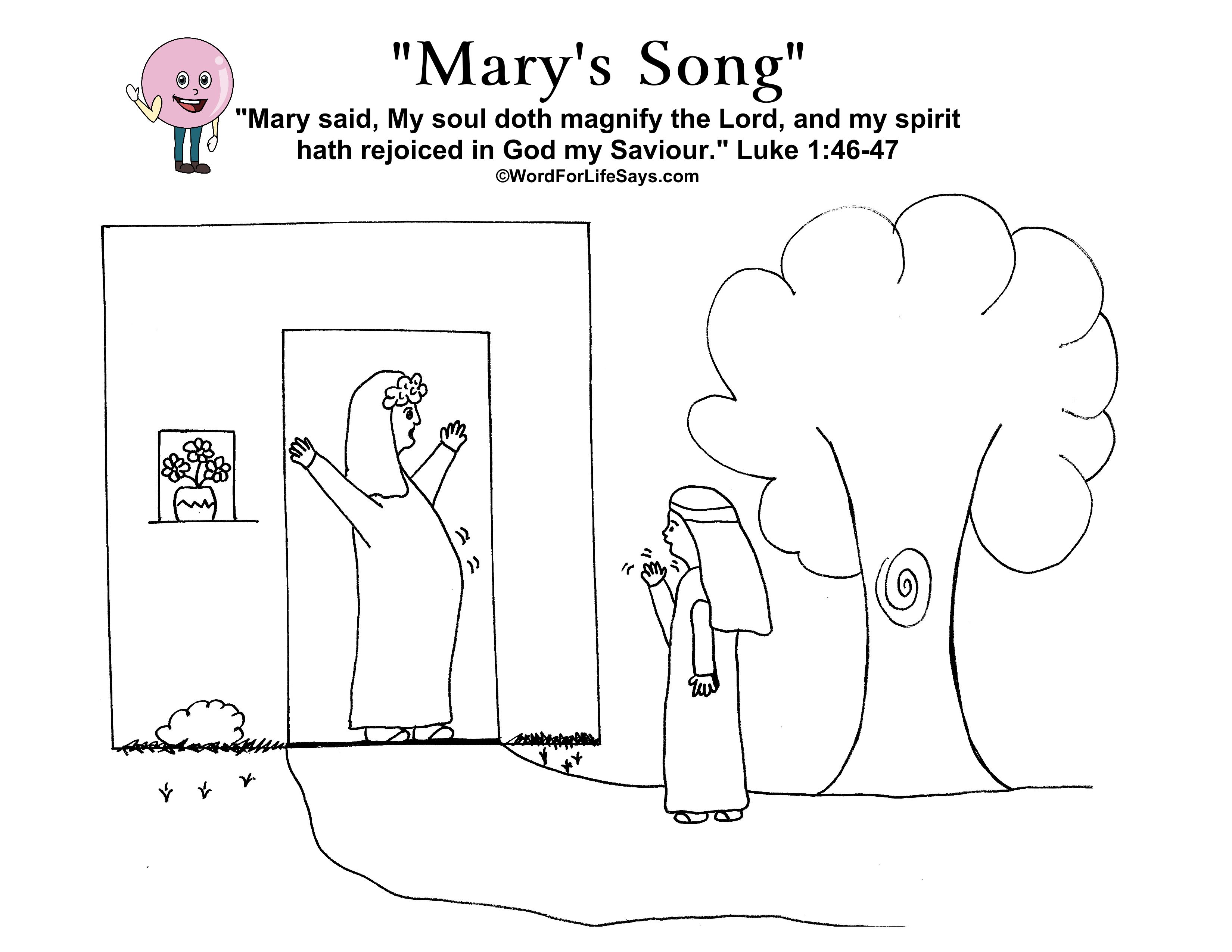
Luke 1:39-40 “And Mary arose in those days, and went into the hill country with haste, into a city of Juda; And entered into the house of Zacharias, and saluted Elisabeth.”

These verses pick up immediately after the angel Gabriel departed from speaking with Mary God’s plans and promise for her life and the life of the Child she was to carry.

But, before his departure, he encouraged Mary, noting, “For with God nothing shall be impossible,” (Luke 1:37) after telling Mary, “Behold, thy cousin Elisabeth, she hath also conceived a son in her old age: and this is the sixth month with her, who was called barren,” (Luke 1:36).  I can only imagine after all that was said and done, she remembered these blessed words and “arose in those days, and went into the hill country with haste, into a city of Juda.” 

Perhaps it was one of those “I just have to see Elisabeth” moments after all she heard.  Regardless of the reason, we do know that it was with “haste” that she was compelled to go.  Immediately, without hesitation, she wanted to be where Elisabeth was.  God was doing an unexpected thing in her life and she possibly wanted to connect with the other name Gabriel gave her concerning this great miracle.

So long ago, on a hill far away, Mary went.  It almost reads like a fairy tale, but the story herein is very true and worthy to be learned and appreciated for the intricacies of details God weaves through their lives and the history of our salvation, as well as to bring about His promise for mankind.

“And entered into the house of Zacharias, and saluted Elisabeth.”  Upon arriving at her destination at the house where Elisabeth dwelt with her now mute husband, Zacharias, Mary entered and greeted her according to custom.

Luke 1:41-45 “And it came to pass, that, when Elisabeth heard the salutation of Mary, the babe leaped in her womb; and Elisabeth was filled with the Holy Ghost: And she spake out with a loud voice, and said, Blessed art thou among women, and blessed is the fruit of thy womb.  And whence is this to me, that the mother of my Lord should come to me?  For, lo, as soon as the voice of thy salutation sounded in mine ears, the babe leaped in my womb for joy.  And blessed is she that believed: for there shall be a performance of those things which were told her from the Lord.”

The words of Mary’s greeting aren’t recorded, but the response by Elisabeth and what happens after is: “When Elisabeth heard the salutation of Mary, the babe leaped in her womb.”  When Mary’s greeting reached the ears of her cousin, God phenomenally made His way known during what seemed to be a very normal and customary interaction between two people.

Something moved in Elisabeth at the hearing of the voice of Mary; and not just the baby inside of her (Although as noted in the lesson he “leaped” and reacted to hearing her voice as well.  See note below).  Mary’s voice connected with her innermost being by the moving of God’s Spirit, hence we see her at this very time being “filled with the Holy Ghost.” 

Please Note: Babies in a womb have an amazing connection to their own mother’s voice and maybe even dads.  But rarely will they react as energetically to a voice they have never heard.  This makes the baby’s reaction all the more powerful and a reason to take note.  The baby, later known as John the Baptist, was filled with the Holy Ghost at this time fulfilling a promise as well (see Luke 1:15).  God used an unborn child to spiritually testify of the work He was doing.  Awesome!

Can I give you something to try to associate this feeling with?  Imagine someone knocking on your door one day to give you the best news possible.  Maybe you are one of those famous sweepstakes winners and all your financial needs will be forever taken care of.  Or, perhaps someone announced that you are a long-lost relative of someone who has left you an extraordinary inheritance.  Maybe that knock brings a lost love home again for which the joy felt cannot be measured in dollars and cents.  Any of these events would have us in joyful tears and simply awestruck at what is happening.  I can imagine the same (although many, many times more),  “I can’t believe it!” joy was felt by Elisabeth at the sound of sweet Mary’s voice.

Mary and Elisabeth were no longer just cousins of the flesh but they were sisters in the Spirit because God was working mightily through both.

Continuing to be moved by the Spirit of God, Elisabeth’s voice rang out in exuberant praise, declaring, “Blessed art thou among women, and blessed is the fruit of thy womb.”  When Gabriel appeared to Mary, he too used words like “highly favoured” and called her “blessed” (Luke 1:28).  Her life would become extraordinarily different from women everywhere and in every era.  There wasn’t then, and would never be, another woman like her in the entire world or the world’s history who was called to do what she did.  She was “blessed.”  And Elisabeth’s declaration: “blessed is the fruit of thy womb,” (even though Mary was nowhere near showing at this time to give the outward appearance of pregnancy) means that she [Elisabeth] was speaking directly about the miracle that God has performed in her [Mary’s] life.

In an age where instant notifications, emails, text messaging, social media, and the like didn’t exist, as quickly as these events unfolded there appears to be no prior knowledge of Mary’s pregnant condition before the infilling of the Holy Ghost.  God revealed this to Elisabeth and Elisabeth sang out in praise declaring how special she [Mary] is because of the babe [the fruit of the womb] inside of her.

Still awestruck at the greatness of all transpiring before her, Elisabeth continues, saying, “Whence is this to me, that the mother of my Lord should come to me?”  Immediately, without any questioning of detail or such, she knew that Mary was the “mother of my Lord.”  What a declaration for Mary to hear!  Very shortly, when word got out about her pregnancy, she would hear, I’m sure what I assume to be a myriad of hateful and hurtful remarks.  But for now, I can imagine Mary letting Elisabeth’s words wrap around her as a warm hug confirming what God is doing in her life.

Elisabeth continues to tell Mary about the reaction of her own baby at the hearing of her voice: “Lo, as soon as the voice of thy salutation sounded in mine ears, the babe leaped in my womb for joy.”  Inspired by the Spirit of God, Elisabeth not only felt the baby physically leap but inwardly she knew the reason was for “joy.”  The forerunner of Christ was already getting happy and testifying to the greatness that was to come through Him.

Ringing out these Holy Ghost-inspired words, Elisabeth continues to say, “Blessed is she that believes.”  That’s a powerful statement.  It not only testifies to Mary’s confident acceptance of what God was doing through her but it also shows how much faith must play a key role in anything God calls anyone to do.  Hebrews 11:1 reminds us, “Now faith is the substance of things hoped for, the evidence of things not seen.”  One’s faith is important for without it we are told it is impossible to please God (see Hebrews 11:6).  As scary as this situation was for Mary, she got on board with God’s plan without knowing everything that would unfold in her future.

Because of that, “there shall be a performance of those things which were told her from the Lord.”  Mary accepted in faith, and Elisabeth declared that God was moving on her behalf.  God has never failed to follow through with His promises.  He speaks them.  Here it is confirmed.  And, it shall come to pass.  Other areas of the Bible remind us of this great truth, saying, “For I am the LORD: I will speak, and the word that I shall speak shall come to pass…” (Ezekiel 12:25; see also Psalm 111:7).

In response, Mary’s soul joins in with rejoicing!

Mary’s Song of Rejoicing

Luke 1:46-47 “And Mary said, My soul doth magnify the Lord, And my spirit hath rejoiced in God my Saviour.”

“My soul doth magnify the Lord.”  What God revealed to her through Gabriel and confirmed through Elisabeth is nothing short of AWESOME!  It goes beyond the concept of human thinking and understanding and takes you to a realm of the way He thinks and operates.  It beckons one to step out into the unknown with a life and a heart of complete trust.

How else is Mary to respond except to say, “My soul doth magnify the Lord?”  God was about a great work (as He always is).  For centuries they have longed for the promise of the Messiah to be fulfilled.  Generations have laid up their hopes in store for this great day.  Mary’s soul can’t help but praise God.  She knew before anyone else that God was ready to do a great kingdom shift.  She is rejoicing because the time is finally at hand for the long-awaited promise to come to pass and she is to be personally involved.

Thus, she was moved to “magnify the Lord.”  We use the word “magnify” to mean “to enlarge.”  We can’t make God bigger than He already is.  1 Kings 8:27 declares, “The heaven of heavens cannot contain thee.”  But we can exalt and praise Him – we can lift His name up at the joy of what He is doing in the lives of His people.  We can make our praise of Him grow and grow until it affects the lives of those around us.  Through our worship, we can’t help but enlarge His territory and gain spiritual ground in the lives of those who witness what God is doing in us.

When was the last time you can honestly say, “My soul doth magnify the Lord?”  When was the last time you felt a shift in your spirit to move into the realm of praise over the greatness of God in your life?  Mary was at her cousin’s house when she rang out with this hymn, rejoicing.  You can feel the Spirit of God move you to worship anywhere!  You don’t have to wait until Sunday morning service!  Let your soul “magnify” Him now!  That’s why she continued, and said, “My spirit hath rejoiced in God my Saviour.”

“God my Saviour.”  This is all about Him and what He is doing.  Man cannot save himself.  Man does not have the means to secure permanent deliverance from sin for himself.  Try as he might, it just won’t work.

But, God…

Her people were under the tyranny of Herod and whoever else decided to put their hands in the pot of affliction over them.  Worse than that, despite laws and sacrifices, the tyranny of sin still permeated the world and had mankind shackled in its bonds.

But, God…

Mary can “rejoice!”  There is hope for her.  There is hope for her people.  There is hope for the world.  “God my Saviour” is ready to let loose His plan of deliverance once and for all!  Titus 3:4-5a says, “But after that the kindness and love of God our Saviour toward man appeared, Not by works of righteousness which we have done, but according to his mercy he saved us…” Rejoice!  “God my Saviour” had and has a plan to “save us!”

Luke 1:48-50 “For he hath regarded the low estate of his handmaiden: for, behold, from henceforth all generations shall call me blessed.  For he that is mighty hath done to me great things; and holy is his name.  And his mercy is on them that fear him from generation to generation.”

“For he hath regarded the low estate of his handmaiden.”  Who are you to those who see you every day?  Are you known as mom or dad, sister or brother?  Are you just that church member who sits at the end of pew five from the front?  Or, are you just that neighbor down the street?  Who are you to those at work or to those who see you drop off the kids at school?  How do people identify you?  Are you just a passing thought to most or do people “regard” you?  Do people take notice of you and your life?

Mary, when she woke up that morning before Gabriel spoke to her, she just saw herself as Mary; nothing more, nothing less.  She was just one in a group of young women who lived in her town of Nazareth.  Yet, the whole time God “regarded” her.  God had His eyes on her for something bigger and better in life and she didn’t even know it.  “He hath regarded the low estate of his handmaiden.”  In a spirit of humility, she may have viewed herself as nobody and her humble surroundings would suggest it as well, but she was somebody God paid attention to.

“From henceforth all generations shall call me blessed.”  God is big on remembering those who submit in obedience to His will and allow themselves to be used by Him.  “He is a rewarder of them that diligently seek him,” (Heb. 11:6).  Jesus told His disciples one day after Mary (not the Mary from today’s lesson) anoints Him with the oil from the alabaster box, “Wheresoever this gospel shall be preached throughout the whole world, this also that she hath done shall be spoken of for a memorial of her” (Mat. 26:13).  People are going to remember her.

With the Mary of today’s lesson, the one that would bear the Son of God, people are going to do more than just remember her, they “shall call me blessed.”  She will forever be linked to the greatest miracle God has ever done and considered “blessed” to be a part of it.

“For he that is mighty hath done to me great things; and holy is his name.”  How often has God moved in the life of one to bless and bring about “great things” to only have them take credit for it or attribute it to another?  Mary didn’t do that.  She recognized that God is the “mighty” One and that He was the One performing these “great things” in her life.  1 Samuel reminds us, “For them that honour me I will honour,” (2:30).  She honored God and attributed glory to His name for His mighty hand in her life.

“Holy is his name.”  Mary is rolling out this beautiful hymn of what God is doing, and in the middle, she takes as we call it today, a praise break!  At least, this is how I viewed it.  God has overwhelmed her, in a good way, and she can’t help but stop and declare, “Holy is his name!”

God is unique in who He is and in how He does things.  After God delivered the children of Israel from Pharaoh and his chariots at the Red Sea, Moses and the children of Israel sang a song, Exodus 15:1.  In that song, they also recognized the holiness of God.  They sang, “Who is like unto thee, O LORD, among the gods? who is like thee, glorious in holiness, fearful in praises, doing wonders?” (15:11).  This is the same heart of song that Mary rejoices with in today’s lesson when she pronounces “Holy is his name!”  Psalm 99:3 declares, “Let them praise thy great and terrible name; for it is holy.”

When God moves in your life; when He does the impossible, if at no other time, one should especially recognize His holiness, power, and uniqueness through it all and praise Him for it!

“And his mercy is on them that fear him from generation to generation.”  I have a lot of favorite psalms but by far one of my top favorites is Psalm 118.  This is one I cling to and often go back to for times when I need encouragement.  It starts by giving a brief history of the goodness of God in the life of His people because “his mercy endureth forever.”  Then, this beautiful psalm moves to an even more beautiful declaration of God’s promises for those who place their trust in Him.  There is not a verse in this Psalm that I don’t like.  It even ends with another, “For his mercy endureth for ever,” (Ps. 118:29).

Mary recognized God’s hand of mercy over “them that fear him from generation to generation.”  Psalm 103:17 also states, “But the mercy of the LORD is from everlasting to everlasting upon them that fear him, and his righteousness unto children’s children.”  Both verses express the unending mercy of God.

God promised David through Nathan the prophet, speaking of his descendants, saying, “I will be his father, and he shall be my son.  If he commit iniquity, I will chasten him with the rod of men, and with the stripes of the children of men: But my mercy shall not depart away from him, as I took it from Saul, whom I put away before thee,” (2 Sam. 7:14-15).

Mary saw God’s promise to David and that His mercy was still at work to “them that fear him.”  Proverbs 1:7 says, “The fear of the LORD is the beginning of knowledge,” (see also Pro. 9:10-11).  Time did not erase the promises of God.  Though they have waited, and at times the wait may have made it seem the Messiah wasn’t coming, God’s mercy was working it out from “generation to generation.”

Luke 1:51-53 “He hath shewed strength with his arm; he hath scattered the proud in the imagination of their hearts.  He hath put down the mighty from their seats, and exalted them of low degree.  He hath filled the hungry with good things; and the rich he hath sent empty away.”

“He hath shewed strength with his arm.”  When God has a plan, He shows up in the full strength of His power to accomplish it.  God is omnipotent.  There is nothing that He can’t do.  There is none who can subdue or usurp His power.  That’s why we are encouraged to, “Seek the LORD and his strength, seek his face continually,” (1 Chron. 16:11) because God’s strength is unmatched in power and authority.

In His strength, He “scattered the proud in the imagination of their hearts… he put down the mighty from their seats… the rich he hath sent empty away.”  He made them broke, busted, and disgusted!  Those that should have had no lack; those that should have been top of their game; God humbled them and removed them.  Why?  Because they lived in relying on their own power and ability.  They lived a life of pride; a life in opposition to God.  Therefore, “God resisteth the proud, but giveth grace unto the humble.” (James 4:6).

God flips the script, and He “exalted them of low degree” and “He hath filled the hungry with good things…”   God lifts up and blesses the lowly of this world such as His people Israel.  “Though the LORD be high, yet hath he respect unto the lowly,” (Ps. 138:6).  It was the lowly, the unassuming, and the unexpected course that God would use to usher in the reign of the Messiah.  From the choosing of a young woman from Nazareth to His lowly birth and being “laid… in a manager,” (Lk. 2:7); all was done without pomp and circumstance to bring forth the Savior of the world.

Luke 1:54-55 “He hath holpen his servant Israel, in remembrance of his mercy; As he spake to our fathers, to Abraham, and to his seed for ever.”

“He hath holpen his servant Israel.”  God has been a constant source for His people “Israel.”  They were a people of promise.  They were a people who would be an example to other nations (Deut. 4:6-8).  They were a people through whom we would be blessed also: “And the scripture, foreseeing that God would justify the heathen through faith, preached before the gospel unto Abraham, saying, In thee shall all nations be blessed,” (Gal. 3:8, see also Luke 1:55 (today’s lesson); Gen. 12:3).  He remembered “his mercy” despite their failings and short-comings.  God has helped Israel and stood by Israel’s side so they can become the people they were called to be.

Luke 1:56 “And Mary abode with her about three months, and returned to her own house.”

Mary, we are assuming, stayed with Elisabeth until the time came for her to give birth to baby John.  Gabriel came to her in the sixth month (Luke 1:26), and here we are told she “abode with her about three months” which would equal the normal time for pregnancy to be completed.  Then, she “returned to her own house.”  After which, verse 57 (not in today’s lesson), tells us of the birth of John.

PDF Printable Sunday School Lesson Pack (With easy to read instructions following the P.E.A.R.L. format on how to conduct each lesson with areas for adding personal notes): Sunday School Lesson – Mary’s Song

Suggested Activities:

Adult Journal Page: Adult Journal Page – Mary’s Song

Kid’s Journal Page: Kid’s Journal Page – Mary’s Song

Blank Journal Pages to fill in for your own ideas: 2 journal pages

Coloring Page: Mary’s Song Coloring Page

Memory Verse: Mary’s Song Memory Verse

Word Search: Mary’s Song Word Search  Answers: Mary’s Song Word Search Answers

Crossword: Mary’s Song Crossword  Answers: Mary’s Song Crossword Answers

Word Scramble: Mary’s Song Word Scramble  Answers: Mary’s Song Word Scramble Answers

“My soul doth magnify the Lord.” Using a magnifying glass, allow students to look at small things in a new way. What details can they see they have seen before? Mary used her heart and her voice to magnify God. God was doing a new thing, and it was something to get excited about.

Craft Idea: This time of the year we are doing a lot of singing right along with Mary.  We are magnifying God in the Christmas songs that we sing.  What better way to Magnify God than to sing of the birth of His Son.  Children can put together their own personal songbooks filled with the blessed melodies of the season.  A great addition to that would be to put together candle crafts that they may hold while singing to the glory of God.  The ideas are limitless in helping our students worship during this Christmas season.

Sunday School Lesson – “The Love of God” 1 John 4:7-19


VERSE DISCOVERY: 1 John 4:7-19 (KJV, Public Domain)

Love is a subject very near and dear to my heart.  It is probably one of my most written about topics to express.  And, we find out from today’s lesson that love is the essence of who God is.  We will learn deeply how our love is an identifying factor in proving us to be of Him and it shows the depth of all He feels for us.

In fact, the whole of our human story has been entirely of God’s love for us.  From our beginning in Genesis to the ending of the story to come, God’s love for humanity has been at the forefront of His relational chase of us.  If you have followed me and my writing for any amount of time you have probably come across a time or two an article I have written titled, Know Real Love.  In that I write:

“God loves you! Throughout the pages of the Bible, the overflow of all He feels for us is pronounced over and over again. He has plenty of evidence to mark the extremes of His love for us . . .  in Deuteronomy 23:5, He is noted as reversing a curse because He loves His people. But His ultimate show of love came when He initiated His plan to reverse the curse of sin once and for all. The plan was successful, but it didn’t come without a price. His love for us cost the life of His Son, John 3:16. All that was done so that one day we might experience the joy of what it really means to be loved; such a tender embrace wrapped around us that can’t be felt anywhere else.” (Word for Life Says/Know Real Love).

Because He loves us so, may we extend that same love to one another, is the pleading of this lesson.  We are His real-life examples to a lost world.  We are the only Bible that some people may read in their entire lifetime.  Let the story they see in you and I be one of love.

Think of it, in a world filled with hatefulness, selfishness, and condemnation, I personally believe we can never tire of hearing of the love of God.  And, as Christians we constantly need to be on our toes; to be retaught over and over again the importance that we show that same love God gave to us to one another.

The ugliness of this world’s characteristics DOES NOT have to infect us.  We can shine brighter above it all knowing that we are loved in a special way by Him.  With that knowledge, we too can return what we have received of Him to others.

When we truly know how much God loves us, we can love others better.

God is Love

1 John 4:7-10 “Beloved, let us love one another: for love is of God; and every one that loveth is born of God, and knoweth God.  He that loveth not knoweth not God; for God is love.  In this was manifested the love of God toward us, because that God sent his only begotten Son into the world, that we mighty live through him.  Herein is love, not that we loved God, but that he loved us, and sent his Son to be the propitiation for our sins.”

God doesn’t birth ugliness (nasty characteristics and ungodly traits).  If one is born of God, then as His spiritual children that one should possess the character and nature of their heavenly Father (just as natural children inherit some of the nature and traits of their parents).

False teachers and naysayers will always try to usurp what God wants to do in the life of the Christian and how they ought to live.  In his letter, false teachers are an enemy that John had to deal with and because of them, he had re-educate the people on what God says is true and encourage people to live and follow that truth which revolves, here in this lesson, around love.

As a matter of fact, John opens chapter 4 with this warning: “Beloved, believe not every spirit, but try the spirits whether they are of God: because many false prophets are gone out into the world,” (1 John 4:1).  After that he gives a summation of the contrast between the Christian and the world; “Ye are of God, little children . . .” (1 John 4:4), and “They are of the world. . .” (1 John 4:5).  Immediately following this comparison of who is in truth and who is in error, 1 John 4:6 begins to admonish the saints how we ought to live.  How the love of God is to be manifest in our culture.

Christians are to operate in a love culture for this is what we have learned from our heavenly Father.  For John to keep pushing this key point means there must have been a serious disturbance and dissension going on in the church that made it necessary for this subject’s continual address.  I wonder how many disturbances in our modern-day churches are due to a lack of this godly love culture being produced within its walls.

With that, John writes, “Beloved, let us love one another: for love is of God.”  God loves us – Yes!  Love comes from God – Yes!  Now, the responsibility to share that love falls on the shoulders of the believers; of the body of Christ, the Church.  As Christians, God has lavished on us the best of His love through our Lord Jesus Christ (as well as being offered to the whole world if they will accept Him).  Therefore, as Christians, our relationship with one another should express that same spirit of love because what comes out of us gives testimony to what’s inside of us (see Jesus’ teaching in Matthew 15:16-20).

For a Christian to claim he is of God means that individual should express the same attributes that are characteristic of the God they say they represent.  To be without those attributes is to be without proof of who you say are and whose you say you are.  The things that come out of our life tell more about the real us than any words of the mouth.

In taking up the responsibility to love one another we are daring to stretch out beyond our personal comfort zones to the benefit of another soul in need.  We are putting our faith in action through the course of loving others.  We are pushing past the popular feelings of emotions and commanding of ourselves and our lives to give unto others what we have received from God.  We are personally making it our goal to imitate the Father’s love toward us.

Romans 12:10 tells us, “Be kindly affectioned one to another with brotherly love; in honour preferring one another.”  As brothers and sisters in Christ, we are all of the same holy family.  We share spiritual kindred and as such we should be devoted to one another in well-being and care expressed through a loving relationship as a family should.  Our love for one another is to be marked by fervency (see 1 Peter 1:22) which means we should have an on-fire, zealous love for one another in Christ.

Love is of God; love is from God and He has demonstrated His love toward humanity when He sent his Son into the world, that we might live through him, (see also John 3:16 and Romans 5:8 which we will see later in this lesson as well).  The sacrifice of Christ proved to us (manifested; made clear) and the world how much God loves us and now we are to make that same love evident to all through our daily living and sacrifice.

God is love (vss. 8, 16), something I hinted on earlier.  The word is can be compared to words such as be or exist.  God doesn’t just love.  God doesn’t just have love.  God isn’t just in love with us.  Loving is not just a part of Him.  God is love.  It’s what His entirety is.  Thus, whoever claims to be in an intimate relationship with God and knows God should readily and willingly demonstrate the same character He is.  In contrast to that, he that loveth not knoweth not God; for God is love.

This love relationship we get to experience didn’t start in or with us.  God has been the chaser of mankind since his creation.  Love begins and ends with God as the bookends that hold everything together.

To prove His love, He provided a means for mankind to be redeemed from the rift of sin that has torn apart his relationship with God.  He sent his Son to be the propitiation for our sins.   The fact of the matter is sin destroys.  And, there is no way around atoning (offering of propitiation) for that sin and restoring humanity’s relationship with God outside of shed blood.  Hebrews remind us, “Without shedding of blood is no remission,” (Hebrews 9:22).

With that being said, Christ became that shed blood sacrifice, sent by God, which permanently atoned for our sins.  The Bible tells us, “For Christ is not entered into the holy places made with hands, which are the figures of the true; but into heaven itself, now to appear in the presence of God for us: Nor yet that he should offer himself often, as the high priest entereth into the holy place every year with blood of others; For then must he often have suffered since the foundation of the world: but now once in the end of the world hath he appeared to put away sin by the sacrifice of himself,” (Hebrews 9:24-26), where He not only covered our sins but, took them away forever.

Now, that’s love!  That’s what God’s love looks like!  Therefore, our response should be to love like God loves.

Love Like God Loves

1 John 4:11-13 “Beloved, if God so loved us, we ought also to love one another.  No man hath seen God at any time. If we love one another, God dwelleth in us, and his love is perfected in us.  Hereby know we that we dwell in him, and he in us, because he hath given us of his Spirit.”

Since God showed us the kind of love that would give up His only begotten Son, the command is, we ought to also love one another.  Whatever little meager anything we think we may lose or give up in extending love can never be compared to what God already gave.

Love is the key that opens the door to the reality in showing that we love Him.  God will not dwell in an environment of hate and selfishness.  If those are present, God is not.  If we, as His children, are showing His characteristics of love, then we know that we dwell in him, and he in us.  Love or lack of it is the marker that shows one’s stance in his/her relationship with God.  Anytime the individual or church is not operating in love, they are not operating in God and He is not in the midst.

There is a personal responsibility that John is pointing to for each individual believer to follow.  Approximately 10x’s John uses the word we throughout this lesson alone, not including the rest of his book where there are many, many more instances and identifying words which incorporate and reference the whole body of Christ with the use of words like “us” and “our.”

“We” identifies us.  We” states what we believe.  We,” tells our mission.  “We” also have His Spirit living on the inside of us and as such should operate the way His Spirit operates; in love.

Every true, born-again Christian, must possess the indwelling of His Spirit.  The effective and powerful Christian life cannot be lived out without His Spirit.  His leading and guiding on the inside is the separating factor between us and the world.  The world caters to the things of the flesh while the Spirit hones in on the things of heaven; the things of God.  Therefore, he hath given us of his Spirit and His Spirit should lead every Christian down the path of showing the same love He has shown to us.

1 John 4:14 “And we have seen and do testify that the Father sent the Son to be the Saviour of the world.”

Here, we see the word “we” again.  In this usage of the word, John is speaking from his personal experience with Jesus.  John was not doing a retelling of a story passed down; rather, he was attesting to the real-life knowledge of the ministry he witnessed following Jesus Christ personally for those 3 ½ years.  This is a ministry that he has seen with his own eyes and now lives to tell about it or testify to others.

And, what does he testify?  “The Father sent the Son to be the Saviour of the world!”  How incredibly AWESOME is that!  He knows and witnessed His workings while here on earth that Jesus Christ was no less than the Son who has come to save!  He is the love of God in action!

Jesus Himself told Nicodemus, “For God sent not his Son into the world to condemn the world; but that the world through him might be saved,” (John 3:17). This is nothing short of the ultimate act of love.  This, throughout every facet of His ministry, John gave witness to, testified of and wrote as a record in the books that bear his name.

1 John 4:15 “Whosoever shall confess that Jesus is the Son of God, God dwelleth in him, and he in God.”

Earlier in this same book John wrote, “Whosoever denieth the Son, the same hath not the Father: he that acknowledgeth the Son hath the Father,” (1 John 2:23).  This goes back to his combatting the false teachers and their teachings.  He stated very bluntly in the verse prior to this: “Who is a liar but he that denieth that Jesus is the Christ? He is antichrist, that denieth the Father and the Son,” (1 John 2:22).

Not only are they a “liar,” but have been identified with the “antichrist.”  That’s a heavy dose of truth.  Christians have to be on guard where they are getting their information from and where they are allowing it to lead them.  But he that shall confess that Jesus is the Son of God, God dwelleth in him, and he in God.

The false teachings are out there.  We are to make sure we are following the way of truth in love.

1 John 4:16-19 “And we have known and believed the love that God hath to us. God is love; and he that dwelleth in love dwelleth in God, and God in him.  Herein is our love made perfect, that we may have boldness in the day of judgment: because as he is, so are we in this world.  There is no fear in love; but perfect love casteth out fear: because fear hath torment. He that feareth is not made perfect in love.  We love him, because he first loved us.”

Here, the love issue is unwrapped and exposed for us to understand.  What do we understand?

  1. We know and believed the love that God hath to us. – Before one can dish it out to another, they must believe the love that God has for them. God loves you! We are more than familiar with the John 3:16 statement of love, but what about the Romans 5:8 statement of love: “But God commendeth his love toward us, in that, while we were yet sinners, Christ died for us.” While we were yet in our mess – God loved us so much to send His Son to the cross for us. That’s powerful love!
  2. God is love. – Again, as already has been stated in our lesson, God cannot be separated from the character of who He is.  Love is not what God does, it’s who He is. Now, everything that the world identifies as love does not mean that God is in that.  If it is in opposition to His Word, He ain’t there.  Point blank.  Plain and simple.
  3. He that dwelleth in love dwelleth in God, and God in him. – God’s love was a demonstrative type of love; one He put on display through action, particularly in the sacrificing of His Son. In John 15:13 Jesus said, “Greater love hath no man than this, that a man lay down his life for his friends.” He who possesses the same marks of love He did, has the same “God in him.” He that lives in the life of love lives in God.
  4. Perfect love – We can experience His perfect love.  When the day of judgment comes we can stand with no fear in us because we have already been covered by His love. Therefore, we fear no sense of judgment or separation.  Romans 8:38-39 reminds us, “For I am persuaded, that neither death, nor life, nor angels, nor principalities, no powers, nor things present, nor things to come, Nor height, nor depth, nor any other creature, shall be able to separate us from the love of God, which is in Christ Jesus our Lord.” There is no fear in His perfect love.  Perfect love casteth out fear, therefore if any remain in fear he is not in love and needs to reevaluate their relationship with God. “For ye have not received the spirit of bondage again to fear; but ye have received the Spirit of adoption, whereby we cry, Abba, Father,” (Romans 8:15; see also 2 Timothy 1:7).
  5. We love him, because he first loved us. – Make no mistake about it; humans cannot take credit for this. As already stated before, love originates with God.  “God loves you!”  You, my friends, are so very much and incredibly loved by the King of all kings and the Lord of all lords.  There is so much that we face daily that tries to speak contrary to the blessedness we have in Him.  But, my God loves you with an undying love.  His heart is tied to His people.  His people need only to rest in the promises of His mercy, grace, power, and authority that make their hearts soar on the wings of the hope we have in Him all because He chose to love us first despite our sins and flaws.

And, when we truly grasp the understanding of the love of God for us, then can we learn to love others better.

PDF Printable Sunday School Lesson Pack (With easy to read instructions following the P.E.A.R.L. format on how to conduct each lesson with areas for adding personal notes for teaching): Sunday School Lesson – The Love of God

Object Lesson Ideas:

“How Much Are We Worth?”

“He Loves Me… He Loves Me Not”

“God’s Love Letter”

Craft Heart: Create a simple heart craft that expresses God’s love for them. Simply fold a piece of construction paper in half and cut into the shape of a half heart.  When the students open the heart fully, they can write in the middle “God is Love” and decorate their heart by making designs, or adding stickers, glitter, or other embellishments to it.

Kid’s Journal Page: Kid’s Journal Page – The Love of God

Adult Journal Page: Adult Journal Page – The Love of God

Memory Verse: The Love of God Memory Verse

Draw the Scene: The Love of God Draw the Scene

Word Search: The Love of God Word Search  Answers: The Love of God Word Search Answers

Crossword: The Love of God Crossword  Answers: The Love of God Crossword Answers

Word Scramble: The Love of God Word Scramble  Answers: The Love of God Word Scramble Answers

Additional Activities/Resources/Links:

“Love Bible Printables” (Yes, printables!  Originally for Valentines Day but goes very nicely with today’s lesson.  Enjoy!)

“Bible Lessons, Crafts and Activities about Love” (Several to choose from that can be nicely incorporated in this week’s lesson.  Enjoy!)

“Love One Another” (How does making “friendship stickers” sound?  This and another activity can be found on this link.  What a creative way to show love!  Enjoy!)

“Love One Another” (A creative classroom project which involves a big red heart and students’ self-portraits.  Very nice!  Enjoy!)

“Heart Crafts” (Several for Valentine’s Day that can be used creatively for our lesson.  Enjoy!)

“As I Have Loved You” (Children’s Bible lesson and activities with printable sheets and group activities that include a “Sucker Relay,” “Bubble Popping,” and more.  Enjoy!)

“Teaching Kids How to Love God and Love Others” (Sunday School Lesson Help)

“Love Bible Verses for Children” (Easy printable activity for kids.  Enjoy!)

“Love One Another Printable Mobile” (AWESOMENESS!  ENJOY!)

“Love Crafts” (Many unique love crafts to choose from that can be adapted to today’s lesson.  Click to check it out.  Enjoy!)

“Three Bible Stories that Teach About Love”