
Sunday School Lesson – “In the Beginning | The Creation Story” Genesis 1:1-27

VERSE DISCOVERY: Genesis 1:1-27 (KJV, Public Domain)

Taking in the world view as a whole, we will see that all that is before us has a starting point. Every person we see began at the time of conception. Every leader had a first step that led to their position. Every nation had the birth of its people coming together as unified persons. Every plant started with a seed. And every building with a first brick being laid.

Creation has its origin as well. And it does not start with a cosmic bang. The wisdom, intelligence, plan, and sovereignty of God, thought through, designed, and put together all of the creation story.

How it All Started

Genesis 1:1, 2 “In the beginning God created the heaven and the earth. And the earth was without form, and void; and darkness was upon the face of the deep. And the Spirit of God moved upon the face of the waters.”

“In the beginning” is not only the lesson/series title but also the biblical designation of when everything that follows these words actually occurred.

From the start, we are told about the start, and how it all began with “God.” (visit “God the Main Character” and “This Was God’s Doing | God is the Creator of All” found on site for further reading)

God, Himself, has no origin, as Isaiah verifies. Still, He is responsible for the origination of all: “Hast thou not known? hast thou not heard, that the everlasting God, the Lord, the Creator of the ends of the earth, fainteth not, neither is weary? there is no searching of his understanding” (40:28).

From His eternal nature and wisdom, all the creation story below starts with God for He “created the heaven and the earth” (see also Job 26:7). All the history of all the beginnings has its foundations laid by our Heavenly Father: “And, Thou, Lord, in the beginning hast laid the foundation of the earth; and the heavens are the works of thine hands” (Hebrews 1:10; see also Deuteronomy 10:14).

The whole scope of every part of creation is attributed to God alone (Genesis 2:4; Psalms 102:25; Isaiah 44:24; Revelation 14:7). Everything our eyes can see and not see, is in existence because the breath of God spoke it here; because He fashioned it: “By the word of the Lord were the heavens made; and all the host of them by the breath of his mouth” (Psalm 33:6), and by faith, it is to be believed: “Through faith we understand that the worlds were framed by the word of God, so that things which are seen were not made of things which do appear” (Hebrews 11:3).

Nothing was anything before God created it: “Where wast thou when I laid the foundations of the earth?” He asked Job, “declare, if thou hast understanding” (38:4). “Who hath laid the measures thereof, if thou knowest? or who hath stretched the line upon it?  Whereupon are the foundations thereof fastened? or who laid the corner stone thereof;” (Job 38:5,6; I suggest reading Job 38 entirely).

Even the “earth” itself was “without form, and void; and darkness was upon the face of the deep” (see also Jeremiah 4:23). “He hath made the earth by his power, he hath established the world by his wisdom, and hath stretched out the heaven by his understanding” (Jeremiah 51:15).

After the complete declaration of verse 1, accrediting God alone as Creator of all, the complexities and intricacies of all that it entails begin to come to life, starting with the state of the earth itself.

Originally called into creation, there was nothing there. But out of this nothingness, something beautiful would form from the formless. That without content and composure would be permeated with the purpose of God’s design.

As of yet, it lay empty in its state without the specifics of creation, but God was getting ready to change it into something more: “And the Spirit of God moved upon the face of the waters.”

Psalm 104:30 says, “Thou sendest forth thy spirit, they are created: and thou renewest the face of the earth.” God as One, shows every part of Himself (Father, Son, and Spirit) being present at the time of creation (see also John 1:1-3).

The same “Spirit,” with a capital S, found throughout the Bible as the promised Comforter (John 14:6), the “Spirit of truth” (John 14:7), the One who filled believing men and women, and in Paul’s prayer for strength in the inner man (Ephesians 3:16), is the same Spirit at work at creation in the beginning.

Day #1

Genesis 1:3-5 “And God said, Let there be light: and there was light. And God saw the light, that it was good: and God divided the light from the darkness. And God called the light Day, and the darkness he called Night. And the evening and the morning were the first day.”

“And God said.” Each day of the six days of creation began with these three words. By God’s design and by His word, the voice of God broke through the nothingness, took authority over the creation story, and spoke His divine will for each day.

And for day one, the command was, “Let there be light.” One of my favorite games to play as a child was focused on light: “Spotlight Tag.” It was played at night when it became dark enough outside. It was a game somewhat like hide-and-seek except the finding and tagging was done with flashlights. When the children hid, they could only be found when the person that was “it” shone a light on them, saying, “Spotlight on ________ (whoever it was).”

Light is pivotal when one wants to illuminate something.

On day one, light was created and entered the world. Although not noted by a specific source as the flashlight was at this point, it still came with the purpose of adding illumination and delineation from the present darkness where none existed before.

And the light was considered “good” by God. Now there was a defining separation. Light and darkness could not cohabitate, rather they are given their own special designations with God calling the light “Day” and the darkness He called “Night.”

 Day #2

Genesis 1:6-8 “And God said, Let there be a firmament in the midst of the waters, and let it divide the waters from the waters. And God made the firmament, and divided the waters which were under the firmament from the waters which were above the firmament: and it was so. And God called the firmament Heaven. And the evening and the morning were the second day.”

On day two the heavens were created, referred to as “firmament,” or as we know it, the sky. In verse two, we see there was no distinction between the waters that were upon the earth, no space between the waters that were above or below (v. 7), The firmament provided this space of separation. It set boundaries and these boundaries were called “Heaven” (v.8). There is now a visible sky with clouds floating upon the waves of the atmosphere. The Bible tells us, “The heavens declare the glory of God; and the firmament sheweth his handywork” (Psalm 19:1).

Day #3

Genesis 1:9-13 “And God said, Let the waters under the heaven be gathered together unto one place, and let the dry land appear: and it was so. And God called the dry land Earth; and the gathering together of the waters called he Seas: and God saw that it was good. And God said, Let the earth bring forth grass, the herb yielding seed, and the fruit tree yielding fruit after his kind, whose seed is in itself, upon the earth: and it was so. And the earth brought forth grass, and herb yielding seed after his kind, and the tree yielding fruit, whose seed was in itself, after his kind: and God saw that it was good. And the evening and the morning were the third day.”

Day three was particularly active in that we see more form come to that which was formless. We see God’s design begin to come alive more vividly as the putting together of different aspects of creation takes on more definition and purpose.

Now the waters under the heavens are called to move into more defined spaces, gathering into “Seas.” And out of these Seas, “dry land” was called forth and recognized as “Earth.”

Although we refer to the whole planet as Earth, in the beginning, it was the designation of the ground beneath the feet.

If you find yourself in the privileged position to stand on the shore of any massive body of water where the land and seas meet, take a moment while looking out at the vastness of it all and appreciate the fact that this is here because the voice of God commanded it to be (see also Psalm 95:3-5).

“And so it was” reminds us that whatever God speaks must happen and obey as He commands.

Then, the earth was called to bring “forth grass, the herb yielding seed, and the fruit tree yielding fruit after his kind, whose seed is in itself, upon the earth.”

Every imaginable and unimaginable plant, tree, herb, and seed was called into existence. The apple you eat today was originally called to inhabit the earth by the voice of God.

When they were called into existence, all types, be they perennials, annuals, weeds, fruit, or what have you, they came forth and followed the marching orders of God and took up residence and established roots of fruitfulness upon the once barren dry land.

Every conceivable produce has ancestor heritage in one form or another that goes back to the time of the beginning, and many reappear through Scripture attached with significant meaning.

Day #4

Genesis 1:14-19 “And God said, Let there be lights in the firmament of the heaven to divide the day from the night; and let them be for signs, and for seasons, and for days, and years: And let them be for lights in the firmament of the heaven to give light upon the earth: and it was so. And God made two great lights; the greater light to rule the day, and the lesser light to rule the night: he made the stars also. And God set them in the firmament of the heaven to give light upon the earth, And to rule over the day and over the night, and to divide the light from the darkness: and God saw that it was good. And the evening and the morning were the fourth day.”

On day one light was called, here specific “lights” (with an s) are created “in the firmament of the heaven to divide the day from the night.”

The day will come when there will be no longer a need for these specific lights (Rev. 22:5; Is. 60:19), but while they are here, they help us manage the telling of times and seasons (Psalm 104:19).

They not only illuminate the sky in their given tasks, but they give us points of reference in our grand scale of living.

The “two great lights” we refer to as the sun and moon are given the charge to rule over the day and night (compare Psalm 74:16). Worshipping these objects of creation has been a downfall of humanity since the beginning. While we don’t do that, we can be appreciative of these huge visible reminders of God’s handiwork throughout history from the start of it all.

When you feel the warmth of the sun on your face or you view the moon rising in the star-lit sky, you can thank God for what He has done then, and what He can and will do now, and in the times to come.

“He made the stars also.” Scientists may attribute the stars in the sky to an extremely complex process of gas and dust, but in the beginning, we are assured that the significance of their presence high above is because God made them also regardless of their makeup, and He knows each one individually: “He telleth the number of the stars; he calleth them all by their names” (Psalm 147:4).

Using the simple process of His authoritative speech and power over all creation, in the same way He called everything else forth, is the same way the stars arrived in the skies above.

“God set them in the firmament.” God specifically placed them in the right place to perform their jobs perfectly. Careful planning indeed.

In our homes, we place ornaments and knick-knacks in precisely the best location for style and aesthetics, but the carefulness of God’s placement of these lights was for neither style nor aesthetics, they were divinely purposed (compare Jeremiah 31:35).

In Psalm 104:2 we see the psalmist attributing to God as the one “who stretchest out the heavens like a curtain.” Can a man even fathom to catch one star that falls from the sky, let alone stretch out the heavens with galaxy upon galaxy and universe upon universe?  God can.  As a matter of fact, in His wisdom in the beginning all He had to do was speak a word and creation obeyed and came into existence.  All in the sky that looks to be stretched out as a cosmic curtain twinkling above our heads is because God is the one who made it to be so.

Side Note: With such carefulness and attention to detail in the creation of this world, do not think that your life is any less purposed or carefully planned by God’s divine plan as well: “When I consider thy heavens, the work of thy fingers, the moon and the stars, which thou hast ordained; What is man, that thou art mindful of him? and the son of man, that thou visitest him?” (Psalm 8:3,4). I’m so glad He is mindful of us.

Day #5

Genesis 1:20-23 “And God said, Let the waters bring forth abundantly the moving creature that hath life, and fowl that may fly above the earth in the open firmament of heaven. And God created great whales, and every living creature that moveth, which the waters brought forth abundantly, after their kind, and every winged fowl after his kind: and God saw that it was good. And God blessed them, saying, Be fruitful, and multiply, and fill the waters in the seas, and let fowl multiply in the earth. And the evening and the morning were the fifth day.”

Life appears. Living and moving creatures come forth. The existence of sea life begins to swim and move in the waters. Imagine them taking their places, setting up habitats among the reefs, and going about their business as if they had always been.

Psalm 104:25-26 tells us, “So is this great and wide sea, wherein are things creeping innumerable, both small and great beasts.  There go the ships: there is that leviathan, whom thou hast made to play therein.” “Innumerable” creatures come to life by God’s design.

For every creature dwelling there we know nothing about, God knows the makeup of their design from the inside out. He knows their identity. He knows the places they swim and hide. What seems impossible to explore and uncover all the intricacies of all life that may dwell in the deepest of the waters, God already understands their mysteries and purpose.

On this same day, birds take to the sky. Wings spread and life begins to soar. Dipping and diving below the clouds, they test their created abilities to new heights and just fly. Amazing! (Check out this poem I wrote about a bird and be encouraged by God’s design.)

Oh, the beauty that must have been in the Heavenly Father’s sight as He witnessed all this new life take off and begin to inhabit the places He created.

“It was good.” You know that space in your house that you finally got decluttered and organized, and now you don’t have to cringe when walking by it anymore? In fact, you go out of your way to look at the transformed space it has become, and you think to yourself, how wonderful and good it is.

My friend, God’s good is so much more.

“God blessed them.” God did something He had not done with the previous days of creation. He commanded a blessing over life: “Be fruitful, and multiply, and fill the waters in the seas, and let fowl multiply in the earth.” Life is of utmost importance to God and protecting life that it continues was in the grand scale of His perfect plan.

Day #6

Genesis 1:24-27 “And God said, Let the earth bring forth the living creature after his kind, cattle, and creeping thing, and beast of the earth after his kind: and it was so. And God made the beast of the earth after his kind, and cattle after their kind, and every thing that creepeth upon the earth after his kind: and God saw that it was good. And God said, Let us make man in our image, after our likeness: and let them have dominion over the fish of the sea, and over the fowl of the air, and over the cattle, and over all the earth, and over every creeping thing that creepeth upon the earth. So God created man in his own image, in the image of God created he him; male and female created he them.”

“The living creature.” As the sea life and birds populated the waters and sky, so too did these come forth to inhabit and populate the earth.

Notice there is no discrepancy in the creation story. No parts are left unfinished or wanting. All are in His mind, and all come to fruition in His story.

“And it was so.” The course of the creation story continued to follow the protocol it was given. Every being formed, gained breath, and became everything God designed them to be. As they entered the realm of creatures that are now living, they entered fulfilling divine purpose: “I have made the earth, the man and the beast that are upon the ground, by my great power and by my outstretched arm…” (Jeremiah 27:5).

“After their kind.” Today, through years of studies by many professionals, we recognize the specific genetic makeup of the various beings that dwell on this earth. Interestingly, and encouraging for the believer, is that we recognize the hand of God in authoring these specific genetic makeups.

Every living creature had the built-in ability to reproduce after its own kind, or its own genetic makeup. From the beginning, it has always been so.

Therefore, there are no needed discussions for evolutionary this and that. What it is, is what it produces. Outside of the interference of man, what it is, is what it will keep producing.

“And God said, Let us make man in our image, after our likeness.” Evolutionary experts will try to take you through billions of years of history to explain the origin of life, civilization, and this world, which they have never known or seen. But “theory” tells them they are right.

Yet, there is a God who has always been and always will be who recorded our earth’s history for us, letting us know that we are a beautiful part of His holy plan.

Here’s the thing, both require some sort of leap of faith. But the walk of faith we have seen played out in the historical, written record of the Bible, along with other non-biblical texts that support its work, in addition to great archeological discoveries doing the same, tells us, beyond a shadow of a doubt, that their theories are wrong, and our God is right: “Have we not all one father? hath not one God created us?…” (Malachi 2:10).

Therefore, in the beginning, this is how it all went down according to the authority of God’s written record, the Holy Bible, which says, “Thy hands have made me and fashioned me…” (Psalm 119:73; emphasis added).

And I assure you, my friend, on that same authority, “God created man in his own image, in the image of God created he him; male and female created he them.”

I have only touched on the creation of man here because I have an entire lesson dedicated to that subject, along with the seventh day of rest in part two of the “In the Beginning” Series.

“For the invisible things of him from the creation of the world are clearly seen, being understood by the things that are made, even his eternal power and Godhead; so that they are without excuse” Romans 1:20

PDF Printable Sunday School Lesson Pack (With easy to read instructions following the P.E.A.R.L. format on how to conduct each lesson with areas for adding personal notes): Sunday School Lesson – In the Beginning – Part 1 The Creation Story

Suggested Activities:

Lesson Prep Opening Idea: “In the beginning…” As our lesson will state, everything has a beginning except for God who is from “everlasting to everlasting” (Psalm 90:2). Therefore, in the beginning of the world and the universe as we know it today, God was already there, orchestrating events and the particulars of the creation story.

Every day of creation began with “And God said.” To demonstrate this as an opening object lesson, set up a row of dominoes in whatever configuration you would like. The first domino is the “beginning” domino, and when it falls over, at its moving, all the other parts of the configuration will move and fall as well.

During the days of the creation story, whenever God, in the beginning, spoke, that part of creation came to pass and fell into its proper place (topple the first domino and watch the effect take place).

Journaling: Tonight, if the skies are clear (or on the next clear night), take a few minutes to stargaze and/or take out your cell phone and photograph the wonders above that you see.  Allow yourself a few minutes to reflect on the greatness of God based on what you have observed.  Jot down what you see or feel on this Blank Journal Page and let the awe of God wash over you as you reacquaint yourself with the majesty of His power and wisdom in the creation story.

Or as Day #3 in the lesson suggests, if you find yourself in the privileged position of standing on the shore of any massive body of water where the land and seas meet, take a moment while looking out into the vastness of it all and appreciate the fact that this is here because the voice of God commanded it to be, and record your thoughts and inspiration (this can be done with any or all days or points of the creation story).

Further Journaling Options:

Adult Journal Page: Adult Journal Page – The Creation Story

Kids Journal Page: Kids Journal Page – The Creation Story

Earth Mobile Craft: Using a hanger, wooden rod, or stick, students can attach the earth printable to remind them of God’s power displayed in the creation story. Color and cut the printable and duplicate the smaller circles until you have seven (one for each day). In the smaller circles, draw pictures or write words describing what occurred during that particular day in the beginning. Note: While we may have to hang a paper earth on something to keep it up, God hangs the real earth on nothing but His power to keep it up (Job 26:7). PDF: The Creation Story Earth Mobile Craft

 

Apple Stamp Picture: Regarding day 3 of the creation story, I wrote in the lesson, “The apple you eat today was originally called to inhabit the earth by the voice of God.” As a reminder that everything was called by God, make an apple stamp picture. Cut apples in half, dip in paint, and allow students to make and decorate apple stamp pictures. Attach or write Genesis 1:11 “And God said, Let the earth bring forth grass, the herb yielding seed, and the fruit tree yielding fruit after his kind, whose seed is in itself, upon the earth: and it was so.”

(Something similar can be done with day 4 using star stickers on a page for decorating with the corresponding verse from Genesis 1:16 “He made the stars also.”) As a side note, any day of creation can be pinpointed and punctuated with corresponding pictures and verses.

Memory Verse Game: Using an inflatable globe (or ball as a substitute), teach students the memory verse by having them rehearse the verse every time the ball lands in their hands. Put the ball into play in whatever form you like (ex. Toss it in the air and whoever catches it repeats the memory verse. That one, in turn, can toss it into the air or to another student, then they too must repeat the verse, and so on.)

Another version of this is to play music. As the globe or ball is passed around the circle of students, when the music stops, whoever has the globe or ball is to say the memory verse. What a fun way to remember God created all.

Word Search: The Creation Story Word Search  Answers: The Creation Story Word Search Answers

Crossword: The Creation Story Crossword  Answers: The Creation Story Crossword Answers

Word Scramble: The Creation Story Word Scramble  Answers: The Creation Story Word Scramble Answers

Memory Verse: The Creation Story Memory Verse

How Many Words: The Creation Story How Many Words

Text Free Top Image by WikiImages from Pixabay

Sunday School Lesson Series: “The Book of James”

“If any of you lack wisdom, let him ask of God, that giveth to all men liberally, and upbraideth not; and it shall be given him” (James 1:5) is written in the opening chapter of this small, yet power-packed book, and in it James provides just that, wisdom that can be used in one’s daily life.

Practical living according to Scripture is the best way I would sum up the book of James. Although Christians may face many challenges and adversities, it does not exempt them from taking responsibility for their personal actions. If anything, it shows more who they are or are not.

From the attitudes we carry to living out the Word in our lives through its application and service toward others, to how we speak and view others – all of these take their proper place in the whole of the Christian’s walk of faith, and all of it matters.

What we profess must match what we live.

Previously I wrote: “What people witness in your life resounds more than the words that are coming out of your mouth… Your faith matters in this world.  More importantly, your faith on display matters to those around you so much that one should not have to speak up or testify for you, all they should be able to do is look at your faith in action and mark you as a person of faith.” (Your Faith Speaks More Than Your Words/©Word for Life Says)

And what better way to do this than through our practical, day-to-day living.

In this new series, I have grouped together some holy reminders for this practical living from the book of James to be used as individual lessons, or as the title suggests, grouped in a series. I am working on more lessons to add to this series and plan to update you as each becomes available.

As always, while I provide resources and activities for lessons and lesson development, I encourage you to do your own personal studies as well.

To access the lessons, simply click on the links below. Enjoy!

“Count it All Joy” – James 1:1-12

Why do we count it all joy? Because what we’re going through is producing a beautiful character in us. Because God will give us, in faith, the wisdom to deal with it all. And because we have a sure reward when this is all over with.

“Doers of the Word” – James 1:19-27

There are enough hearers, observers, and viewers of the faith.  God needs some action heroes that will allow the Word to work in their lives.  God needs more “doers!”

“No Respect of Persons” – James 2:1-13

How we treat people matters. We are called to love people more.

“Faith Without Works is Dead” – James 2:14-26

Faith is not silent. Faith is full of action. Faith is alive. Faith is shared through works to testify of its genuineness and sincerity. Faith does more than move mountains. If it is lived out in the lives of the men and women of God, it can help move hearts toward salvation!

“4 Ways to Use Words Better” – James 3:1-12; Isaiah 50:4

Our words are powerful!  As this lesson shows, they can be used to hurt or to heal; to edify or to tear down.  James wants us to choose life with the words that we speak.

Sunday School Lesson – “Ezekiel Sees a Life-Giving River” Ezekiel 47:1-12

One day, Jesus, walking with His disciples, felt compelled to go through Samaria (John 4:4).  Resting on a well while His disciples proceeded into the city to buy food (v.8), He had an encounter with a woman from Samaria who came seeking water (v.7).  Seeing her intent, Jesus asked, “Give me to drink.”

Her response was nothing unusual for the days they lived in.  Knowing the animosity that was between the Jews and the Samaritans, she stated what was to her a normal fact: “How is it that thou, being a Jew, askest drink of me, which am a woman of Samaria? for the Jews have no dealings with the Samaritans” (v.9).

Jesus, bypassing her hesitation to reach her heart, said to her, “If thou knewest the gift of God, and who it is that saith to thee, Give me to drink; thou wouldest have asked of him, and he would have given thee living water.  But whosoever drinketh of the water that I shall give him shall never thirst; but the water that I shall give him shall be in him a well of water springing up into everlasting life” (John 4:10, 14; emphasis added).

Water is life-sustaining.  No matter what climate or environment one dwells in, water is a mandatory need that must be met to thrive physically.  For Jesus, to identify what He has to offer as “water springing up into everlasting life” is triumphal.  It meets the soul’s deepest need and satisfies all that is required spiritually for one to enter life everlasting.

Living water springing up into everlasting life is picturesque of this lesson.  In this portion of Ezekiel’s visions (for he had many), there is a life-giving river that flows from the sanctuary of God, healing all it touches much like our Lord promised the woman at the well of Samaria.

Ezekiel 47:1, 2 “Afterward he brought me again unto the door of the house; and, behold, waters issued out from under the threshold of the house eastward: for the forefront of the house stood toward the east, and the waters came down from under from the right side of the house, at the south side of the altar.  Then brought he me out of the way of the gate northward, and led me about the way without unto the utter gate by the way that looketh eastward; and, behold, there ran out waters on the right side.”

When traveling through uncharted, unfamiliar territories, places where your feet have not stepped before, nor have your eyes seen, it is always wise to have someone along who can lead the way and show you things you may miss or not understand.

During this vision, Ezekiel has such a person to help him navigate and understand what he is witnessing.  The one escorting him is simply referred to as “the man” (Ezekiel 40:1-4), or “he” here in verse 1. 

The Bible does not clarify who “the man” is, but he has walked with Ezekiel through several visions, unfolding the truth of each one along the way.

Whoever “the man” was, he knew his way around and he knew what he was talking about.  Therefore, Ezekiel, in faith, continued to follow his lead, learning what God wanted him to learn along the way.  Truths for himself.  Truths for the people of the day.  And truth for us as well.

In this lesson, he is brought back to the door of the temple, or “house.”  It was here that he saw something unusual and out of the ordinary.  Water was flowing from under the threshold of the door of the temple.  This was a sight to see for Ezekiel, but even more so for us being that other verses of the Bible speak of the same thing occurring.   

Joel 3:18 speaks about “a fountain shall come forth out of the house of the LORD.”  And Zechariah 14:8 tells us, “living waters shall go out from Jerusalem.”

Traveling to the end of the Bible, there is a very vivid picture of this life-giving river and its source which was “Proceeding out of the throne of God and of the Lamb” (Revelation 22:1). 

Ezekiel became an eyewitness to a phenomenon of God.  A miracle was unfolding before his eyes, reminding us of what the prophet Isaiah once wrote: “Every one that thirsteth, come ye to the waters…” (55:1). 

There is a miracle unfolding in the house of God for all who will come to Him.

The man had taken Ezekiel out of the north gate and brought him around to the gate that “looketh eastward; and, behold, there ran out waters on the right side” (v. 2).

Some may ask why they traveled this path?  Why not just go directly out the east gate to witness this phenomenon?

Let us travel back in history a bit to find out.

First, let’s talk about Ezekiel and why he was having these visions in the first place.  He was a prophet/priest who was ministering God’s word to the captives in Babylon, and unfortunately, they were noted as being rebellious people (Ezekiel 2:3,7).

Through many demonstrations and illustrations, God relayed His message through Ezekiel to the people.  Then, we reach Ezekiel 8, where in another vision, Ezekiel is shown the following: “Son of man, seest thou what they do? even the great abominations that the house of Israel committeth here, that I should go far off from my sanctuary?…” (Ez. 8:6). 

Reaching Ezekiel 10, he then saw God’s glory depart from the temple because of the wickedness of the people.

By the time we reach Ezekiel 43, and after much goings on in between the two references, the Bible tells us, “And the glory of the Lord came into the house by the way of the gate whose prospect is toward the east” (Ez. 43:4). 

Because of this, Ezekiel 44:2 says, “Then said the Lord unto me; This gate shall be shut, it shall not be opened, and no man shall enter in by it; because the Lord, the God of Israel, hath entered in by it, therefore it shall be shut.”  So, no man can tread through there.

Ezekiel 47:3-5 “And when the man that had the line in his hand went forth eastward, he measured a thousand cubits, and he brought me through the waters; the waters were to the ankles.  Again he measured a thousand, and brought me through the waters; the waters were to the knees. Again he measured a thousand, and brought me through; the waters were to the loins.  Afterward he measured a thousand; and it was a river that I could not pass over: for the waters were risen, waters to swim in, a river that could not be passed over.”

After coming out of the gate and witnessing the “waters on the right side” (v. 2), our focus is then brought back to “the man” who was leading Ezekiel through this vision, and who now has a measuring “line in his hand.”

Moving “eastward,” in the same direction as the water flow, the man began to take measurements.  Marking out “a thousand cubits” following the water flow, they found the waters to be to the “ankles.”

Measuring in “cubits” was the normal practice of the day.  It was usually the length of a man’s elbow to the top of his middle finger, or approximately 18 inches long.

The man repeats his measurements of “a thousand cubits” three more times.  Going through the waters till we see the measurements and the depth of the water reach the “knees,” the “loins,” and lastly, until the waters are too deep for wading and the only choice left was to “swim” in it.

Although we are not given specifics for the growing depth and spreading of the waters, we fully appreciate all they touch and the effects they produce.

Ezekiel 47:6-10 “And he said unto me, Son of man, hast thou seen this? Then he brought me, and caused me to return to the brink of the river.

Now when I had returned, behold, at the bank of the river were very many trees on the one side and on the other.

Then said he unto me, These waters issue out toward the east country, and go down into the desert, and go into the sea: which being brought forth into the sea, the waters shall be healed.

And it shall come to pass, that every thing that liveth, which moveth, whithersoever the rivers shall come, shall live: and there shall be a very great multitude of fish, because these waters shall come thither: for they shall be healed; and every thing shall live whither the river cometh.

And it shall come to pass, that the fishers shall stand upon it from Engedi even unto Eneglaim; they shall be a place to spread forth nets; their fish shall be according to their kinds, as the fish of the great sea, exceeding many.”

The man, addressing Ezekiel asked, “Son of man, hast thou seen this?

In previous visions, when he witnessed the wickedness of the people and their abominations of worship, he probably wished he could unsee and forget that horrible sight.  But now, what he sees is so wonderful and so refreshing, because what he is witnessing is a testament to what God wants to do through His mercy and restoration power.

The Bible says, “Eye hath not seen, nor ear heard, neither have entered into the heart of man, the things which God hath prepared for them that love him” (1 Corinthians 2:9).  Yet, God allowed Ezekiel this illustrative preview of the glorious.

God has stuff in store that will blow your mind, and you want to be very attentive to see every bit of it.

Then he brought me, and caused me to return to the brink of the river.  Now when I had returned, behold, at the bank of the river were very many trees on the one side and on the other.”  Where the water flowed, vegetation appeared in abundance.  Both sides of the river were thick with “trees.” 

Trees that are planted by water tend to do great in their growth.  All they absorb from the river gives them the nutrients to not only develop and increase, but to thrive (compare Psalm 1:3).  One may assume that’s why there are “very many” of them present in the vision.

Then said he unto me, These waters issue out toward the east country, and go down into the desert, and go into the sea: which being brought forth into the sea, the waters shall be healed.”  No wonder there are so many trees.  “These waters” are healing waters.  This is the result of flowing from the sanctuary.  Anything that flows from where God resides must be healed or made whole.

That little trickle that started at the threshold impacted everything it touched, and what follows is abundance.  They are experiencing an outpouring of the bounty of God’s power in action.  God has the cure for everything that needs to be restored!

And it shall come to pass, that every thing that liveth, which moveth, whithersoever the rivers shall come, shall live: and there shall be a very great multitude of fish, because these waters shall come thither: for they shall be healed; and every thing shall live whither the river cometh.”  Don’t you love it when you see the word “shall” attached to the promises and blessings of God?  It speaks of the authority of the author of the words to make happen what was said to happen.  It is essentially a command word, and here the command is to “live.”

Wherever “these waters” flow, life flows with it.  Whatever the river touches, it will be penetrated by the power of God.  Wherever the currents move –  life, restoration, and healing will be stirred in the ripples of it.

Why?  “For they shall be healed.”  Since we’ve already discussed the healing of the waters in the previous section, let’s focus on what occurred after the waters moved through these rivers.

One thing we noticed is that now, as opposed to its previous condition, “there shall be a very great multitude of fish.” 

A significant note indeed, considering the body of waters being referenced is none other than the Dead Sea, whose extremely high salt content makes it impossible for life to exist there.

But when the waters that flow from the sanctuary touch that which was dead, life springs forth anew.  Fish are not only able to inhabit that which was considered uninhabitable, but they thrive “because these waters shall come thither.” 

Fishers shall stand upon it from Engedi even unto Eneglaim” and cast out their nets with guaranteed results of a good catch.

Today, there are myriad ways for people to catch fish.  Some launch out in boats.  Some have waterproof bibbed overalls that equip them to walk deeper in the water where the fish are.  Visiting beach areas you may find some positioning themselves on a pier or a bridge to let down their lines into the waters.

Depending on the type of fishing and fish one is looking for, methods such as airboats, sonar, different baits and bobbers are used to guarantee a good catch.  But none of those tricks and tactics would be needed in this river.  Put away your new-fangled gadgets and gizmos, because all they had to do was stand on the side, and fish. 

A fisherman’s paradise, if you will, because of the abundance.

So.  Many.  Fish.  This wasn’t a man-made, pre-stocked pond that made catching easy.  Nor was it a catch-and-release program.  The abundance experienced here was because of the miracle flowing from the sanctuary.

Not only was there abundance in numbers, but there was abundance in “kinds,” or species of fish: “Their fish shall be according to their kinds, as the fish of the great sea, exceeding many.”

Science has tried to put a number on the many species of fish that may swim in this planet’s waters.  But they are only what is known to us.  It seems the more we explore, the more we find out.  I don’t know how many different species of fish swimming in these waters in this lesson are, but it was so much that it was noted here: “exceeding many.”

Ezekiel 47:11 “But the miry places thereof and the marishes thereof shall not be healed; they shall be given to salt.”

God, on purpose, let an area remain unaffected by the flow of healing waters.  There are many speculations about why it goes untouched, but none substantiated by the Word.  For His reasons, God commanded it to remain as is.  This really exemplifies the sovereignty of God at work in all areas of life.  If He commands healing, then it shall be healed.  If He commands a condition to stay in the state that it is, then we can rest knowing that it is still a part of His perfect plan and that there must be a divine purpose at work even if we don’t know why.  Romans reminds us, “And we know that all things work together for good to them that love God, to them who are the called according to his purpose” (8:28). 

Ezekiel 47:12 “And by the river upon the bank thereof, on this side and on that side, shall grow all trees for meat, whose leaf shall not fade, neither shall the fruit thereof be consumed: it shall bring forth new fruit according to his months, because their waters they issued out of the sanctuary: and the fruit thereof shall be for meat, and the leaf thereof for medicine.”

We see nearly the exact thing written by John in Revelation 22:2 where it says, “In the midst of the street of it, and on either side of the river, was there the tree of life, which bare twelve manner of fruits, and yielded her fruit every month: and the leaves of the tree were for the healing of the nations.”

In both instances, there are the trees with fruit every month, and leaves adorned for healing or “medicine.”  All because of those life-giving waters that support them.

The culmination of all that God is doing and touching is with the end result of healing and restoration; to bring new life.

Is this not what Jesus promised the woman at the well?  “The water that I shall give him shall be in him a well of water springing up into everlasting life” (John 4:14). 

Everlasting life.  Does that not speak of being wholly restored and healed for all eternity?  Does that not reverse the curse of sin and bring life to the place that was dead?

Let us take heed to the call of Isaiah: “Ho, every one that thirsteth, come ye to the waters,” (55:1).  There is life, the power of His Spirit, waiting to touch and heal all that come.  “For the wages of sin is death; but the gift of God is eternal life through Jesus Christ our Lord,” (Romans 6:23).

PDF Full Printable Sunday School Lesson Pack (With easy to read instructions following the P.E.A.R.L. format on how to conduct each lesson with areas for adding personal notes): Sunday School Lesson – Ezekiel Sees a Life-Giving River

Water Bottle Verse:

Water is life-sustaining.  There is no hiding the value it has for our physical health.  But what about our spiritual health?

Jesus told the woman of Samaria, “If thou knewest the gift of God, and who it is that saith to thee, Give me to drink; thou wouldest have asked of him, and he would have given thee living water.  But whosoever drinketh of the water that I shall give him shall never thirst; but the water that I shall give him shall be in him a well of water springing up into everlasting life” (John 4:10, 14).

Copy, cut out, and attach/tape these verses to your water bottles (disposable or other) throughout this week.  These verses will not only serve as a reminder of what Christ offers us, but they can also be used as a witnessing tool to others. Click here for a free water bottle verse printable ► Water Bottle Verse

  • Game Idea for younger students: To the tune of “Head, Shoulders, Knees, and Toes” sing this modified version indicating the flow of the increasing, healing waters found in Ezekiel’s vision. Sing:

“Ankles, knees, hips, and shoulders,

Hips and shoulders.

Ankles, knees, hips, and shoulders,

Hips and shoulders.

Healing the trees,

And fish,

And waters.

Ankles, knees, hips, and shoulders,

Hips and shoulders.” © Word for Life Says

Adult Journal Page: Adult Journal Page – Ezekiel Sees a Life-Giving River


Kid’s Journal Page: Kid’s Journal Page – Ezekiel Sees a Life-Giving River

Blank Journal Page: These pages, one designed for adults and one for children, can be used to bring out, remember, or write a particular part of the lesson you wish for you and/or your class to focus on.  Click>>Blank Adult and Kid’s Journal Pages to access the journal pages.

Draw the Scene: Ezekiel Sees a Life-Giving River Draw the Scene

Simple Coloring Sheet: Ezekiel Sees a Life-Giving River Simple Coloring Sheet

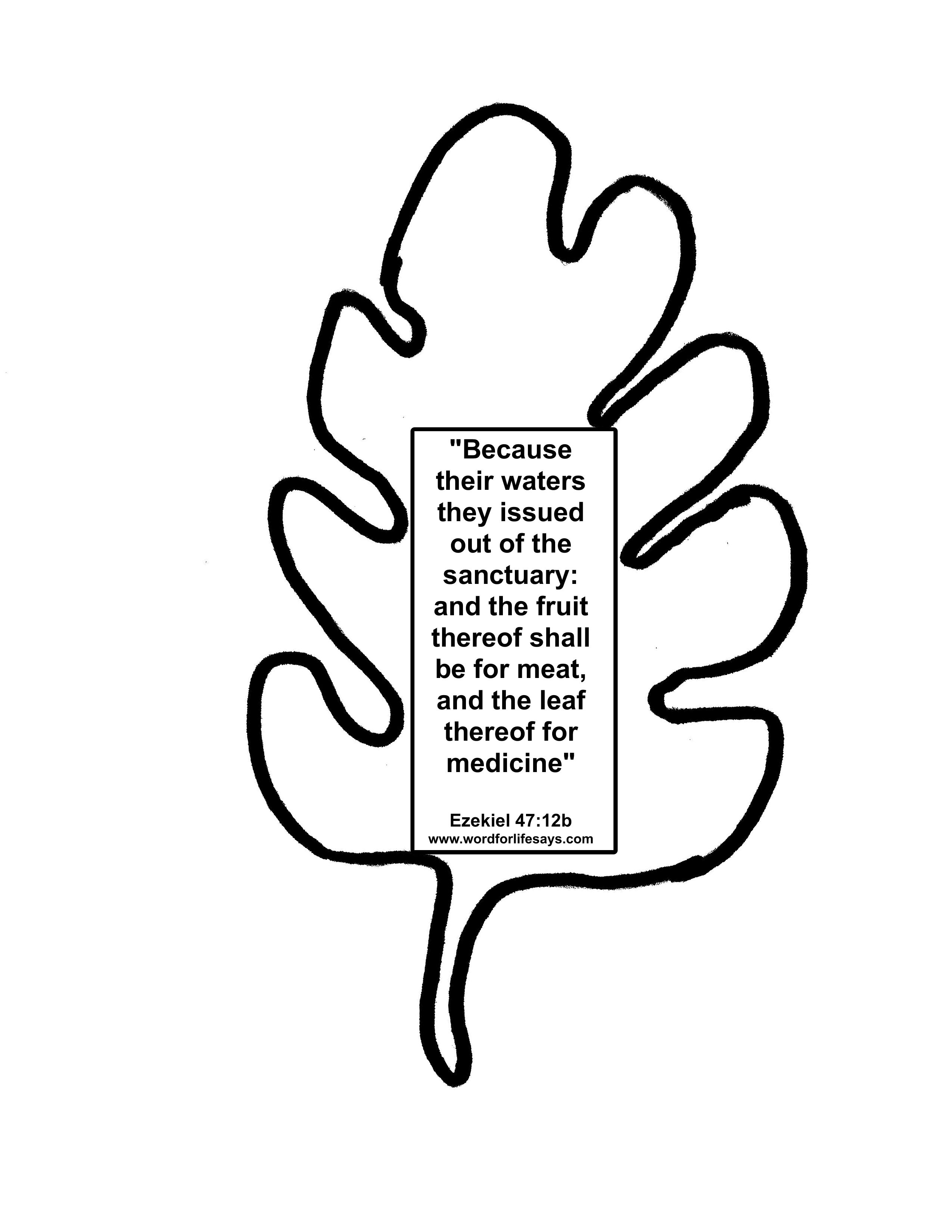
Leaf Lace-Up Craft: This simple craft connects the children with the effects this life-giving river has on the fruit and the leaves of the trees.  Use PDF: Ezekiel 47 12 Lace Up Leaf to put together this simple, yet fun activity.  Print out on cardstock and use a hole punch to put holes around the leaf.  Use any materials you have lying around for lacing: yarn, string, pipe cleaners, etc.  I used crumbled party streamers.  Go figure!  Enjoy!

My Project 320-001

Ezekiel 47 12 Lace Up Leaf-001

Word Search: Ezekiel Sees a Life-Giving River Word Search  Word Search Answers: Ezekiel Sees a Life-Giving River Word Search Answers

Crossword: Ezekiel Sees a Life-Giving River Crossword  Crossword Answers: Ezekiel Sees a Life-Giving River Crossword Answers

Word Scramble: Ezekiel Sees a Life-Giving River Word Scramble  Word Scramble Answers: Ezekiel Sees a Life-Giving River Word Scramble Answers

Text Free Image Above by 15079075 from Pixabay

Sunday School Lesson – “Raising Lazarus: Jesus’ Authority Over Death” John 11:38-44

VERSE DISCOVERY: John 11:38-44 (KJV, Public Domain)

Have you ever watched a dramatic movie just to get that knot in your throat when the scene turns too intense? You know what’s on the screen is not real, yet unbidden tears begin to form in the corner of your eyes.  You wipe and wipe, hoping nobody else sees you crying over a movie, but they just won’t stop flowing.

Quite possibly, you have seen this movie before and you know the story will turn out for good, but your heart was just so touched by what was before you that you cannot help but let the emotions of the scene get to you.

In today’s lesson, we come upon a scene that takes a dramatic turn and puts a knot in the throat of our Savior. This does not only become a scene where He shows His undying compassion for those He loves by the shedding of His own tears, but He also shows His complete authority and victory over death and the grave before He ever went to the cross.

Jesus Comes to the Grave

John 11:38 “Jesus therefore again groaning in himself cometh to the grave. It was a cave, and a stone lay upon it.”

Jesus was out of the area when He received the summons that something terrible had happened to a very good friend of His. Lazarus was sick and the situation did not look good.  His sisters Mary and Martha sent a messenger to the Lord, saying, “He whom thou lovest is sick,” (John 11:3).

The first response when one hears news of a dire emergency occurring with a family member or a friend is to hurry and get to where that individual is, to offer any support and aid that one can to help remedy the situation. This may be the reason his sisters sent for Jesus in the first place.  As we learn, things did not work out as they had planned, but the situation was not out of the control of God.  His plan would be made manifest, and glory would be rendered to Him at the outcome of it all.

When He received the news about Lazarus, Jesus spoke without wavering, “This sickness is not unto death, but for the glory of God, that the Son of God might be glorified thereby,” (John 11:4). Therefore, the Bible tells us He waited and did not immediately run to his side.

Some may think this is heartless. Not so, and if you read carefully, you will see that Jesus loved these people greatly (see John 11:5).  God was on the verge of transitioning the faith of those who would witness this great miracle to a brand-new level of belief in Jesus Christ, His Son.  Lazarus’ death would be the tool that would do just that.  So powerful was the event that is about to take place that later “the chief priests consulted that they might put Lazarus also to death; Because that by reason of him many of the Jews went away, and believed on Jesus,” (John 12:10-11).

So, Jesus waits two more days before He made His way to where Lazarus was (see John 11:6). When He arrives, no surprise to Him, but just for narrative purposes we are told in the Bible that Lazarus has been in the grave “four days already,” (John 11:17).

Martha, upon finding out of the Lord’s arrival ran to Him and said, “Lord, if thou hadst been here, my brother had not died,” (John 11:21). She knew that while Lazarus was still alive if Jesus had intervened death, all of this could have been avoided, and they would not be having this conversation today.

With no great, flowery words we often hear as sentiments of condolences at the passing of a loved one, Jesus simply stated, “Thy brother shall rise again,” (John 11:23). Martha knew of the resurrection, and she had that kind of faith in Jesus for the “last day” (see John 11:24), but today she still stands in grief wondering why Jesus hadn’t come on time.

When Mary was called to join them, she expressed the same sorrowful sentiment, “Lord, if thou hadst been here my brother had not died,” (John 11:32). Seeing His friends weeping and this whole sad scene playing out before Him, it caused Him to “groan in the spirit,” and He was “troubled” (John 11:33).  His own tears began to flow.

Looking at Him, and seeing His love for the one who was dead, people began to question, “Could not this man, which opened the eyes of the blind, have caused that even this man should not have died,” (John 11:37)? At this point, many of them still saw Jesus as just a “man.”  And as a man, they were looking at what Jesus could’ve done while Lazarus was alive as opposed to what He can do now even in his death.  In their humanity, they focused on what could have been prevented, instead of Jesus as the Savior who has the power to overcome it.

Arriving at the text of our lesson, verse 38 tells us, “Jesus therefore again groaning in himself cometh to the grave.” Here, Jesus is at the graveside of Lazarus and despite His all-knowing nature, He still groans again.

The fact of the matter is Lazarus was a friend of His and this tragic event touched Him on a personal level. Could it be that although He is fully God, that even in His humanity here on earth grief hit hard?  He was surrounded by weeping friends, and one is laying lifeless in the grave.  He was going to gain victory over it all, but for now, He groaned.

The Bible says that Jesus was “touched with the feeling of our infirmities,” (Hebrews 4:15). What that means is He knows what this human life is all about, the good times and the sad.  He feels what we feel.  He understands the hardships we face in the flesh; therefore, He groans.

Once I wrote, “Isn’t it nice to know that not only do we NOT carry our burdens alone, but we have a Savior that knows what those burdens feel like? Out of the depths of sorrow and pain – He knows.  Through the roads of striving and the paths of hatred – He knows.  During the darkness of nights, He already knows.  Our weaknesses have become His; He knows them, has lived through them, and has borne them.  Jesus knows!” (Jesus Knows/Wordforlifesays.com).

Jesus Says Take the Stone from the Grave

John 11:39 “Jesus said, Take ye away the stone. Martha, the sister of him that was dead, saith unto him, Lord, by this time he stinketh: for he hath been dead four days.”

“Take ye away the stone.” The scene was heart-wrenching and troubling; now Jesus asked what may seem to be an unthinkable and irrational request to some.

Unthinkable?  Maybe for another, but not for Jesus.

Irrational? Not at all.  Jesus was asking permission to gain access to the problem.

There are steps of faith and participation Jesus asks His followers to take. If you will remember back in 2 Chronicles 20:17 the people were told to get battle ready and go out against their enemy even though they would not need to fight in that battle.  We have the responsibility to activate our faith in Him by following through on His requests even if it seems irrational.

By removing the stone, they would not only be giving Jesus access to Lazarus, but they were giving Him access to their faith. When one opens their faith, they give Jesus a chance to speak life into it and do the impossible.

“Lord, by this time he stinketh.” Martha spoke up at the thought of it all. One did not just go around opening the graves of dead people except to add more dead people to it.  Little did she know Jesus wanted to free him that was dead and deliver him from that situation.

It should not be surprising that Martha is the one that spoke up. She was the worrier of the family.  When Mary spent time at the feet of Jesus, taking in the words He spoke and strengthening her faith, Martha was busy worrying about the things of this life (see Luke 10:38-42).

“For he hath been dead four days.” Four days gives us the impression that decay could have possibly started to set in in Lazarus’ body. For the human eye, this may look like a point of no return.  But for Jesus, it’s not too late.

Jesus’ power and authority over death are not restricted because Lazarus is in the grave and in a possibly decomposing state (think of the valley of dry bones in Ezekiel 37).  Lazarus’s sister wanted to confine the possibility of Jesus being able to do something about his condition within a certain time frame.  Once that time expired, to her, all hope expired with it.

Earlier she and her sister both expressed to Jesus, “Lord, if thou hadst been here, my brother had not died,” (John 11:21, 32). But now, she sees the situation as past the point of remedy.  She believes it is too late.

There is nothing that God cannot do: “For thou art great, and doest wondrous things: thou art God alone,” (Psalm 86:10).  Jesus can “do exceeding abundantly above all that we ask or think,” (Ephesians 3:20).  Jesus didn’t need her to rehearse how many days have passed.  For Him, it’s never too late!

John 11:40 “Jesus saith unto her, Said I not unto thee, that, if thou wouldest believe, thou shouldest see the glory of God?”

Before this moment of questioning, there was given a promise. Jesus assured her then, “I am the resurrection, and the life: he that believeth in me, though he were dead, yet shall he live: And whosoever liveth and believeth in me shall never die.  Believest thou this?” (John 11:25-26).

Her response then was, “Yea, Lord: I believe that thou art the Christ, the Son of God, which should come into the world,” (John 11:27). She was most likely concerned with the hereafter when she made her declaration of faith.  But Jesus was ready right now to do the impossible.  He was ready now to manifest “the glory of God.”

How do we see the glory of God manifested in our own life? By believing.

In an article titled, “Do More Than Pray – Believe!” I wrote:

“Sometimes in life, I think we tend to downplay the importance of our faith and what we believe. We hear about it so much that I think as Christians we have become desensitized to its power in both our spiritual and our natural lives.  This is not what it should be since we are told in four verses of the Bible, “The just shall live by his faith,” (Hab. 2:4; Rom. 1:17; Gal. 3:11; Heb. 10:38, KJV).

Our faith, our belief should be the marker for everything in our lives. Not just for salvation, but for every action and prayer.  We know all the right words to say and all the proper “Christian” motions to make, but is our faith alive and put into full force action?” (Wordforlifesays.com)

What Jesus was asking her was to believe beyond what she can see now, and she will have access to witnessing something truly miraculous taking place.  She was to put her faith “into full force action.” As Christians, we too are called to put our faith on display and let Jesus have access to the dead things so that He can raise them to life again.

Previously in John 11:4, when first called to come to Lazarus’ aid, Jesus spoke, “This sickness is not unto death, but for the glory of God, that the Son of God might be glorified thereby.” Knowing the power He would soon exhibit, He stated confidently again in verse 11, “Our friend Lazarus sleepeth; but I go, that I may awake him out of sleep.”

God’s glory was about to shine for the whole world to see.

The Grave is Opened and Jesus Prays

John 11:41-42 “Then they took away the stone from the place where the dead was laid. And Jesus lifted up his eyes, and said, Father, I thank thee that thou hast heard me.  And I knew that thou hearest me always: but because of the people which stand by I said it, that they may believe that thou hast sent me.”

With the stone rolled away from the grave, “Jesus lifted up his eyes.” What a beautiful picture this depicts, the King of all creation standing humbly with the naysayers while His whole focus is on heaven. He intercedes and approaches heaven where His Father sits attentively upon His holy throne.  A privilege, mind you, that He has now given to all His children (Hebrews 4:16).

“And said, Father, I thank thee that thou hast heard me.” To me, this is one of the most special phrases in the Bible. Aloud, Jesus let us know that our prayers do not fall on deaf ears.  Repeatedly we are taught that God hears when we pray, and here in this moment, Jesus gives us an exact illustration of the faith we too can have when approaching the throne of grace.

“God has so many wonderful characteristics and attributes, but one of the things that always strike me as impressive is the fact that He hears my prayers, Psalm 54:2. In all lowliness of mind and heart, we come before Him freely. The Sovereign of the universe becomes attentive to us, and to our needs, and bows down His ear to take on our concerns and needs. He doesn’t have to, but He is mindful of us, Psalm 8:4. He centers Himself to focus wholly and completely on us.” (Know that God Hears/Wordforlifesays.com).

That’s amazing!

When Jesus approached God in prayer, He went in expectation, totally sure “that thou hearest me always.”

When one prays, expect to receive an answer, expect to see some sort of fulfillment come from your prayers. Look for something to happen because of your praying.  Even if the answer doesn’t look the way you imagine it should, your prayers do not fall on deaf ears.  Be confident that God hears you.  God is attentive to you.  God does not leave you in a state of wanting.  David said, “The LORD is my shepherd; I shall not want,” (Psalm 23:1).  There will be results.

Believe in the goodness of God. Believe in your relationship with Him as a child of the heavenly Father.  Believe that He always seeks to give you His best (ex. John 3:16).  I often refer to God in my personal prayer as the Good Father who gives good gifts to His children (Matthew 7:11).  It’s something we must hold on to and depend upon.  Believe that God knows how to answer our prayers.

“That they may believe that thou hast sent me.”  Jesus wanted to show the people through His prayer, and through what was to follow, that He and His Father were hooked up together in this.  He wasn’t some rogue man seeking to attract crowds for self-sake.  He was the Son of God, working with God and His approval, seeking to convince as many as possible to believe in Him, to believe in the mission He came to accomplish on this earth, with the end result of saving their souls, not just raising Lazarus from the dead. He spoke, “That they may believe.”

Jesus Calls Lazarus Out of the Grave

John 11:43-44 “And when he thus had spoken, he cried with a loud voice, Lazarus, come forth.  And he that was dead came forth, bound hand and foot with graveclothes: and his face was bound about with a napkin. Jesus saith unto them, Loose him, and let him go.”

Jesus, before He ever went to the cross, proved His authority over death once again. On previous occasions, others who tasted death were brought back to life (see Matthew 9:25 and Luke 7:15).  Lazarus’s death, and the miracle of life being restored to him would be far more convincing of the power of Christ because he had been dead for a longer period.

Jesus once spoke, and said, “Verily, verily, I say unto you, The hour is coming, and now is, when the dead shall hear the voice of the Son of God: and they that hear shall live. Marvel not at this: for the hour is coming, in the which all that are in the graves shall hear his voice, And shall come forth; they that have done good, unto the resurrection of life; and they that have done evil, unto the resurrection of damnation,” (John 5:25, 28-29).

What Jesus was doing with Lazarus now was just a small example of His power and what He will do in that day to come. Therefore, He called Lazarus by name and commanded him, “Come forth.” The Bible then tells us, “And he that was dead came forth.”

Even in death, those who were and are in Christ Jesus, are secured. “Loose him, and let him go,” Jesus commanded.  The one who has been raised need not be bound any longer.  Graveclothes are for the dead, of which Lazarus was not anymore.  Therefore, they were commanded to be taken off him.  Lazarus was made totally free.

In conclusion, we can have faith, because we see:

Jesus showed His authority over death before the cross: as seen here in this lesson and through other death-raising miracles.

He showed His authority over death during His process of going to the cross: When Pilate spoke of his power to crucify Him, the Bible says, “Jesus answered, Thou couldest have no power at all against me, except it were given thee from above,” (John 19:11, emphasis mine).  Previously, when He spoke of His life to others He said, “No man taketh it from me, but I lay it down of myself. I have power to lay it down, and I have power to take it again,” (John 10:18, emphasis mine).

He showed His authority over death on the cross: “When Jesus therefore had received the vinegar, he said, It is finished: and he bowed his head, and gave up the ghost,” (John 19:30, emphasis mine; see also Matthew 27:50 and Luke 23:46).

He showed His authority over death when He rose on the third day: “And that he was buried, and that he rose again the third day according to the scriptures,” (1 Corinthians 15:4, emphasis mine).

And He has authority over death forevermore: “I am he that liveth, and was dead; and, behold, I am alive for evermore, Amen; and have the keys of hell and of death,” – Revelation 1:18, emphasis mine).

PDF Full Printable Sunday School Lesson Pack (With easy to read instructions following the P.E.A.R.L. format on how to conduct each lesson with areas for adding personal notes): Sunday School Lesson – Raising Lazarus: Jesus’ Authority Over Death

Suggested Activities:

Lesson Opener: “Resurrection Power” (see the attached lesson pdf link above for details on an activity to open this lesson)

Adult Journal Page: From the lesson of Jesus raising Lazarus from the dead (John 11:38-44), we are reminded of many wonderful truths, such as Jesus’ love and compassion for people (Jesus wept), activating our faith through believing His promises and acting upon them (rolling away the stone), squashing doubts about what Jesus can do (“Said I not unto thee, that, if thou wouldest believe, thou shouldest see the glory of God?” (v. 40)), to believing for the impossible, and God hears our prayers.  These, and many more truths come alive in this story.  Which part or parts are the most encouraging to you, and why?  Write your response on the Adult Journal Page – Raising Lazarus

Kid’s Journal Page: Kid’s Journal Page – Raising Lazarus

Blank Journal Pages: These pages, one designed for adults and one for children, can be used to bring out, remember, or write a particular part of the lesson you wish for you and/or your class to focus on.  Click>>Blank Adult and Kid’s Journal Pages to access the journal pages.

Draw the Scene:  Raising Lazarus Draw the Scene

How Many Words:  Resurrection Power How Many Words

Memory Verse: Raising Lazarus Memory Verse

Word Search: Raising Lazarus Word Search  Answers: Raising Lazarus Word Search Answers

Crossword: Raising Lazarus Crossword  Answers: Raising Lazarus Crossword Answers

Word Scramble: Raising Lazarus Word Scramble  Answers: Raising Lazarus Word Scramble Answers

Copyright © Word For Life Says.com (Sharing any posts or lessons can only be done through the share buttons provided on this site from the original posts, lessons, and articles only. You can reblog from the original posts only using the reblog button provided, or share using the share buttons provided from these social media platforms: Facebook, Twitter, or Pinterest, etc., and they must be shared from the original posts only. All other repostings are prohibited. Posts and other items of interest found on this site MAY NOT BE COPIED AND PASTED, downloaded, uploaded, etc to another website or entity not listed (physical or electronic).  See COPYRIGHT PAGE for more details.

Please Note: Ads below or referenced on this site are prefabricated and mass-produced (of which I currently have no control over) and DO NOT necessarily represent the views and/or beliefs of this site and its admin.


Sunday School Lesson – “4 Ways to Use Words Better” James 3:1-12; Isaiah 50:4

4 ways to use words better - pagemodo pic

4 Ways to Use Words Better Title pic-001

Our words are powerful!  As this lesson shows, they can be used to hurt or to heal; to edify or to tear down.  James wants us to choose life with the words that we speak.

VERSE DISCOVERY: James 3:1-12; Isaiah 50:4 (KJV, Public Domain)

Simon says, “Close your mouth!”  We all know the game.  Whatever Simon tells us to do, we do it lest we fear being counted out.  Oh, if only it were that easy to take command of some of our loose actions in life, such as ones that regard the mouth.  And yet, throughout the Bible, we are commanded to use our speech patterns in healthy and productive ways.  Not to be instruments for destruction and tearing one another down.

There is so much power bound up in the way that we talk.  Proverbs 18:21 tells us, “Death and life are in the power of the tongue: and they that love it shall eat the fruit thereof.”  Whatever is produced from our lips generates fruit.  Stuff grows, for the good or the bad, from what we say.

James is admonishing us to be mindful of the words that come out of our mouth for with them we can lift someone’s day, or we can emotionally kill them. 

What we say makes a difference in the lives of others.  Our mouths are vessels of influence. 

James 3 unpacks the truth of the power of the tongue and how people of faith should be cautious in how they unleash it. 

Using Isaiah 50:4 as a companion Scripture with those found in James 3, this lesson will uncover four ways all of us can strive to use our words better.

 1. Realizing the Weight of Your Words

James 3:1 “My brethren, be not many masters, knowing that we shall receive the greater condemnation.”

At the beginning of this lesson, I believe this is where many of us drop the ball, so to speak, in trying to improve our speech patterns toward others.  Many do not realize the weight of the words they speak and the impact those very words can have on the hearers.  Even if one is not trying to be purposely offensive, they would do well to think before speaking, asking oneself if the words that are about to come out of my mouth, necessary and/or helpful.  This step none can overlook, whether they are leaders or laypeople.  The responsibility of our words is just that, our responsibility.

So, starting with the leaders, James teaches, “Be not many masters.”  When it comes to bearing any title of leadership, often many will focus on prestige and tend to overlook the responsibility that comes with the job.  The Bible warns us, “For unto whomsoever much is given, of him shall be much required: and to whom men have committed much, of him they will ask the more” (Luke 12:48).  There is a higher level of accountability for “masters” or “teachers.”  Those endued with the power to magnify the gospel in such a way must be particularly careful in how they use words.

Words are powerful and need to be measured out carefully.  One of the devices that Jesus’s enemies tried to employ against Him was to catch or trap Him in what He said.  Matthew 22:15 says, “Then went the Pharisees, and took counsel how they might entangle him in his talk.”  One’s words can testify for or against an individual.  “Masters” and those in leadership carry the added weight of accountability for their words for the increased impact they can make.

This office is not to be taken lightly, for James said, “Knowing that we shall receive the greater condemnation.”  At this level, there is a higher standard of living expected for the one who bears the title, and James included himself in this by saying, “we”.  Proverbs 10:11 says, “The mouth of the righteous man is a well of life.”  Those who belong to God and work at sharing His word must especially be careful that what is coming out of them is speaking “life” to the ears of the hearers (more on this later).

James 3:2 “For in many things we offend all.  If any man offend not in word, the same is a perfect man, and able also to bridle the whole body.” 

In your mind, raise your hand if you have ever messed up or “offend” another.  One of the easiest ways to “offend” and harm another is through the mouth.  People often speak rashly in the heat of the moment and without carefully considering the impact their words have on another.  These emotional outbursts cause us to come up with phrases like “My mouth ran away with me” and so forth.  On those occasions, the use of the mouth was not employed as a tool for edifying, rather just the opposite.

But the one that can control his speech is considered “a perfect man.”  Since the tongue is often known as “running away” on its own, the one that exercises great restraint over this defiant member is considered “able also to bridle the whole body.”  It is the taming of what some view as being untamable.   He or she who can moderate or put limits on something so difficult to deal with can often show great restraint in other areas of life.  “He that keepeth his mouth keepeth His life: but he that openeth wide his lips shall have destruction,” is what we find in Proverbs 13:3a.  If one can keep their mouth under control, they can often hold tight elsewhere, avoiding destructive patterns that would work to tear them down.

In both verses quoted above, we see the weight of words and their impact is the sole responsibility of the one speaking, regardless of their title or not.  What we say out of our mouths carries so much with it and, it would behoove us to use our words wisely, chew on it a bit before we say it, and think critically, if what we are about to say is needful for that particular moment.

2. Learn to Tame the Tongue

James 3:3-4 “Behold, we put bits in the horses’ mouths,  that they may obey us; and we turn about their whole body.  Behold also the ships, which though they be so great, and are driven of fierce winds, yet are they turned about with a very small helm, whithersoever the governor listeth.”

James gives us the best possible illustrations on the power of the tongue by referencing it to two things his readers, as well as modern-day readers, can easily understand.  Through these two examples: one of a horse and another of a ship, James shows that man has, down through the years, discovered ways to bring these powerful objects under control.  For the horse, it is using a “bit” in its mouth and, for a ship, “a very small helm.” 

Both instruments are used for controlling other things.  They both direct the course of which way the operator wants each to go, be it a rider or “the governor.”  Both are great examples of how these large, and strong objects, can be made to comply with the will of the one who is controlling that little, vital piece.  If there are these little things that can move great objects into obeisance at its master’s will, what more of the little tongue?

James 3:5-6 “Even so the tongue is a little member, and boasteth great things. Behold, how great a matter a little fire kindleth!  And the tongue is a fire, a world of iniquity: so is the tongue among our members, that it defileth the whole body, and setteth on fire the course of nature; and it is set on fire of hell.”

Just as those little instruments are applied to the horse and ships, the body has a little thing that tries to control it also: “the tongue.” 

First, it “boasteth great things.”  The tongue edifies itself.  It magnifies the capabilities of its owner whether or not they really can do something.  The tongue is swollen with pride.  Have you ever seen an owner walk a little tiny dog with the biggest yipper on it, tugging and tugging the leash?  Or have you walked past a yard to the tune of relentless barking thanks to a peewee-sized dog?  These little ones are tenacious in letting you know who they are.  These pint-sized sweeties have no problem in letting the world know that they are here, and they mean business.

Our tongues often act in the same way.  It is so small, and it has so much to bark about.  Yet, this barking, used in a nonproductive and selfish way, makes a lot of noise, and can lead to great destruction.

Secondly, James taught, “how great a matter a little fire kindleth!  And the tongue is a fire.”  It only takes a small flame to bring on a raging inferno.  I often watch coverage on the news of fires that burn uncontrollably.  They are huge.  They are massive walls of orange-red destruction, eating and devouring everything in its path.  But they never start out that big.  Their origin is relatively small in comparison to the size they have grown to be.

James said, “And the tongue is a fire.”  The tongue can be the source of destruction that wreaks havoc on the things that get in its way.  It can chop and devour until it has consumed some with sorrow and some with despair when wrongly used.  The tongue can lash out and cause irreparable damage to the ears of its hearer if not used properly.

James described it as “a world of iniquity.”  Proverbs 10:19 says, “In the multitude of words there wanteth not sin: but he that refraineth his lips is wise.”  A lot of running off at the mouth gives many opportunities for sin to rear its ugly head.  When the tongue is let loose, it lashes about without regard for hurt, feelings, or the devastation it leaves behind.  Like a whirling tornado, it ravishes, spinning around and around in sinfulness, wiping out all in its path.

Without restraint, all it knows how to do is upheaval.  Without being restrained, the tongue “defileth the whole body.”  Jesus taught, “A good man out of the good treasure of his heart bringeth forth that which is good; and an evil man out of the evil treasure of his heart bringeth forth that which is evil: for of the abundance of the heart his mouth speaketh,” (Luke 6:45).  With that, we see that whatever comes out of the mouth, gives evidence to what already resides in the heart or the “body.” 

James 3:7-8 “For every kind of beasts, and of birds, and of serpents, and of things in the sea, is tamed, and hath been tamed of mankind:  But the tongue can no man tame; it is an unruly evil, full of deadly poison.”

Man, through the blessed ingenuity that God has given him, has developed ways to tame just about everything.  Yes, our lesson focuses on the taming of animals and birds, right down to the taming of serpents.  But, when we think about it, man has been able to take control of or tame many more things.  Since the Bible days, man has even found ways to harness energy through many means, including using the sun’s power.  Man has developed many ways to use the power of nature, such as wind and water, to harness their energies to benefit humanity.

Though he has been able to do so many feats (think of all the inventions through the years), the Bible says, “the tongue can no man tame.” It speaks to the “unruly evil” that it truly is.  It testifies to the power that it holds in its little self.  It is liken as being “full of deadly poison.”  Its work can destroy to the point of no return.  No wonder James’s warning is so strong and so severe.  Christians must learn how to put reins on this evil and stop its destructive ways.

Taming the tongue begins with not only monitoring one’s mouth but the things in the heart.  For the mouth cannot speak what the heart is not feeling.  Proverbs commands us, “Keep thy heart with all diligence; for out of it are the issues of life” (4:23).  The word “keep” can be used in the same sense as “guard” or “monitor.”  When the heart is kept and dealt with rightly, so too will the words which flow from it.

One day, each one of us will give an account for everything that proceeds from our mouths (Matthew 12:36-37).  As God’s children, we must not be reckless in the use of our words.  Taming the tongue means working hard to make sure your mouth is as a “well of life” (Proverbs 10:11) and that the words we speak be words of grace and helpful to the hearers thereof (Colossians 4:6; see also Ephesians 4:29).

3. Speak to Give Life

James 3:9-10 “Therewith bless we God, even the Father; and therewith curse we men, which are made after the similitude of God.  Out of the same mouth proceedeth blessing and cursing.  My brethren, these things ought not so to be.”

In the beginning, God spoke His most beautiful words of creation: “Let us make man in our image, after our likeness…” (Genesis 1:26).  Verse 27 goes on to say, “So God created man in his own image, in the image of God created he him; male and female created he them.”  These words professed the climax of His creation.  These words speak volumes of the love relationship that God wanted to have with man who was made “in his own image,” or as today’s lesson says, “after the similitude of God.” 

“Out of the same mouth proceedeth blessing and cursing.”  The conundrum of man is that we love the Lord and seek to bless Him, but sometimes our attitude toward His creation, our fellow man, can cause us to have disgruntled feelings that may turn to cursing.  “These things ought not so to be,” James said.  That is not the way we are to behave toward one another.

1 John 4:20 says it like this, “If a man say, I love God, and hateth his brother, he is a liar: for he that loveth not his brother whom he hath seen, how can he love God whom he hath not seen?”  Love for God and hate toward man equals “blessing” and “cursing.” Those two cannot, and should not, exist together.  They are incompatible roommates.  They are not a good fit to dwell in the same domain with each other.

James 3:11-12 “Doth a fountain send forth at the same place sweet water and bitter?  Can the fig tree, my brethren, bear olive berries? either a vine figs? so can no fountain both yield salt water and fresh.”

To further illustrate this puzzling aspect of man to try and bless and curse from the same vessel, James points out things in nature that cannot happen, that are incompatible.  First, he uses “water” to demonstrate.  Can a water fountain bring sweet water and bitter from the same place?  Can a fountain have both salt water and fresh water?  The answer is an obvious no.  The same is true for looking for olives on the fig tree or figs on a vine where grapes would be.  It does not happen.

Nature is not confused about what it is to produce.  A fig tree is designed by God to bear fig fruit.  The same is true for olives and such.  If nature knows what it should produce, so should the Christians to whom James is writing.  They are to not act out of character to the way that God designed them.

In dealing with our speech toward others, we must be mindful of building up rather than tearing down.  Proverbs 15:4 reminds us that, “A wholesome tongue is a tree of life…” Think about that for a minute.  The words that we speak about and to one another can bring healing to a hurting soul.  That is powerful!  Our speech goes beyond just saying words; they exhibit and send forth “life.”

Who are we raising to “life” with a timely and sincere word?  Are people enriched for the good when they sit down to have a chat with us or do they walk away feeling extra heavy and burdened down?  These things make a difference.  Not only do they make a difference to the one whom we are conversing with, but they also speak for us how closely we are walking in tune with our Savior and how He dealt with individuals daily.  On that note, on to our fourth point in this lesson.

4. Mimic the Speech of Jesus

Isaiah 50:4 “The Lord GOD hath given me the tongue of the learned, that I should know how to speak a word in season to him that is weary: he wakeneth morning by morning, he wakeneth mine ear to hear as the learned.”

If one seems to come short of all other attempts to use productive and positive speech patterns, all you have to do is look at Jesus and see what He did and how He communicated to those He came into contact with.

If one is going to learn how to use the tongue healthily, the best example is that of our Lord Jesus Christ.  Jesus had all the right words at the right time.  He knew how to speak compassion when it was needed most.  He knew how to speak conviction in truth without berating another.  And Jesus knew how to speak life.

Jumping out of the New Testament and going back to the old, there we see the prophesied Servant, whom we know to be the Messiah, our Lord Jesus Christ, and in Isaiah 50:4, He talks about the words He uses and the way He uses them to speak.  There He says, “The Lord GOD hath given me the tongue of the learned, that I should know how to speak a word in season to him that is weary…” 

It amazes me how many people think they have something to offer and are quick to verbalize those very thoughts and ideas.  Never do we see Jesus in the Bible using words in a frivolous or lackadaisical manner.  We have already expressed the preciousness of words and how they are used, and Jesus, just as His Father, knew the value of words and used them as such.

Jesus’ heart was always, and I do mean always, to do the will of the Father (John 6:38).  In everything, right down to going to the cross, God’s will was His number one priority (Luke 22:42).  With the will of God governing His whole life and ministry, even the words He spoke had to be what “The Lord GOD hath given me.” 

In Isaiah, that which was given is described as “the tongue of the learned”; as one who had been taught by God what to say and how to say it.  You can speak something true, but how the message is delivered can affect how one receives it or not.

In John 12:50, Jesus said, “For I have not spoken of myself; but the Father which sent me, he gave me a commandment, what I should say, and what I should speak.  And I know that his commandment is life everlasting: whatsoever I speak therefore, even as the Father said unto me, so I speak.”

Jesus never used words in a fly-away fashion.  With everything He spoke, it was either with a purpose, for a purpose, or to fulfill a purpose – or all three in one.

When we think of “with a purpose”, we can think along the lines of healing, miracles, and deliverances.  Jesus, in those instances, spoke with the intent to deliver an individual from some illness, spiritual oppression, or to perform a miracle such as the feeding of the five thousand.

When we think in terms of “for a purpose”, we can think along the lines of the parables He taught.  In those instances, He spoke for His audience to gain a greater understanding of something, particularly Kingdom principles.

And, when we think in terms of Jesus speaking to “fulfill a purpose”, we can easily associate this with prophecies such as the one He spoke from the cross: “Eli, Eli, lama sabachthani? that is to say, My God, my God, why hast thou forsaken me?” (Matthew 27:46).  Those exact words open the Messianic psalm found in Psalm 22:1.

By the way, the verses quoted above in John 12:49, 50 could also be looked at in a fulfilling fashion because they fulfilled our verse of study in Isaiah 50:4 regarding the use of His speech.

Jesus used His words with exactness and preciseness.  Back in Isaiah, we see His words were carefully chosen “that I should know how to speak a word in season to him that is weary.”  The right words at the right time, especially for the weary worn, are a special kind of sweetness to a soul that dreadfully needs it.  Proverbs 16:24 says, “Pleasant words are as an honeycomb, sweet to the soul, and health to the bones,” and nobody could do this better than the Lord Jesus Christ.  He said, “…the word that I speak unto you, they are spirit, and they are life,” (John 6:63).

Then, in Isaiah, He goes on to explain, “he wakeneth morning by morning, he wakeneth mine ear to hear as the learned.”  It was a daily thing for Jesus to have His ear tuned into the Father’s mouth, to hear what He has to say and express the very words He “learned.” 

In concluding this lesson, this last section may seem overwhelming in learning to speak like Jesus in this manner.  But, if we take everything into consideration and then look at what James taught earlier in his book: “Wherefore, my beloved brethren, let every man be swift to hear, slow to speak, slow to wrath:” (James 1:19), following this, may help us to learn to have an ear as the Servant (Jesus), and be able to speak with words of grace (Ephesians 4:29).

Our words are powerful!  As this lesson shows, they can be used to hurt or to heal; to edify or to tear down.  James wants us to choose life with the words that we speak.  He wants us to take the high road and control of what is coming out of our mouths.  If we need help, we can pray the prayer of the psalmist and say, “Set a watch, O LORD, before my mouth; keep the door of my lips” (Ps. 141:3).

What we say and how we talk to one another really does matter.  It is all about how we use our words and to learn daily to use them better.

PDF Full Printable Sunday School Lesson Pack (With easy to read instructions following the P.E.A.R.L. format on how to conduct each lesson with areas for adding personal notes and other ideas available.): Sunday School Lesson – 4 Ways to Use Words Better

SUGGESTED ACTIVITIES:

Adult Journal Page:  Adult Journal Page – I Am a Lifter 

Adult Journal Page - I Am a Lifter...

Kid’s Journal Page: Kid’s Journal Page – Speak Kindly

Kid's Journal Page - Speak Kindly

Blank Journal Page: These pages, one designed for adults and one for children, can be used to bring out, remember, or write a particular part of the lesson you wish for you and/or your class to focus on.  Click>>Blank Adult and Kid’s Journal Pages to access the journal pages.

Speaking Collage Craft: This craft is perfect if you have old newspaper comics strips laying around.  Just cut them out and glue onto construction paper to make a collage of many different ones together (I prefer the ones with word balloons on them to demonstrate speaking).  In the middle, attach our cut-out picture verse printable for James 3:10 declaring, “Out of the same mouth proceedeth blessing and cursing. My brethren, these things ought not so to be”  found here.

James 3 10 picture verse-001

Draw the Scene: 4 Ways to Use Words Better Draw the Scene 

4 Ways to Use Words Better Draw the Scene-001

Memory Verse: Four Ways to Use Words Better Memory Verse 

Four Ways to Use Words Better Memory Verse-001

Word Search: Four Ways to Use Words Better Word Search  Answers: Four Ways to Use Words Better Word Search

Crossword: Four Ways to Use Words Better Crossword   Answers: Four Ways to Use Words Better Crossword Answers

Word Scramble: Four Ways to Use Words Better Word Scramble   Answers: Four Ways to Use Words Better Word Scramble Answers

Copyright © Word For Life Says.com (Sharing any posts or lessons can only be done through the share buttons provided on this site from the original posts, lessons, and articles only. You can reblog from the original posts only using the reblog button provided, or share using the share buttons provided from these social media platforms: Facebook, Twitter, or Pinterest, etc., and they must be shared from the original posts only. All other repostings are prohibited. Posts and other items of interest found on this site MAY NOT BE COPIED AND PASTED, downloaded, uploaded, etc to another website or entity not listed (physical or electronic).  See COPYRIGHT PAGE for more details.

Sunday School Lesson – “Hosanna to the King!” Mark 11:1-11

VERSE DISCOVERY: Mark 11:1-11 (KJV, Public Domain)

At one point, before his death, John the Baptist sent men to Jesus and asked, “Art thou he that should come, or do we look for another?” (Matthew 11:3).  This questioning was spawned because of the mighty “works of Christ” (Matthew 11:2) that were performed and proclaimed throughout the region.

Not only did the works He performed bear witness of who He was (John 10:25), Jesus often identified Himself with the Deity of heaven; as being one with the Father Himself (see John 10:30; John 1:1; John 14:9).

The hope of the people has been in a state of expectation since the days of old.  They have heard of the prophecies, such as the one Zechariah proclaimed, saying, “Rejoice greatly, O daughter of Zion; shout, O daughter of Jerusalem: behold, thy King cometh unto thee: he is just, and having salvation; lowly, and riding upon an ass, and upon a colt the foal of an ass,” (Zechariah 9:9).

They were waiting for this time of celebration that was prophesied hundreds of years before the actual event took place. A time when God’s people would ring out their worship of their one true King. At His coming joy will go before Him for His proposed reign. People will raise their voices with heartfelt praise and adoration of Him who has come to save them.

Unfortunately, when He came, most were not looking for a Savior from sin, rather one who would free them of the national tyranny of their oppressors. The people at that time were more focused on their present circumstances over their eternal destinies.  This will rob you of seeing Jesus for who He really is every single time.

It was prophesied that this King would be “just.” His rule would be governed by truth. It’s how He lived and how He died; according to God’s truth. He declared in Matthew 5:18 “For verily I say unto you, Till heaven and earth pass, one jot or one tittle shall in no wise pass from the law, till all be fulfilled.” He pressed on to fulfill truth so that His reign would be marked and identified as being “just.” He would do all that is right according to God’s holy Word.

This King would also be known as “having salvation.” He would bear within Himself the means to save mankind from the ravages of sin and disparity brought on by their fleshly stance in this world. The Bible declares, “For all have sinned and fall short of the glory of God,” (Romans 3:23). Therefore, all of mankind needed and still needs a Savior; one who can bring them out of the depths of his/her evil state. Acts 4:12 lets us know, “Nor is there salvation in any other, for there is no other name under heaven given among men by which we must be saved.” This King comes with our “salvation.”

At His entrance, He comes in a state opposite of most royalty and the elite of society. This King is prophesied to come “lowly, and riding upon an ass, and upon a colt the foal of an ass.” A humble creature of burden becomes transportation of Him who would bear all of humanities burdens and sins.

I think it important to reiterate here that our King was “lowly.” We sing songs praising that wonderful characteristic of His, but do we really understand how much He humbled Himself to come and do what He did for us? Do we understand that He could have arrived with all the pomp and circumstance of heaven, but He arrived in an animal’s dwelling, with no proper place to lay His head? Do we understand how many times He could have shut the mouth of those who rose against Him and accused Him, but He took it all on Himself as part of His mission; His ministry to save mankind? Do we really understand how much He took off to put on the dregs of humanity? Do we understand? He was “lowly.”

By entering the town on that day in that way, Jesus was letting all the world know that He was that prophesied King.  That yes, if anybody wants to know, He is the One whom they have been looking for.

This is where we find ourselves studying today: Jesus’ triumphal entry. 

 Lesson Summary

Mark 11:1-3 “And when they came night to Jerusalem, unto Bethphage and Bethany, at the mount of Olives, he sendeth forth two of his disciples, And saith unto them, Go your way into the village over against you: and as soon as ye be entered into it, ye shall find a colt tied, whereon never man sat; loose him, and bring him. And if any man say unto you, Why do ye this? say ye that the Lord hath need of him; and straightway he will send him hither.”

Before we arrive at today’s lesson, Matthew 20 tells us that Jesus once again tried to prepare His disciples for the reality of what was soon to take place:

“Now Jesus, going up to Jerusalem, took the twelve disciples aside on the road and said to them,

“Behold, we are going up to Jerusalem, and the Son of Man will be betrayed to the chief priests and to the scribes; and they will condemn Him to death,

And deliver Him to the Gentiles to mock and to scourge and to crucify. And the third day He will rise again,” (Matthew 20:17-19; see also Mark 10:32:34).

Here, in the above verses, with what I believe was still clueless disciples, Jesus is drawing “nigh to Jerusalem.” The King is about to make His entrance but before doing so He gives His disciples very explicit details to follow to make sure when He comes in there is no mistake to the reign He claims.

As a matter of fact, fulfilling every prophecy that was spoken of Him was so imperative that later He wouldn’t die until He could finally say, “It is finished,” (John 19:30).

God’s prophets such as Zechariah were His spokesmen. They have been used down through Israel’s history to pass onto the people the word of God. To warn, exhort and exalt them to draw closer to Him through their prophecies. When God used a prophet as His mouthpiece, the words that come from them are as valid as if they heard it from His own being, thundering upon the mountains. Since what they spoke was on His behalf, He had to make sure everything: past, present, and future would be fulfilled as it was told to the people down through the years.

They were told exactly how their King would arrive and Jesus was careful to make sure there would be no mistaking who He claimed to be when He arrived in Jerusalem in such a fashion. His arrival mounted on that beast would offer them visual evidence. Any Jew would have known that when they see Him on a “colt the foal of an ass,” as Zechariah stated; or just using the word “colt” as this lesson states, He was claiming His Kingship; He was claiming His Lordship; He was claiming His Messiahship.

With that, the instructions He gives is for them to, “Go your way into the village over against you: and as soon as ye be entered into it, ye shall find a colt tied, whereon never man sat; loose him, and bring him.” It is supposed by many Bible students that Jesus had a prearranged agreement with the owners of the animals that He sent them for. With that supposition, He knew (which He could have known because of His Sovereignty if He wanted to) exactly where to send them and how to instruct them on searching out what He already planned. When they arrived and found the ones He said, His command was “loose him, and bring him.” The reason is stated for us, and for the owner’s is in the next verse.

If anyone dared to question what the disciples were doing and what was their intent and purposes of loosing the animal, Jesus gave them a simple reply to relay: “The Lord hath need of him.” He was set aside for the Master’s use. He was needed by Jesus. How privileged was this little guy that would carry the “Lord;” the Savior of the world, on his back. Awesome!

Never had anyone rode him before this day.  Jesus’ specific instructions included that he be one that “never a man sat.”  It amazes me what our Christ can do with the unused; what He can do with the unskilled and rough around the edges. This donkey is not known by name to us, but we know him as part of the Messiah’s royal parade forever in history.  Even more awesome!

Mark 11:4-6 “And they went their way, and found the colt tied by the door without in a place where two ways met; and they loose him.  And certain of them that stood there said unto them, What do ye, loosing the colt?  And they said unto them even as Jesus had commanded: and they let them go.”

“And they went their way, and found the colt… and they loose him.”  They may have not understood everything right away, nor did they fully grasp that Jesus was fully preparing Himself to die that He might reign (though He often tried to get that point across to them), but they didn’t question Him. They didn’t try to dissuade Him from His task; rather they obeyed.

Their obedience is a key component. Let’s put this in full perspective.  They knew the authorities of the day were plotting against Him to seek to take His life. The Triumphal Entry of Jesus is also found in the Book of John chapter 12. In chapter 11 of that same book, before this moment in time, when Jesus was determined to go to Bethany (about 1½ miles outside of Jerusalem) to raise Lazarus from the dead, seeing that He couldn’t be dissuaded, Thomas, one of the disciples, said, “Let us also go, that we may die with Him.” So, when He instructed them in the matter of the “colt” they are noted as doing what Jesus told them to do despite any fears on misgivings they may have felt at that moment.

Following His orders did indeed get them questioned by others, but they once again followed the path of obedience and “they said unto them even as Jesus had commanded.” 

Mark 11:7 “And they brought the colt to Jesus, and cast their garments on him; and he sat upon him.”

I don’t know about you, but I have ridden a horse bareback before. The experience was not pleasant, to say the least. Here, the disciples provide comfort for the Lord as He mounts the beast set aside for His use. In lieu of a saddle, they pad the back of the beast with “their garments.”

We often hear people use expressions of love and service to another by saying things like, “I will give them the clothes off my back.” Jesus’ disciples didn’t talk about it, they did it. They literally gave Him the “clothes” off their backs to comfort the ride of the King. Oh, how much this must have meant to the Lord who would soon come before angry faces and hearts filled with hatred.  But, at this moment, He gets to feel and experience support from those closest to Him.

Mark 11:8-10 “And many spread their garments in the way: and others cut down branches off the trees, and strawed them in the way.  And they that went before, and they that followed, cried, saying, Hosanna; Blessed is he that cometh in the name of the Lord.  Blessed be the kingdom of our father David, that cometh in the name of the Lord: Hosanna in the highest.”

Can we picture this scene really quick? As Jesus was entering in Jerusalem on that colt, word had to have rapidly spread for not just the disciples were celebrating the King, “many” and “others” joined in. Matthew 21:8 referred to them as “multitudes.”

Did they recognize the symbolism? Did they associate His entrance as the long-awaited promised One; of He that was prophesied of? We are working under the assumption that those questions can be answered with a very real, “Yes!”

Again, His reign to free men from sin instead of tyranny may not be what they had imagined at the time, but they understood who He claimed to be by how He rode into Jerusalem, fulfilling prophecy. Therefore, they willingly and with great rejoicing (as was also prophesied) wanted to be a part of the celebration. The King was coming and they “spread their garments in the way” and “cut down branches off the trees” to cover the path He would travel. What a small service for such a great King!

They honored Him with their “Hosanna” shout. They rallied and proclaimed the praises of Him who would save them, for that’s the meaning behind the word “Hosanna;” to “save now.”

“Hosanna” was the shout of triumph. In Him, they saw a victorious King. In Him, they had an expectancy of deliverance. In Him they rejoiced, proclaiming that He is the one who would fulfill the promise of “the kingdom of our father David,” (see 2 Samuel 7:12-14).

So, they rejoiced and shouted that He was, “Blessed.”  His “kingdom” is “blessed.” He is the one that “cometh in the name of the Lord!” They were getting their praise on as we say it today! The King has arrived! The King has come! “Blessed is he!”

In Matthew 21:10 it says of that day that “all the city was moved.”  Often when Jesus performed miracles crowds would gather around Him to witness the power of God at work through Him. Here, there is no miracle performed; rather prophecy, long-awaited prophecy being fulfilled. Emotions were running high and people gathered and were excited to see it coming to pass right before their eyes; right in their time of living. When was the last time you were so stirred up about Jesus?  They had a reason to be shaken with excitement saying, “Hosanna in the highest!”

Mark 11:11 “And Jesus entered into Jerusalem, and into the temple: and when he had looked round about upon all things, and now the eventide was come, he went out unto Bethany with the twelve.”

An anti-climactic end to such a triumphal entry?  Oh, no!  After identifying Himself as King by riding in the way that He did, Jesus “entered… into the temple,” and soon some things were going to change!  It was about to get real up in that place, as some would say.

If you would read further past our lesson, Mark 11:15-17 shows us the second cleansing of the temple Jesus performed (this is also support by Matthew 21:12-13).  There He turned over tables and proclaimed, “Is it not written, My house shall be called of all nations the house of prayer? but ye have made it a den of thieves,” (Mark 11:17).

This King wasn’t playing with His ministry!  He was triumphant at the beginning, middle and end of His parade, and He still commands the victory as He is cleaning out His Father’s house.  Only the true King, with true authority, can command and operate the way He does.

Conclusion

Jesus is He that was to come; the King to reign for all eternity.  Let us shout his praises: “Hosanna in the highest!”  There’s no need to look for another.  He’s the One!

Lesson PDF: Sunday School Lesson – Hosanna to the King

Suggested Activities:

Adult Journal Page: Adult Journal Page – Hosanna to the King

Kid’s Journal Page: Kid’s Journal Page – Hosanna to the King

Draw the Scene: Hosanna to the King Draw the Scene

(Use the PDF link above for accurate printing) Want to jazz up this memory verse?  Try printing on cardstock and using glue with glitter to fill in the words, colored chalk, paints and more.  You’re only limited by your imagination.  Enjoy!

HOSANNA PALM LEAF CRAFT: Hosanna Palm Leaf for Palm Sunday (Use this PDF link for accurate printing)  Have students decorate and color their free palm leaf (printing on cardstock is best) and tape or glue to a craft stick (makes a great church fan 🙂 ) or dowel rod or twigs from outside for a natural element so they too can wave them before the Lord with rejoicing.  I wanted mine to be colorful, not just all green.  Jazz it up! After all, it is a celebration.  Enjoy!

PhotoGrid_1426985631285

Hosanna Palm Leaf for Palm Sunday-001


Leaf Lace Up Craft:   Use PDF: Mark 11 9 Leaf Lace Up Craft to put together this simple, yet fun activity.  Print out on cardstock and use a hole punch to put holes around the free leaf template.  Use any materials you have laying around for lacing: yarn, string, pipe cleaners, etc.  I used crumbled up party streamers.  Go figure!  Enjoy! (Similar project shown below)

My Project 320-001

Mark 11 9 Leaf Lace Up Craft-001

How Many Words: Hosanna to the King How Many Words

Word Search: Hosanna to the King Word Search Answers: Hosanna to the King Word Search Answers

Crossword: Hosanna to the King Crossword Answers: Hosanna to the King Crossword Answers

Word Scramble: Hosanna to the King Word Scramble Answers: Hosanna to the King Word Scramble Answers


Sunday School Lesson – “Love Your Enemies” Matthew 5:38-48

Photo: Pixabay
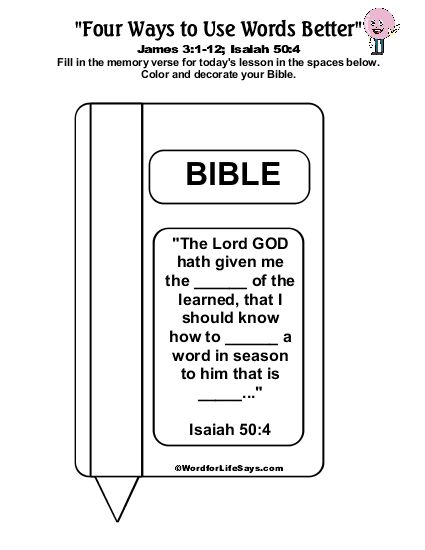
VERSE DISCOVERY: Matthew 5:38-48 (KJV, Public Domain)

What does true Christianity look like?  How do people know that we are a child of God?  What marks us as being different from anyone else?  When we decided to do the things that God does and love the way He loves, then people can readily tell whom we belong; who is our Father.

In life, there are going to be times of being wronged, hurt, and/or misunderstood.  What do we do in these instances?  Do we vehemently seek revenge or try to get even? 

No.  Part of being a Christian or living life as God’s people is to extend God’s love to those who refuse to show us kindness in return.  It’s going against our human nature to when offenses happen by extending the heart of God to those who oppose or war against us; to those whom one would consider being an enemy.

When we choose to say no to what our flesh wants to do and yes to what is right in God’s sight, then we are on the right pathway of living lives that are pleasing to Him.  We are purposefully living like Jesus did – choosing to love, even the worst, like God does.   

Going Against Human Nature

Matthew 5:38-42 “Ye have heard that it hath been said, An eye for an eye, and a tooth for a tooth: But I say unto you, That ye resist not evil: but whosoever shall smite thee on thy right cheek, turn to him the other also.  And if any man will sue thee at the law, and take away thy coat, let him have thy cloak also.  And whosoever shall compel thee to go a mile, go with him twain.  Give to him that asketh thee, and from him that would borrow of thee turn not thou away.”

It is during His teaching on the Sermon on the Mount where Jesus lays out the disciplines necessary for a life lived for the Kingdom of God, where this lesson text is found.  In that teaching, He clarifies a few points He wants His followers to adhere to.  Jesus wanted to set aright some misunderstandings concerning the Law and offers a more Kingdom-approached mindset.

Part of laying out the law in Exodus was to ensure that when people committed a wrong against another or injured another, proper retribution was made.  This portion of the law, and similar portions like it, were put in place to keep everything fair and balanced, not only for the offended but for the offender.  Both parties would be protected to ensure neither party involved would go overboard in exacting from the other what they believed was due them or deserved.  Those who were to receive something in return for an offense would get what’s coming to them – nothing more, nothing less.  And, those who caused the offense or injury, those on the punishment end of the spectrum would get or give what is their due – nothing more, nothing less.

Basically, laws like this not only promoted fairness, but it limited extreme actions from being taken by another for the least little bit of infractions.  The punishment had to fit the crime and not be exaggerated, out of the proportion, or go too far for what was called for.

That’s the meaning behind the phrase/verse, An eye for an eye, and a tooth for a tooth, (compare Exodus 21:24).  It was not a license for retaliation and revenge.  It was a law commanded to keep everything fair and balanced.

Supporting the true nature of the law, Jesus taught, rather than seek revenge, go above and beyond what normal human nature would demand of in times of offense.  Do something radically different: Resist not evil.  Proverbs 20:22 explains it like this: “Say not thou, I will recompense evil; but wait on the LORD, and he will save thee,” (compare 1 Peter 3:9).  The focus of a Kingdom-minded individual is not seeking to render evil for evil.  The focus of a true child of God is to live life like Jesus did, with love and compassion toward one’s fellow man.  Even their enemies.

And, if it’s the Law the people want to quote to justify themselves in rendering to another their “just desserts,” then they also must remember that it is also the Law that states, “Thou shalt not avenge, nor bear any grudge against the children of thy people, but thou shalt  love thy neighbour as thyself: I am the LORD,” (Leviticus 19:18).

People can be very self-seeking in matters of avenging and holding grudges.  These two things will tear relationships and people down rather than heal and restore.  And, that defeats the purpose of the original intent of the Law.

Therefore Jesus, to further drive His point home, continues: But whosoever shall smite thee on thy right cheek, turn to him the other also.  During the Roman occupation, people in Jesus’ day would suffer many assaults from these soldiers and governing authorities.  And, surely too, there would be times when one’s own countrymen would strike out in unjust ways.  But, the response of the Christian is not to behave in the same manner as they.  They were to respond opposite of what society or their normal human character would dictate.

Other scenarios Jesus gave, such as, if any man will sue thee at the law, and take away thy coat, let him have thy cloak also, and, whosoever shall compel thee to go a mile, go with him twain, demonstrate the previous point He made about not getting caught up in revenge, retaliation, and the seeking of one’s rights.  Here, He is instructing them to once again, go above and beyond that, to the point of doing more than what was insistent upon.  The Christian is not called to live and act like everyone else, getting caught up in matters that surround the here and now or being entangled with the cares of this life, 2 Timothy 2:4.  He/she is called to live and love people as God Himself does, and that often goes against the grain of human nature.  And, sometimes it will require one to do extra or more than necessary in order to show the love of God.

When someone has been hurt and broken the last thing on their mind is the benefit of the one who has inflicted the harm.  Jesus, knowing what He was going to accomplish on the cross, was teaching His disciples to operate in this world as He would.

All these things that He speaks of in the above verses, all the scenarios of wrongs committed, were to be situations that Jesus Himself would live through, love through, and forgive the offense of others through.  They would be things that He would actually demonstrate through His own life: “He was oppressed, and he was afflicted, yet he opened not his mouth: he is brought as a lamb to the slaughter, and as a sheep before her shearers is dumb, so he opened not his mouth,” (Isaiah 53:7).

Jesus was teaching His disciples that to live as Kingdom-minded people, you will not only have to go against the status quo and cliques of society, but you will also have to fight against your own natural inclinations that don’t want to seek the good of those who cause harm.

In addition to that, be giving.  Give to him that asketh thee, and from him that would borrow of thee turn not thou away.  God gave us the greatest gift one could ever hope to receive, the Lord Jesus Christ (John 3:16), who would freely and willingly suffer so much wrong to lay His life down for us.  Is it too much for us to give as He gave to those in need?  Jesus didn’t turn others way or turn a blind eye to genuine needs.  Do we?

Love Like God Loves

Matthew 5:43-48 “Ye have heard that it hath been said, Thou shalt love thy neighbour, and hate thine enemy.  But I say unto you, Love your enemies, bless them that curse you, do good to them that hate you, and pray for them which despitefully use you, and persecute you; That ye may be the children of your Father which is in heaven: for he maketh his sun to rise on the evil and on the good, and sendeth rain on the just and on the unjust.  For if ye love them which love you, what reward have ye? do not even the publicans the same?  And if ye salute your brethren only, what do ye more than others? do not even the publicans so?  Be ye therefore perfect, even as your Father which is in heaven is perfect.”

Love your enemies.  Loving neighbors is one thing, but the words love and enemies don’t exactly coincide with one another according to human standards; rather, they usually collide with one another head-on.  But Jesus is calling us to use God’s Spirit within us to operate on a supernatural level that surpasses our view which is usually obstructed by this natural world.

When one is an enemy that means they are against us.  Yet, Jesus’ command is to love them anyhow.  Show them the same compassion as He did when He allowed them to drive the nails through His hands and feet.  He told His disciples in the Garden of Gethsemane at the time of His arrest, “Thinkest thou that I cannot now pray to my Father, and he shall presently give me more than twelve legions of angels?” (Matthew 26:53).  He could’ve taken care of His enemies with one swoop of prayer, yet love compelled Him to offer Himself for their release from sin.  He had a heavenly view for loving His enemies.  In that, He laid it all down for them and us and showed just one of the ways one can do good to them that hate you.

Pray for them which despitefully use you, and persecute you.  No one said these sayings were easy, because they’re not.  If they were, everybody would be doing them.  But they are doable because everything that Jesus is telling His followers to do, He did, or would go on to do.

They cursed Him, yet He prayed for them: “Father, forgive them; for they know not what they do,” (Luke 23:34).  They struck Jesus on the cheek (John 18:22; compare with Matthew 5:39 from above), and they divided His clothes (Luke 23:34).  He went through it all and never sought His own revenge but continued forth in love.

Following His teachings, even when it’s hard, and mimicking the things He did, helps to identify the Christians as true children of your Father which is in heaven.  In normal, familial relationships there will be some sort of resemblance between parents and children.  Certain traits, characteristics, features will be prominent, assuring the fact that this child belongs to me.  And, the same is true for those who claim to be spiritual children of God.  As His children, some of Him should be seen in us.  As we were originally created to be in the image of God (Genesis 1:26-27), so too should we represent His image as we have been recreated with a new nature (2 Corinthians 5:17).

God is a good God (Psalm 100:5) and “He that doeth good is of God: but he that doeth evil hath not seen God,” (3 John 1:11).  In His goodness, He does not withhold the natural graces of nature even from those who are considered evil and unjust.  He allows the sun and rain to benefit them all.  How much more in kindness should we operate if we are mimicking our Father?

It is easy for anyone to love or salute those who love and salute them back.  Jesus, to make sure they understood this concept, used as an illustration one of the most despised people of their day: the publicans.  The publicans were the local tax collectors on behalf of the Roman government.  They placed exorbitant charges on their fellow countrymen and gave to the Romans what belonged to them while pocketing the overages for themselves.  Because of this, they were greatly despised among their own people and seen as traitors.

With that being said, Jesus is making His point, that it is no great thing to treat ones with love and compassion who show the same toward you.  Even the most despised of people usually do the same.

It is when one goes above and beyond – that’s what sets them apart as true children of God.  When one can step away from their natural tendencies of wanting to retaliate and get even and decide to walk the path that leads us to perfect living; one that mimics our Father which is in heaven is perfect, can they truly say they are loving as God loves.  They are seeing people the way the Father sees them.  That even enemies, and those that war against us, would be viewed in our sight the same way the Father views them and treats them.

After all, we were once enemies as well.  “But now in Christ Jesus ye who sometimes were far off are made nigh by the blood of Christ.” (Ephesians 2:13).  But, in His love, “God commendeth his love toward us, in that, while we were yet sinners, Christ died for us.” (Romans 5:8).  He didn’t wait until we were doing right and walking perfect and checking off all the right boxes and treating everyone fairly before He died for us.  He did it while we were in our mess.  He did it while we were sinners.  He did it while we were enemies.  Now, it’s our turn to show others, even those who may hurt us and be called our enemies, the love of God in us.

PDF Printable Sunday School Lesson Pack (With easy to read instructions following the P.E.A.R.L. format on how to conduct each lesson with areas for adding personal notes): Sunday School Lesson – Love Your Enemies

Suggested Activities:

Adult Journal Page – Love Your Enemies

Kid’s Journal Page – Going the Second Mile

Memory Verse: Love Your Enemies Memory Verse

Draw the Scene: Love Your Enemies Draw the Scene

Word Search: Love Your Enemies Word Search  Answers: Love Your Enemies Word Search Answers

Crossword: Love Your Enemies Crossword  Answers: Love Your Enemies Crossword Answers

Word Scramble: Love Your Enemies Word Scramble  Answers: Love Your Enemies Word Scramble Answers

“Love Your Enemies Activities” (Tom and Jerry anyone?  Yes, what a great example about getting along with someone you are always fighting with.  Enjoy!)

“Love Your Enemy Children’s Lesson”

“Love Your Enemies Group Activities” (Several great ways to bring this lesson out.  Enjoy!)

“Love Your Enemies Activity Sheets”

“What Would Jesus Do Printable Craft”

“What Would Jesus Do Activities” (I really like the section on Visual Activities.  I think using this technique is a great way to open up and introduce the students to this week’s lesson.  Enjoy!)

“What Would Jesus Do, Mirror”

“Jesus Knocking Craft” (Though this does not go with today’s verse, I think this easy printable can be nicely applied to today’s lesson.  Use it to make a Jesus door hanger that will help remind students to ask WWJD?  Enjoy!)